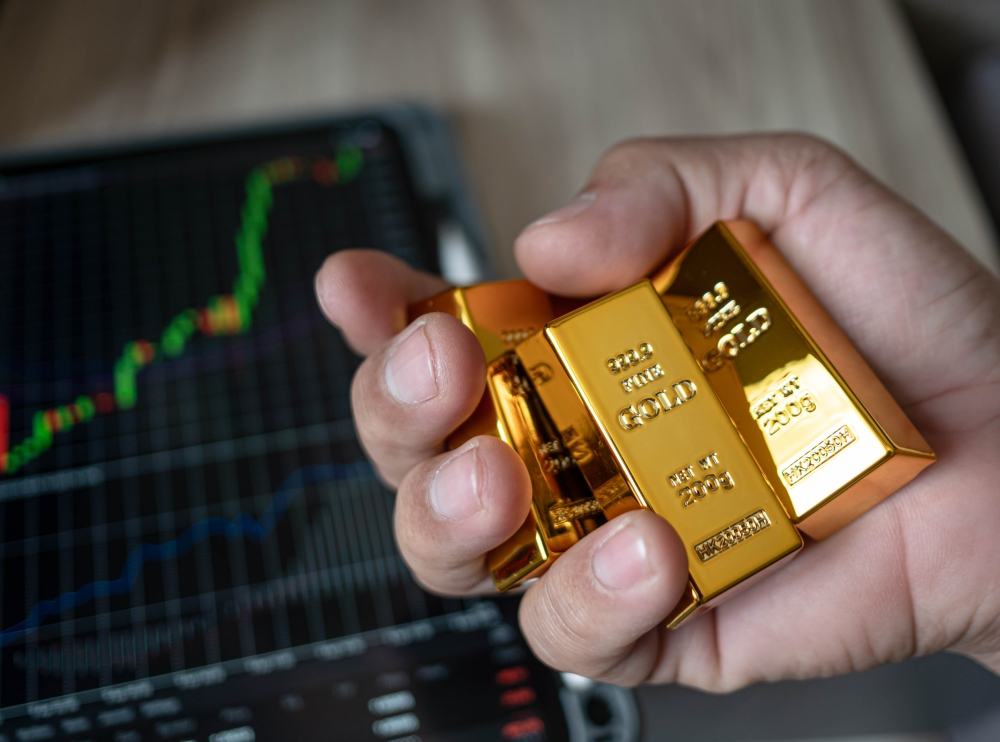
In a world teetering between successive crises and financial volatility, gold has returned to the forefront of the global economic scene as the “last language of confidence” amidst an economy described as chaotic. The year 2025 was not merely a passing phase in the history of the precious metal, but rather an exceptional chapter that reshaped the relationship between investors and citizens alike with both gold and silver.
Historical context and the return of the safe haven
Historically, gold has always served as a safety net during times of uncertainty. Since currencies were decoupled from gold in the last century, with every major economic shock, attention immediately turns to the precious metal. What we are witnessing in 2025 is not mere coincidence, but rather the result of accumulated economic factors that have made gold the only lifeline against the erosion of the purchasing power of paper currencies and the volatility of stock markets. Amidst increasing geopolitical complexities and inflationary pressures that are straining major economies, gold has regained its luster not only as an ornament but also as a steadfast store of value.
The influence of institutions and central banks
The current surge is not solely driven by individual demand; it is also supported by strategic moves by global central banks, which have continued to bolster their gold reserves. This institutional behavior is seen as a tacit acknowledgment that gold remains the most reliable safe-haven asset, insulating from the risks of sovereign debt and currency market volatility. This strong support gives current prices justifications that go beyond mere short-term speculation and reinforces the metal's status as an indispensable strategic asset in diversified investment portfolios.
From the global market to local goldsmiths
After unprecedented price surges that disrupted market calculations and spurred a public appetite for saving and hedging, pressing questions arose about the future of these prices. In this context, the "Al-Youm" team, comprised of editors Raed Al-Suwailem and Hudhaifa Al-Qurashi, along with photographer Murtada Boukhamsin, opened a broad analytical window into the story of gold. The journey began with monitoring global market indicators and extended to local jewelry stores, to gauge public sentiment and the shift in consumer behavior between the desire to acquire gold and the fear of the unknown.
Are we facing a bubble?
The most difficult question raised by the report and preoccupying economists this year remains: Is the meteoric rise we are witnessing sustainable growth built on solid economic fundamentals, or is it a price bubble waiting to burst? The answer requires considering all the data, which is what the report attempts to explore in depth.
To view the full report and understand the dimensions of the economic landscape, you can click on the image above.