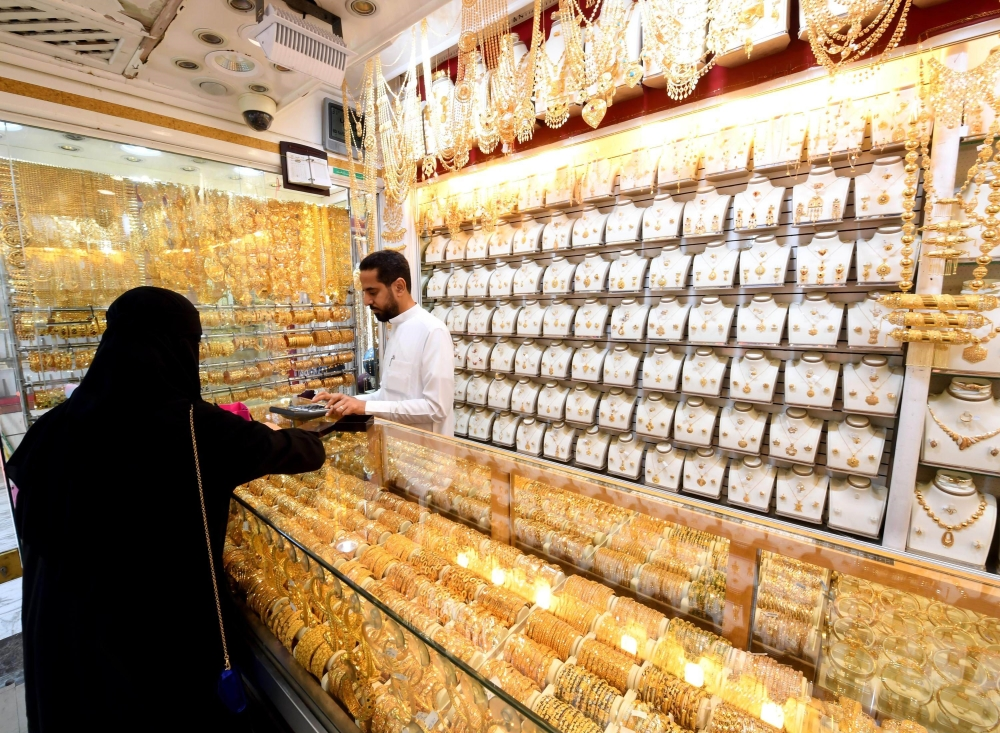
Gold prices in Saudi Arabia saw a notable increase at the start of trading on Monday, continuing the volatility that has characterized global gold markets. This rise directly impacts consumers and investors in the Kingdom, particularly regarding the price of a gram of 21-karat gold, the most popular and widely traded type in local markets.
The price of a gram of 21-karat gold today
of 21-karat gold in Saudi Arabia today, Monday, reached 542.75 Saudi riyals , compared to yesterday’s closing price of 537.75 riyals, reflecting the increase witnessed in the markets at the beginning of the week.
Gold prices today in Saudi Arabia for different karats
The price increase was not limited to 21-karat gold only, but included all karats traded in the Saudi market, and the prices were as follows:
- The price of a gram of 24-karat gold reached 620.5 riyals, up from 614.75 riyals yesterday.
- The price of a gram of 22-karat gold reached 568.75 riyals, compared to 563.5 riyals yesterday.
- The price of a gram of 18-karat gold: recorded 465.25 riyals, after it was 461 riyals at yesterday’s close.
- The price of a gram of 14-karat gold reached 362 riyals.
- The price of a gram of 12-karat gold has risen to 310.25 riyals.
of an ounce of gold was recorded at 19,296 riyals, while the price of a gold pound 4,342.75 riyals.
General context and historical background of gold prices
Gold has historically been considered a safe haven for investors worldwide, especially during times of economic crisis and geopolitical tension. When uncertainty increases in financial markets, investors turn to gold as a way to preserve the value of their wealth, driving up its price. Gold prices in the Saudi market are directly linked to global prices, with the precious metal priced in US dollars on international exchanges and then converted to Saudi riyals.
The importance of the event and its expected impact
Gold price fluctuations have far-reaching effects, extending beyond investors to the average consumer. Globally, gold prices are influenced by the decisions of major central banks, most notably the US Federal Reserve. When interest rates rise, demand for gold decreases because it does not generate returns, and vice versa. The strength of the US dollar also plays a pivotal role; the relationship between the two is generally inverse, with a stronger dollar leading to lower gold prices. Regionally, any geopolitical tensions in the Middle East increase demand for gold as a safe haven. Locally in Saudi Arabia, rising gold prices impact the jewelry market, as consumers may hesitate to buy, while savers and investors see bullion as an opportunity to enhance the value of their savings.