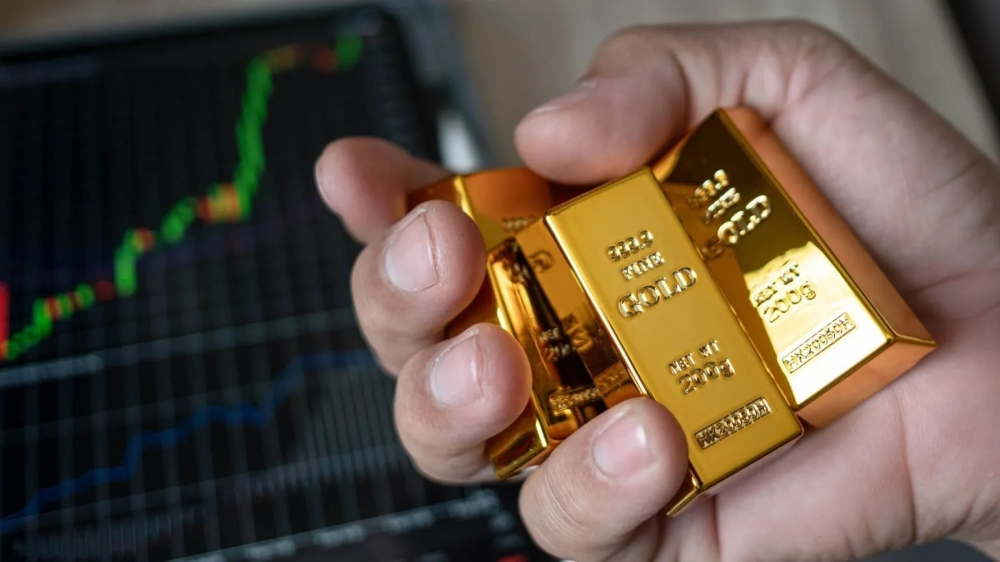
After an exceptional year for financial markets by all accounts, attention is now turning to gold price forecasts for 2026 , amid a consensus among major global financial institutions that the upward momentum will continue. This optimism comes after the precious metal achieved its strongest annual performance since 1971, reshaping the global investment landscape and reinforcing gold's status as a store of value during times of crisis.
Historical context: Why is gold considered a safe haven?
To understand the magnitude of the current figures, we must look back a little. Historically, gold has always been the standard that countries and individuals turn to in order to protect their wealth against inflation and the fluctuations of paper currencies. The performance witnessed in 2025, described as the strongest in more than 50 years, reflects a state of global economic anxiety and a search for safety, a scenario similar to what happened after the Nixon shock and the end of the dollar's link to gold, confirming that the current drivers of the rise are based on strong economic fundamentals and are not merely a price bubble.
2025 Harvest: Record-Breaking Gold and Silver Prices
The year 2025 was a pivotal year in the history of precious metals, as prices recorded significant leaps:
- Gold: The first quarter began at levels of $3066 per ounce, ending the year with amazing gains of 65%, recording $4312 on the last trading day.
- Silver: It was the shining star with an unexpectedly high performance, jumping from $29.5 in January to over $72 by the end of the year, achieving a rise of over 150%.
Major banks' forecasts for 2026
Based on this data, major investment banks have updated their outlook, with forecasts for the average price per ounce ranging between $4,500 and $4,700, with scenarios suggesting a break below the $5,000 barrier:
- Bank of America (BofA) and Societe Generale: They expect the price to reach $5,000 per ounce during 2026.
- Goldman Sachs predicts that the yellow metal will reach $4,900 by December 2026.
- HSBC: Supports the $5,000 scenario, citing the weakness of the dollar and geopolitical risks.
- UBS Bank: Indicates that lower real interest rates could push prices towards $4,700.
Influencing factors and expected economic impact
The rise in gold prices is not solely driven by speculation, but also by profound geopolitical and economic factors. Ongoing international tensions, economic uncertainty, and the US Federal Reserve's interest rate policies are all putting pressure on the dollar and increasing gold's appeal. Domestically and regionally, this rise could increase the value of national reserves for countries with substantial gold holdings, but conversely, it could raise the cost of jewelry and industrial products made from precious metals, impacting consumption patterns in emerging markets.
Will the situation be reversed in the second half of 2026?
Despite the prevailing optimism, some analyses warn of a potential price correction. Forecasts indicate that the first half of 2026 will see continued growth, driven by rising public debt and policy instability. However, prices may begin a gradual decline in the second half of the year, coinciding with the Federal Reserve's conclusion of its monetary easing cycle. This could restore some strength to the dollar and reduce the appeal of non-yielding assets like gold.