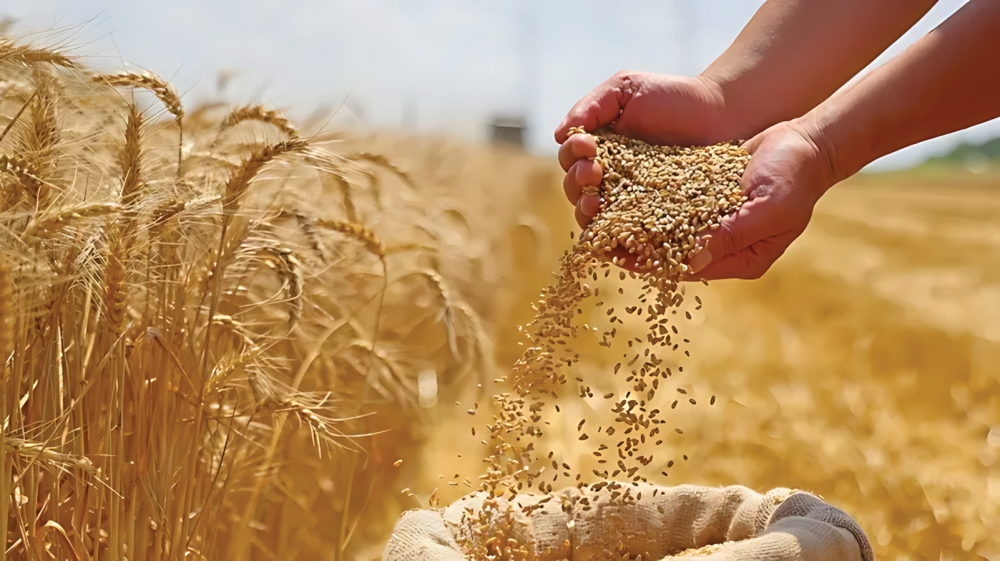
Global wheat prices have fallen sharply to their lowest level in a week, amid growing expectations of a global supply glut, fueled by improved weather conditions in key US growing regions. This decline adds further pressure to a grain market that has experienced sharp fluctuations in recent years.
Specifically, wheat futures for May delivery on the Chicago Board of Trade fell by as much as 1.4%, settling at $5.4075 per bushel. Grain and oilseed markets were generally affected, with corn and soybean prices also experiencing slight declines. This drop was partly due to a temporary decrease in market liquidity, as most Asian markets were closed for the Lunar New Year holiday, reducing global trading volumes.
General context and market background
This price decline comes in a complex global context. Wheat markets have experienced extreme volatility since the start of the Russian-Ukrainian conflict, given that both countries are among the world's largest grain exporters and the Black Sea region is known as the "breadbasket of the world." The war disrupted supply chains and increased shipping and insurance costs, driving prices to historic highs in 2022 and raising serious concerns about global food security, particularly in developing and food-importing countries.
However, the recent period has seen an oversupply from the Black Sea region, particularly as Russia continues to export large quantities at competitive prices, creating downward pressure on global prices. Estimates predict another large Russian harvest this year, further reinforcing expectations of a global surplus.
Importance and expected impact
Internationally, the decline in wheat prices is positive news for importing countries, particularly those in the Middle East and North Africa, such as Egypt, the world's largest wheat importer. This drop could help alleviate domestic inflationary pressures and reduce import bills, easing the burden on these countries' budgets and helping to stabilize prices for bread and other essential food items.
For exporting countries like the United States, improved weather following a severe cold snap promises a bountiful harvest, but continued low prices could negatively impact farmers' incomes. The U.S. Climate Prediction Center forecasts warmer, drier weather across much of the American Plains, which should improve crop growth prospects and support bearish price indicators stemming from the anticipated global surplus.