Worsening humanitarian crisis: Record rise in landmine victims
The Landmine Monitor's latest annual report reveals a disturbing reality: 2024 saw a sharp rise in the number of deaths and injuries caused by landmines and explosive remnants of war. According to the data, 6,279 victims were recorded in 52 countries and territories, an increase of nearly 500 people compared to the previous year, and the highest annual toll since 2020. These figures reveal a profound humanitarian tragedy, with civilians comprising a shocking 90% of all victims, nearly half of whom are children who bear the brunt of conflicts in which they have no part.
Historical context: The Ottawa Treaty and efforts to ban landmines
This tragic increase in casualties represents a setback to decades of international efforts. In 1997, the world adopted the Anti-Personnel Mine Ban Treaty, also known as the Ottawa Treaty, which entered into force in 1999. The treaty aimed to end the use, stockpiling, production, and transfer of these indiscriminate weapons, and obligated states to destroy their stockpiles and clear contaminated areas. It has been ratified by 164 countries and has significantly reduced the number of casualties globally over the past two decades. However, key countries such as Russia, the United States, China, India, and Pakistan have not joined the treaty, limiting its overall effectiveness, particularly in current conflict zones.
Geopolitical challenges threaten the international treaty
The report warned of “unprecedented challenges” facing the international ban, as five NATO member states (Estonia, Finland, Latvia, Lithuania, and Poland) announced their intention to withdraw from the treaty, citing concerns about “potential Russian aggression.” This trend represents a serious erosion of the international consensus that formed the basis of the treaty. In a related development, the International Campaign to Ban Landmines criticized Ukraine’s attempt to suspend its obligations under the treaty due to the war, asserting that such a measure is unacceptable. Campaign Chair Tamar Gabilnik stated, “Backing down is not an option; the human cost is too high.”.
Global hotspots: from Burma to Ukraine
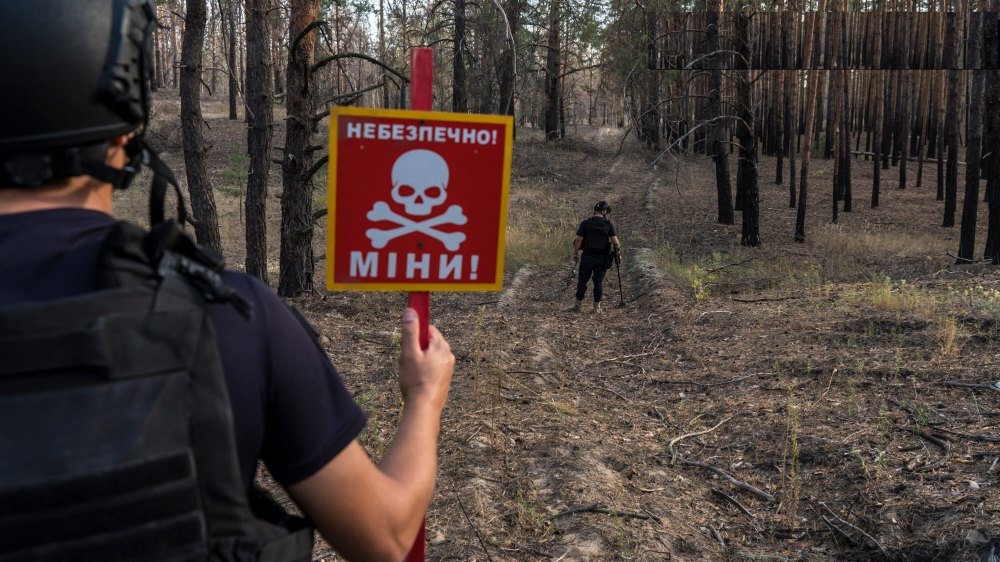
The dramatic increase in casualties is primarily due to the widespread use of landmines in conflicts in countries not party to the treaty. For the second year running, Myanmar (Burma) recorded the highest number of casualties globally, with 2,029 killed and injured. Syria followed with 1,015 casualties, where civilians returning to their homes after years of war face deadly danger. In Ukraine, the report documented nearly 300 casualties, confirming that Russia has used antipersonnel mines extensively since the start of its invasion in February 2022.
The decline in funding and its impact on the cleansing operations
This crisis coincides with a significant decline in funding for mine clearance and victim assistance programs. The year 2024 saw a marked decrease in cleared areas due to resource shortages and deteriorating security conditions. Even more alarming, funding for victim assistance, which constitutes less than 5% of total funding, has fallen by 25%. Future concerns are heightened by the potential reduction in US aid, the world's largest donor to mine clearance programs, which threatens to exacerbate the humanitarian crisis in the coming years and put even more innocent civilian lives at risk.