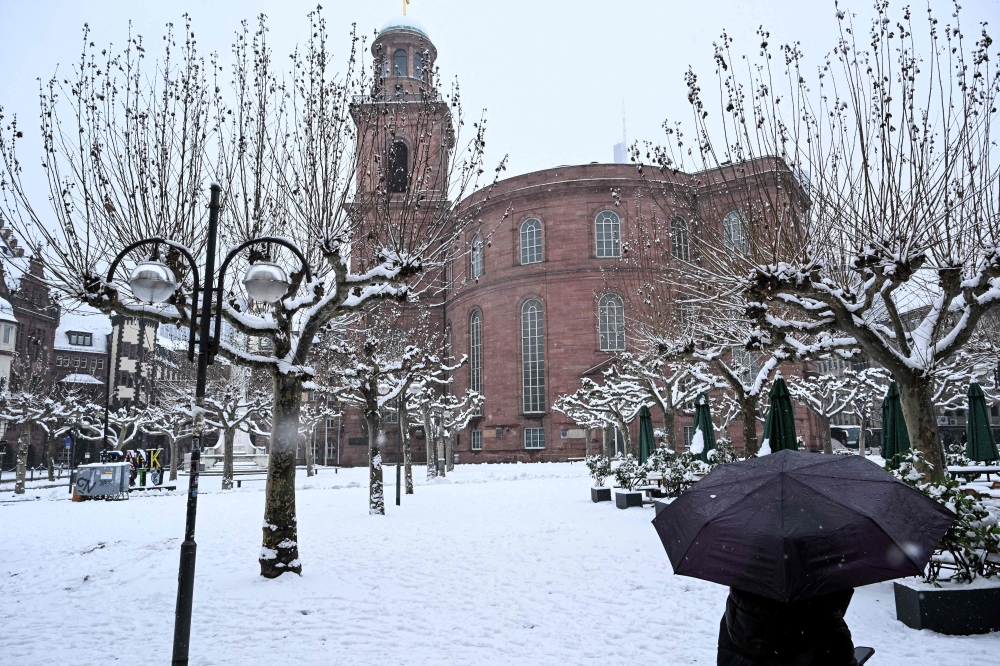
Large areas of Germany, especially in the northeastern states, experienced a near-total paralysis of transportation this morning, as a result of a strong winter storm accompanied by heavy snowfall that reached a height of 25 centimeters in some areas, in addition to freezing rain that turned roads into dangerous icy surfaces.
Storm impact on transport infrastructure
Severe weather conditions caused widespread disruption during the morning rush hour, with authorities reporting a significant increase in traffic accidents in states such as Saxony, Brandenburg, and Mecklenburg-Western Pomerania. National rail operator Deutsche Bahn announced significant delays and cancellations of long-distance train services, confirming that the impact would extend across the entire southern German rail network, including vital lines connecting major cities like Berlin, Hamburg, and Hanover.
Paralysis in the capital, Berlin
In Berlin, the capital city heavily reliant on its public transport network, residents faced significant commuting difficulties. Public transport companies were forced to suspend tram services entirely on several lines due to frozen overhead power lines, further straining other modes of transport. Restrictions and limited operation of bus and subway services were also implemented in various parts of the city to ensure passenger safety.
General context and preparedness for winter
Germany is known for its preparedness for harsh winters, boasting a sophisticated infrastructure and dedicated emergency services (Winterdienst) for snow removal and road salting. However, extreme weather events, particularly freezing rain that forms a layer of black ice (Glatteis), can overwhelm the capacity of these services to respond immediately, leading to serious accidents and traffic disruptions. This storm comes within a global context of increasing frequency of extreme weather events, a trend scientists link to climate change.
Economic and social importance and impacts
The storm's impact extends far beyond disrupting daily life, with broader economic and social repercussions. The disruption of train and truck traffic negatively affects supply chains and the movement of goods in Germany, the economic heart of Europe. The difficulty employees face in reaching their workplaces also leads to lost productivity. On a social level, the conditions have forced the closure of some schools and disrupted public life, while emergency and rescue teams are working around the clock to respond to incidents and provide assistance to those affected.