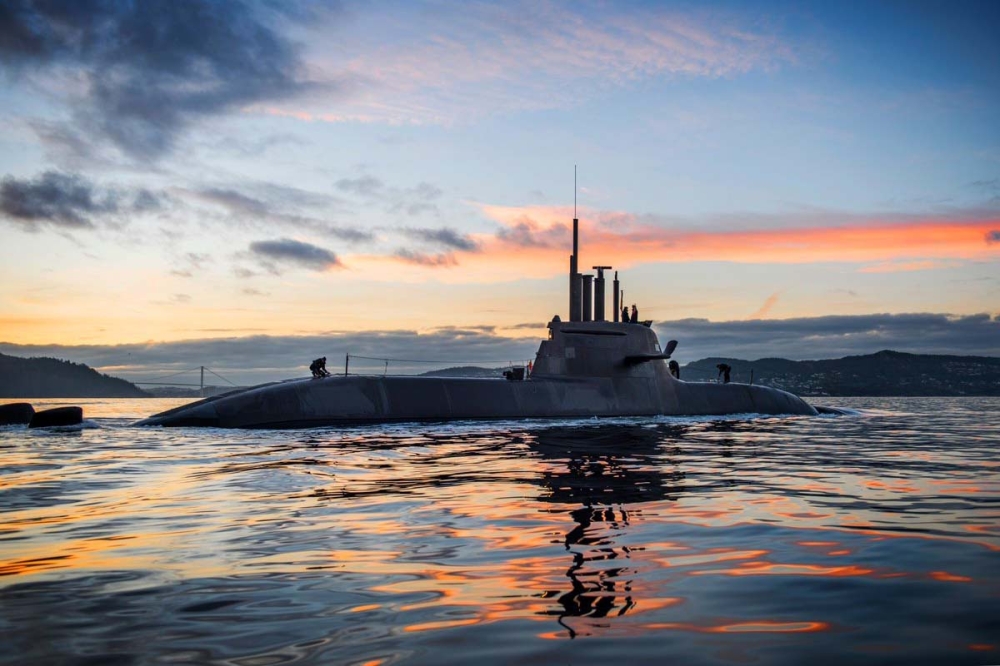
Germany and India are racing against time to finalize a massive $8 billion defense deal aimed at producing advanced submarines, marking New Delhi's largest naval defense procurement to date. International media outlets, most notably Bloomberg, quoted informed sources as saying that negotiations between the two countries have reached a very advanced stage, with the agreement including a crucial clause concerning the transfer of military manufacturing technology to India.
Advanced technologies to enhance maritime sovereignty
According to leaked details, the new submarines will be equipped with an Air-Independent Propulsion (AIP) system, a revolutionary technology that gives conventional submarines superior stealth capabilities. This system allows the submarine to remain submerged for much longer periods compared to submarines that rely solely on conventional diesel-electric propulsion, thus increasing their operational range and making them extremely difficult for enemy radar to detect. This move is intended to bolster the Indian Navy's strategic deterrent capabilities in deep waters.
Project 75I context and the need for updating
This deal falls under India's ambitious Project 75I, which aims to modernize the Indian Navy's aging submarine fleet. Through this project, New Delhi seeks to replace its older submarines with modern vessels capable of protecting its interests in the Indian Ocean. India's requirement for technology transfer and local submarine manufacturing is part of Prime Minister Narendra Modi's "Make in India" initiative, designed to bolster the country's defense industrial base.
Geopolitical dimensions and balance in the Indian Ocean
The significance of this deal extends beyond its technical aspects, carrying profound geopolitical implications. India is actively seeking to counter China's growing influence in the Indo-Pacific region, where Beijing has significantly expanded its naval presence in recent years. India's acquisition of advanced German submarines will reshape the naval balance of power in the region and grant the Indian Navy a qualitative advantage in protecting vital maritime trade routes.
A shift in Indian arms sources
Internationally, this deal represents a strategic shift in India's arms policy, which for decades relied on Russian weaponry. Amid current global tensions and sanctions against Moscow, New Delhi has begun diversifying its defense partners, turning westward, specifically to Germany, France, and the United States. For Germany, this deal is a golden opportunity to boost its defense exports and solidify its strategic partnership with the world's largest democracy, reflecting Berlin's desire to play a larger security role on the international stage.