Sharp European statements and Chinese warnings
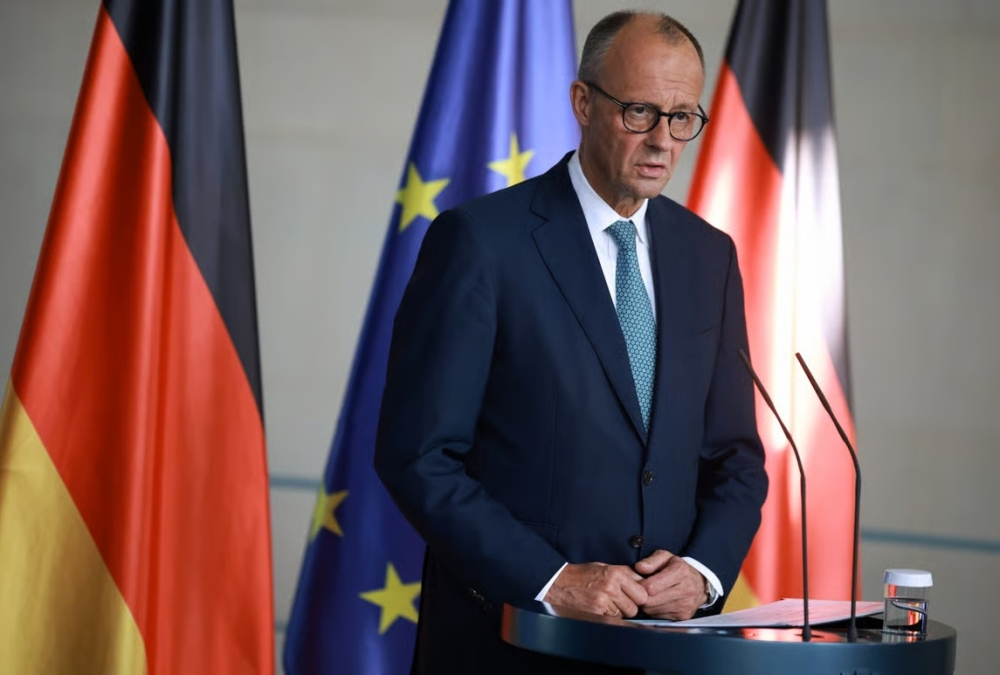
In a statement reflecting growing international concern over Tehran's policies, German opposition leader Friedrich Merz asserted that the days of the ruling regime in Iran are numbered. These remarks came amidst a tense period marked by escalating threats from the previous US administration under Donald Trump, which hinted at the possibility of military intervention against the Islamic Republic.
During a press conference, Merz, who heads the Christian Democratic Union (CDU), outlined his vision for the future of the Iranian regime, saying: “A regime that can only remain in power through sheer violence and terrorism against its own people has its days numbered.” He added firmly: “It may be a matter of weeks, but this regime has no legitimacy to rule.”.
On the other side of the international scene, a contrasting Chinese stance emerged, with Beijing strongly warning against being drawn into a “military adventure” in the Middle East. In a speech before the Security Council, the Chinese ambassador to the United Nations stressed that “the use of force cannot solve problems, and any military adventure will only push the region toward the abyss of the unknown,” calling for restraint and a return to diplomacy.
Historical background of tension and the nuclear agreement
These tensions were not a product of the moment, but rather an extension of decades of hostility between Iran and Western countries, specifically the United States, since the Islamic Revolution in 1979. The Iranian nuclear program has been the most prominent point of contention, as it has raised international suspicions about the possibility that Tehran is seeking to develop nuclear weapons under the guise of peaceful uses of energy.
In 2015, a historic diplomatic achievement was reached with the Joint Comprehensive Plan of Action (JCPOA), also known as the Iran nuclear deal, which Iran concluded with the P5+1 group of nations. Under this agreement, Iran agreed to significantly restrict its nuclear program in exchange for the lifting of economic sanctions. However, the Trump administration's unilateral withdrawal from the agreement in 2018 and the reimposition of its "maximum pressure" policy shattered this delicate balance and reignited tensions.
Importance and potential impacts on the international stage
Any military escalation against Iran carries serious repercussions that extend far beyond its borders. Regionally, it threatens to ignite a wider conflict that could draw in other Middle Eastern states, such as Saudi Arabia and Israel, as well as Iran's proxies in the region, like Hezbollah in Lebanon and the Houthis in Yemen. The stability of global shipping lanes, particularly the Strait of Hormuz through which a significant portion of the world's oil passes, would also be severely jeopardized, potentially leading to a dramatic surge in global energy prices.
Internationally, the crisis revealed a clear division in positions. While the United States under Trump adopted a hardline approach, European powers, including Germany and France, attempted to preserve the nuclear agreement and seek diplomatic solutions, while continuing to criticize Iran's human rights record and regional interventions. In contrast, China and Russia sided more closely with Iran, opposing the policy of sanctions and military threats, thus complicating the geopolitical landscape and making it more difficult to reach lasting solutions.