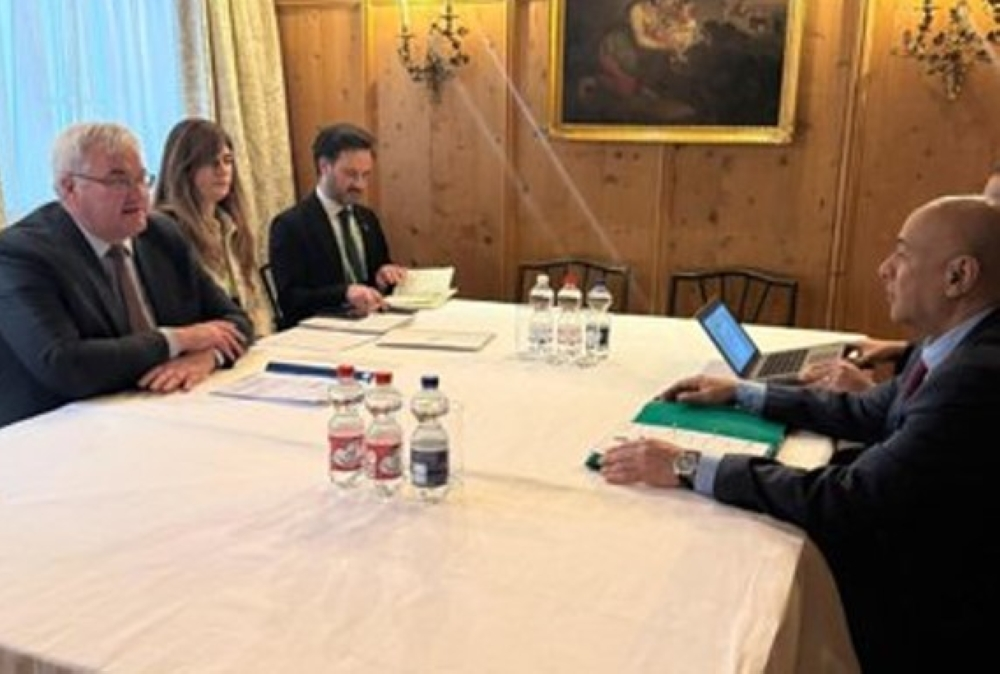
In a significant diplomatic move on the sidelines of the 62nd Munich Security Conference, His Excellency Mr. Jassem Mohammed Al-Budaiwi, Secretary General of the Cooperation Council for the Arab States of the Gulf (GCC), met with Mr. Andriy Sybiha, Minister of Foreign Affairs of Ukraine. The meeting provided a platform to discuss ways to strengthen and develop bilateral relations between the GCC and Ukraine, in a manner that serves common interests and contributes to addressing current regional and international challenges.
Background of the meeting: Active diplomacy in an international forum
This meeting comes at a complex international juncture, as the Munich Security Conference is one of the world's leading forums, bringing together leaders and decision-makers to discuss pressing security issues. The war in Ukraine has emerged as a key item on the conference agenda, making bilateral meetings with Ukrainian officials particularly important. For their part, the Gulf Cooperation Council (GCC) states seek to play a balanced and constructive role on the international stage, leveraging their economic weight and multilateral diplomatic relations.
Strategic importance of Gulf-Ukrainian relations
Relations between the Gulf Cooperation Council (GCC) states and Ukraine have gained increasing importance, particularly since the outbreak of the crisis in 2022. The GCC states have adopted a position advocating for peaceful solutions, respect for international law and state sovereignty, and have provided substantial humanitarian aid to Ukraine. Furthermore, the role of some GCC states, such as Saudi Arabia and the United Arab Emirates, in successful mediation efforts to exchange prisoners has been prominent, reflecting the ability of Gulf diplomacy to build bridges of trust between conflicting parties.
Expected impact and future prospects
This meeting is expected to enhance political coordination between the two sides and explore new avenues for cooperation in vital areas such as energy and food security. Ukraine is a key player in global grain markets, while the Gulf states are a cornerstone of energy market stability. The dialogue also opens the door to potential Gulf participation in future reconstruction efforts in Ukraine, reflecting a long-term strategic vision that extends beyond managing the current crisis. The continuation of this dialogue underscores the desire of both parties to build a sustainable partnership that serves the goals of development and stability at both the regional and international levels.