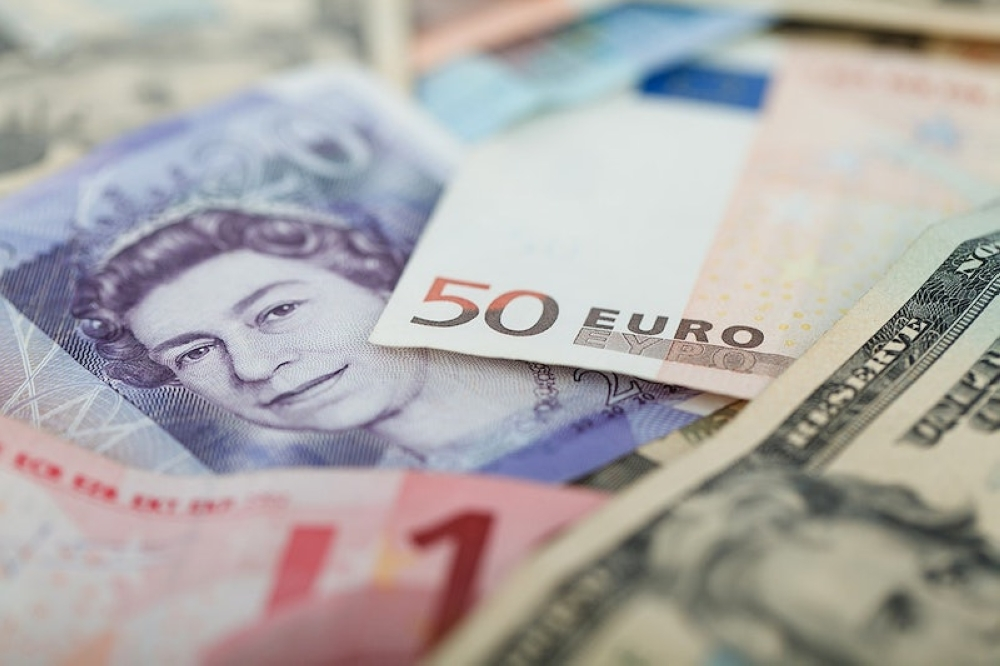
The British pound experienced a notable decline during Thursday's trading session, falling against both the US dollar and the euro. This decline comes amidst volatility in global financial markets, influenced by a range of economic and geopolitical factors. At the close of trading in London, the pound was trading at $1.3554, a decrease of 0.80%. Meanwhile, the pound also weakened against the euro, falling to €1.1479, a drop of 0.74%.
This negative performance of the British pound coincided with a decline in the local stock market, with the FTSE 100, London's main index comprising the 100 largest listed companies by market capitalization, closing down 0.90%. The index lost 93.12 points, settling at 10,309.22 points, reflecting a cautious sentiment among investors.
Historical context and the importance of the British pound
The British pound (GBP) is one of the world's oldest currencies still in circulation and holds a prominent position in the global financial system as a major reserve currency. Historically, the value of the pound has been influenced by major events that have shaped the course of the British and global economies. From the UK's exit from the Bretton Woods system, through the Black Wednesday crisis of 1992, to the global financial crisis of 2008, the currency has demonstrated both resilience and volatility. In the last decade, the UK's decision to leave the European Union (Brexit) in 2016 had the most significant impact on the currency, ushering in a new era of uncertainty and sharp fluctuations against other currencies.
Expected economic effects of the pound's decline
Fluctuations in the value of the British pound have direct repercussions for the UK economy and the international landscape. Domestically, a weaker pound makes imports more expensive, potentially contributing to inflationary pressures and raising the cost of living for British citizens. Conversely, British exports benefit from a weaker pound, as British goods and services become cheaper and more competitive in global markets, which can support sectors such as manufacturing and tourism.
Regionally and internationally, the GBP/USD currency pair, known in forex markets as the "Cable," is one of the most traded pairs in the world, and its volatility reflects the relative health of the UK and US economies. The relationship between the pound and the euro (GBP/EUR) is particularly important given the enormous volume of trade between the UK and the Eurozone. Therefore, any movements in these exchange rates directly affect companies engaged in international trade and require close monitoring by monetary policymakers at the Bank of England and the European Central Bank to make appropriate decisions regarding interest rates and other policies to achieve economic stability.