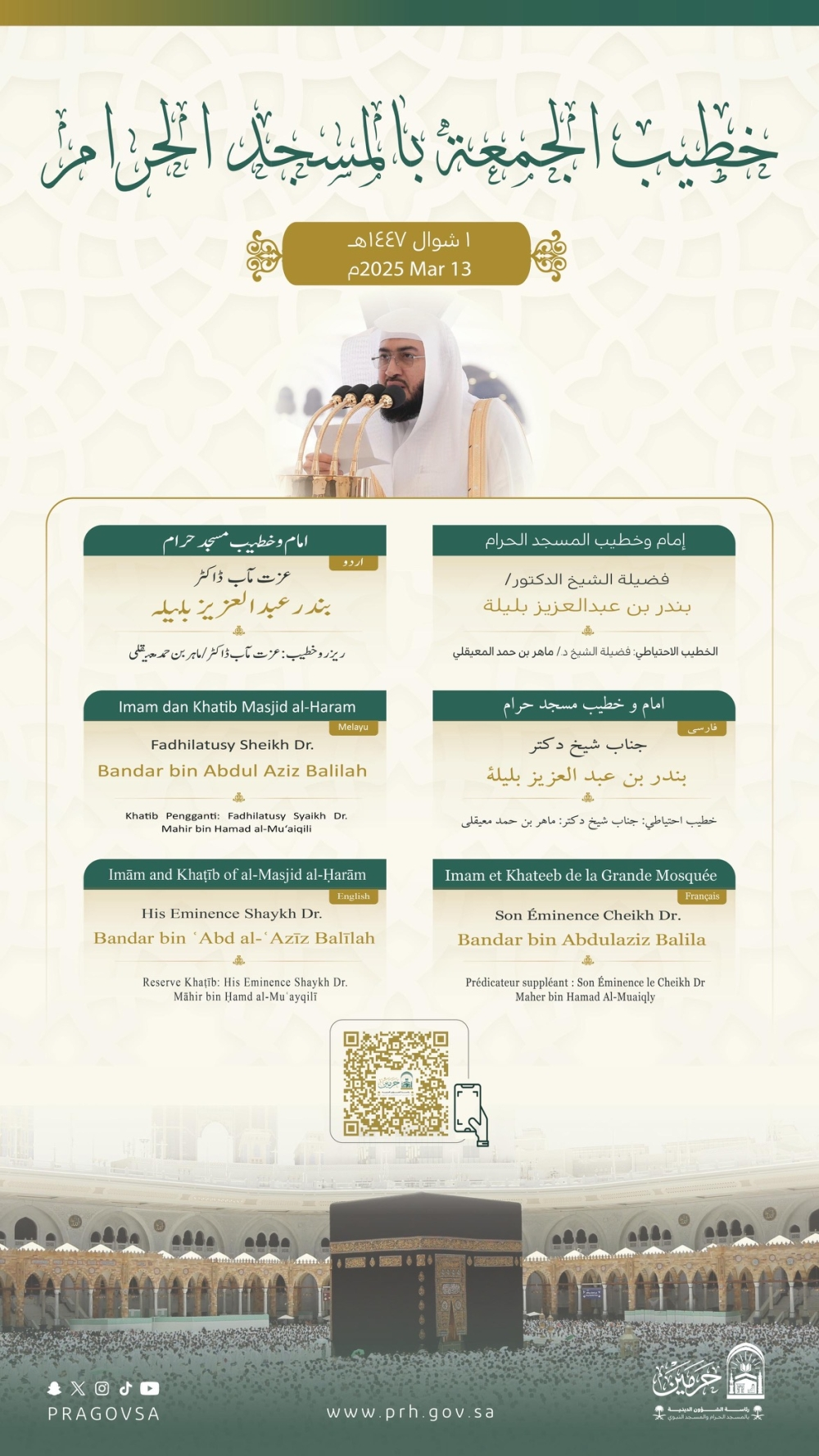
The General Presidency for Religious Affairs at the Grand Mosque in Mecca and the Prophet's Mosque in Medina announced the names of the imams and preachers the Friday sermon at the Two Holy Mosques on the first day of Shawwal, 1447 AH. This announcement comes as part of ongoing efforts to organize the affairs of leading prayers and delivering sermons in the holiest places on earth, ensuring the delivery of a moderate and impactful religious message to millions of Muslims. It was decided that Their Eminences, Sheikh Dr. Bandar Balila and Sheikh Dr. Abdulmohsen Al-Qasim, will undertake this noble task on this blessed day, which coincides with the beginning of Shawwal.
Leading prayers at the Grand Mosque in Mecca
His Eminence Sheikh Dr. Bandar Balila will lead the prayers and deliver the sermon at the Grand Mosque in Mecca. This appointment is part of the comprehensive religious services program overseen by the General Presidency for the Affairs of the Two Holy Mosques, which primarily aims to enhance guidance and instruction for visitors to the Holy Mosque. Through these selections, the Presidency seeks to enrich the spiritual experience of worshippers and provide religious content that resonates with the hearts and aspirations of the Muslim community on this blessed occasion.
Sheikh Al-Qasim and the Friday sermon at the Prophet's Mosque
In Medina, Sheikh Dr. Abdulmohsen Al-Qasim will lead the prayers and deliver the sermon at the Prophet's Mosque. Through these meticulous arrangements, the Presidency is working to ensure that a moderate and impactful religious message reaches the large numbers of worshippers and visitors who flock to the Prophet's Mosque at the beginning of Shawwal. The selection of prominent religious and scholarly figures reflects the leadership's commitment to providing the best possible guidance and services to the pilgrims and visitors to the city of the Prophet Muhammad (peace and blessings be upon him).
The long history of the Friday sermon pulpit in the Two Holy Mosques
of the Friday sermon in the Two Holy Mosques holds a profound historical and Islamic significance dating back to the dawn of Islam. From the time of the Prophet Muhammad (peace be upon him) and the Rightly Guided Caliphs, this pulpit has been, and continues to be, a beacon of guidance and a launchpad for spreading the values of tolerance and moderation. Throughout the centuries, eminent scholars and reciters have ascended this pulpit, contributing to the guidance of the Muslim community and the unity of its ranks. In modern times, the Kingdom of Saudi Arabia continues this blessed tradition by meticulously selecting imams and preachers who possess vast knowledge and profound wisdom, thus reinforcing the continuity of this timeless historical mission.
The regional and international impact of the religious message from the holy sites
The impact of sermons delivered in Mecca and Medina extends far beyond the local level, leaving a profound mark on both regional and international levels. The words emanating from the Two Holy Mosques resonate throughout the Muslim world, followed by millions via live broadcasts and various media outlets. This widespread influence makes the sermon a powerful tool for strengthening Islamic solidarity, addressing contemporary intellectual challenges, and disseminating the true image of Islam as a religion that calls for peace and peaceful coexistence among peoples. These organizational arrangements reaffirm the Kingdom's leading role in serving Islam and Muslims, providing a safe and well-organized environment that enables pilgrims to perform their religious rites with ease and tranquility.