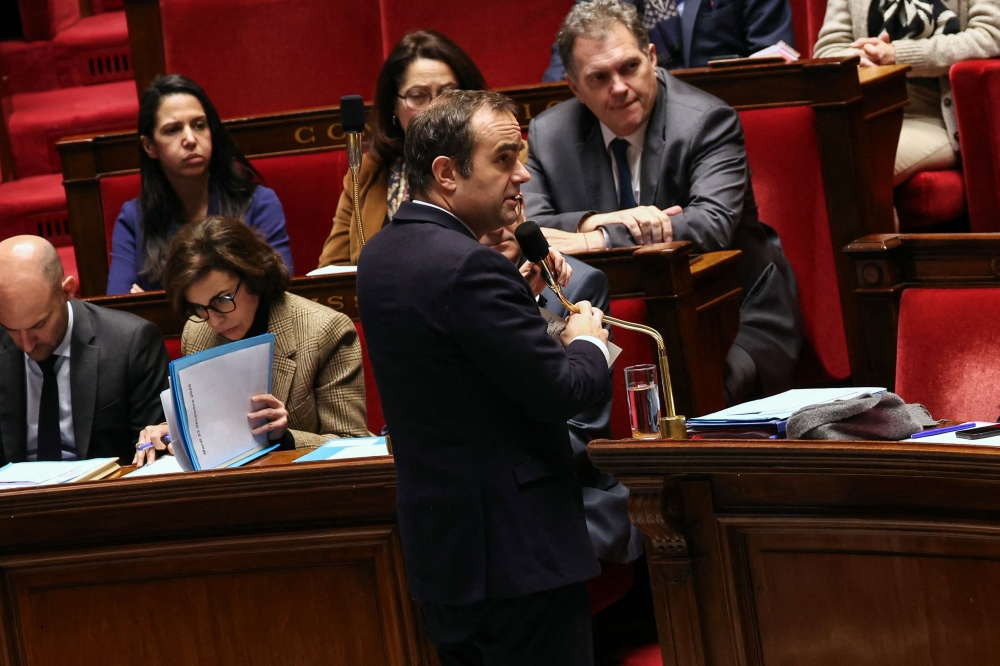
The deeply divided French parliament begins crucial debates today on an emergency bill aimed primarily at averting a US-style government shutdown as next week's critical deadline approaches. This desperate move comes after the collapse of complex political negotiations over the 2026 budget, plunging the country into an unprecedented financial and legislative crisis.
In a frantic race against time, with only a few days remaining before the new year, French President Emmanuel Macron held an emergency meeting with his government on Monday night, during which the final touches were put on a shortened draft law. According to a cabinet statement, this draft aims to "ensure the continuity of national life and the provision of public services," including tax collection mechanisms and the disbursement of funds to local authorities, based on the spending levels approved in the 2025 budget, as a temporary solution to avoid a complete shutdown.
Background to the political crisis and parliamentary division
This financial crisis cannot be separated from the tense political context that France has been experiencing for some time. The current parliamentary landscape is marked by significant fragmentation as a result of elections that produced a National Assembly in which no single bloc holds an absolute majority. This deep division among the three main camps – the National Rally (far right) led by Marine Le Pen, the Alliance of Left Forces, and the centrist minority government loyal to President Macron – has made passing financial legislation a grueling political battle, with each bloc using all available leverage to strengthen its position.
Economic concerns and international repercussions
The significance of this event extends far beyond France's borders. France is the second-largest economy in the Eurozone, and any prolonged financial instability there could send shockwaves through European markets. Investors and credit rating agencies are watching closely as the French president struggles to reduce the massive budget deficit to 5%, a task that seems virtually impossible given the current political deadlock. Failure to pass a stable budget could lead to higher borrowing costs and further undermine market confidence in the French economy, which is still recovering from previous turmoil.
Voting path and predictions
On the procedural front, members of the National Assembly introduced several amendments to the emergency bill, which is expected to be voted on later today before being sent to the Senate. Despite the sharp disagreements, observers predict the bill will pass to avoid administrative chaos. However, French Finance Minister Roland Lescure warned on BFM TV, "We need a budget as quickly as possible so we can move forward, and the longer the temporary budget remains in place, the more it will cost the state and its citizens.".
French Prime Minister Sebastien Lecornu is expected to make a public address later today to clarify the financial situation, at a time when all parties realize that the next step will be the most difficult: building a consensus around a realistic budget for 2026 to avoid a new political crisis that could bring down the government.