A politically motivated act of violence shakes France and sparks international reactions
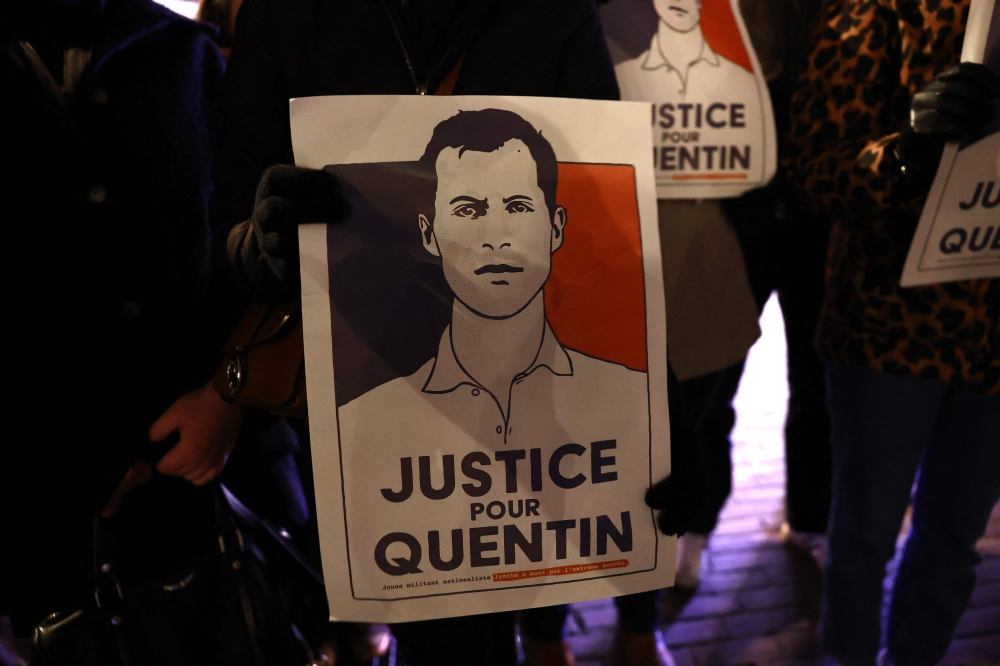
The killing of a far-right activist in France sparked a wave of condemnations and sharp reactions that transcended national borders, escalating into a diplomatic row between Paris on one side, and Washington and Rome on the other. The story began when the administration of former US President Donald Trump condemned what it called "terrorism" in France, warning of a rise in "left-wing violence," following the beating death of 23-year-old activist Quentin Duranc.
According to reports, Duranc died from severe head injuries after being attacked by at least six people in Lyon, on the sidelines of a protest against a conference attended by European Parliament member Rima Hassan of the radical left-wing party La France Insoumise. This incident has added a new dimension to the already tense political climate in the country.
General context: Rising political polarization in Europe
This incident did not occur in a vacuum, but rather within the context of the sharp political polarization that France and many other European countries are experiencing. In recent years, tensions have escalated between far-right and radical left-wing groups, and the conflict has often spilled from political and media platforms onto the streets. Historically, France has witnessed similar acts of violence, such as the 2013 murder of left-wing activist Clément Méric by far-right extremists, reflecting the deep ideological divisions within French society. These divisions are fueled by contentious issues such as immigration, national identity, and economic policies, creating a fertile ground for the growth of extremism on both sides.
Diplomatic repercussions and international dimensions
The incident quickly gained international attention. Sarah Rogers, identified as the U.S. Under Secretary of State for Public Diplomacy, stated that Duranke's murder underscored the need for a firm response to political violence and terrorism. The State Department's Bureau of Counterterrorism also issued a separate statement warning of "the rise of violent left-wing extremism.".
The French response was swift, with the official “France Responds” account on the “X” platform responding to the American statements by publishing statistics comparing murder rates in the United States and France, which show a significant disparity in favor of France, implicitly suggesting that Washington should attend to its internal problems first.
Italy, for its part, entered the fray, with right-wing Prime Minister Giorgia Meloni, who enjoys friendly relations with Trump, describing the incident as “a wound for all of Europe.” This statement provoked a sharp rebuke from French President Emmanuel Macron, who criticized her interference in French domestic affairs, adding a new chapter of tension to Franco-Italian relations, which have been marked by frequent disagreements on several issues.
The importance of the event and its expected impact
The significance of this debate lies in its revelation of the entanglement of domestic politics and international diplomacy in our time. Issues of political violence are no longer merely local concerns; they have become fodder for international polarization, with ideologically aligned political forces seeking to support one another across borders. This incident is expected to further isolate extremist political movements in France and may push the French government to take stricter measures against violent groups of all stripes. Internationally, this event reflects the depth of the ideological divide among Western governments and highlights how a local incident can become a tool in global political conflicts.