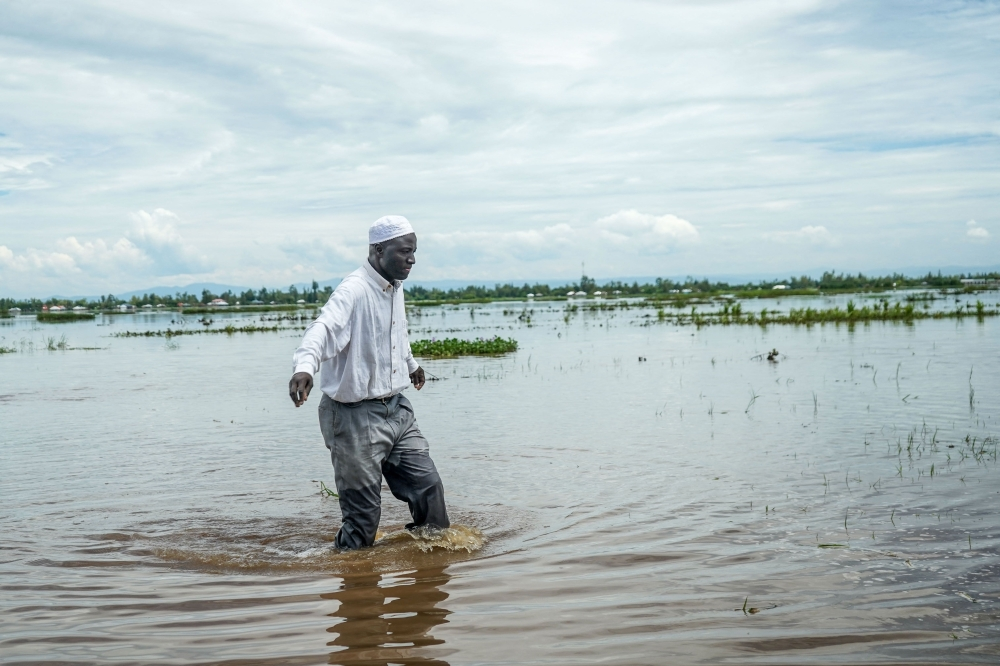
East Africa has been hit hard by climate change, with floods in Kenya , caused by torrential and continuous rains, claiming the lives of at least 81 people. These torrential rains continue to fall across much of the country, threatening to worsen the humanitarian crisis. Local authorities have declared a state of emergency in several affected areas to provide necessary support to those affected and attempt to control the catastrophic consequences of this natural disaster.
In detailing the incident, Kenyan National Police spokesperson, Meshiri Nyaga, stated in an official statement carried by Agence France-Presse that the cumulative death toll had risen significantly to 81 victims. He added that the sudden and devastating floods swept through vast areas and several counties, displacing approximately 2,690 families from their homes in search of safe shelter. The damage was not limited to the loss of life; the disaster also caused widespread destruction of essential infrastructure, including roads and bridges, as well as the destruction of private and public property and agricultural crops.
Climate change and the history of flooding in Kenya
Historically, flooding in Kenya has not been an isolated event, but rather part of a complex climatic pattern influenced by global phenomena such as El Niño and the Indian Ocean Dipole (IOD). Recently, global and local meteorological agencies have warned of increased rainfall in the Horn of Africa. Kenya, with its diverse geography encompassing valleys and low-lying plains, is highly susceptible to water accumulation and flash floods. In recent years, the country has experienced severe droughts followed by torrential rains, rendering the parched soil unable to absorb large volumes of water quickly. This explains the rapid formation of flash floods that inundate villages and cities alike.
Humanitarian and economic repercussions of the disaster
This natural disaster has profound dimensions and impacts that extend far beyond the local level, affecting the entire region. Locally, the displacement of thousands of families presents an immense challenge for the Kenyan government and aid organizations, highlighting the urgent need to provide temporary shelter, food, clean drinking water, and healthcare to prevent outbreaks of waterborne diseases such as cholera and malaria. Economically, the destruction of infrastructure is paralyzing internal trade and hindering the delivery of emergency aid, not to mention the devastating losses in the agricultural sector, on which a large portion of the population depends for their livelihoods.
International community response and regional impact
Regionally and internationally, this crisis highlights the vulnerability of East African countries to extreme climate change. These events necessitate urgent intervention from the international community and humanitarian organizations to provide financial and logistical support. The recurrence of such disasters also compels the international community to reassess climate adaptation plans in developing countries. Collaboration between the Kenyan government and UN agencies is crucial at this stage to alleviate the suffering of those affected and rebuild the devastated areas on a more resilient foundation, better equipped to withstand future climate-related disasters.