The skies above Arar, in Saudi Arabia's Northern Borders region, are preparing to host a remarkable astronomical spectacle: the first quarter phase of the crescent moon marking the beginning of Ramadan 1447 AH. This event, eagerly anticipated by astronomy enthusiasts and specialists alike, represents a key phase in the lunar cycle and holds significant scientific and cultural importance.
The scientific importance of the first quadrant phase
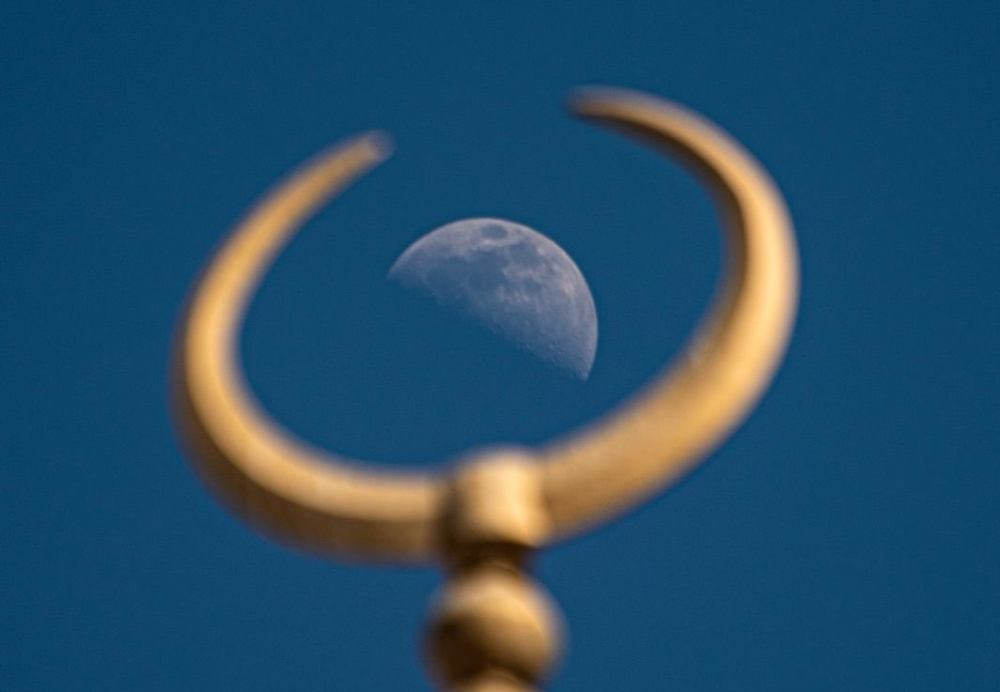
Astronomer Adnan Khalifa, a member of the Astronomy and Space Club, explained that the moon will reach its first quarter phase on Tuesday afternoon at 3:28 PM Saudi time. At this stage, the moon will have completed a quarter of its orbit around the Earth since the new moon. From our perspective on Earth, half of the moon's circle appears fully illuminated by sunlight, while the other half is shrouded in darkness. This phenomenon occurs when the moon forms a right angle (90 degrees) with both the Earth and the sun.
This timing is ideal for astronomers, as the lunar twilight line—the line separating the illuminated and dark sides of the Moon—is prominent and clearly visible. The slanted sunlight casts long shadows across the lunar surface, highlighting craters, mountains, and valleys in stunning detail. This provides a valuable opportunity to study the Moon's geology and image its surface with high resolution using telescopes.
The cultural and religious context of the month of Ramadan
The significance of the lunar phases extends beyond the scientific realm, touching upon cultural and religious heritage, particularly in the Islamic world. The Islamic calendar is entirely based on the lunar cycle, and the appearance of the first quarter crescent indicates that approximately one week has passed since the beginning of Ramadan. This phase serves as a clear time marker for Muslims, preceding the full moon in the middle of the month, after which the moon begins its gradual waning.
Historically, humans have linked the moon and its phases to determining times and seasons, and this connection remains strong during religious occasions like Ramadan. Following these phases enhances the sense of time's passage and the succession of the holy month's days and nights, adding a cosmic dimension to spiritual practices.
Arar as a destination for astronomical observation
This observation comes amidst growing interest in astronomical phenomena in the Northern Borders region, which enjoys a strategic advantage in its clear desert skies and low levels of light pollution, providing ideal conditions for precise astronomical observation. The activities of astronomy clubs and enthusiasts in the region have contributed to spreading scientific awareness and encouraging the local community to engage with these celestial events, transforming them into educational and recreational occasions that combine science and culture.