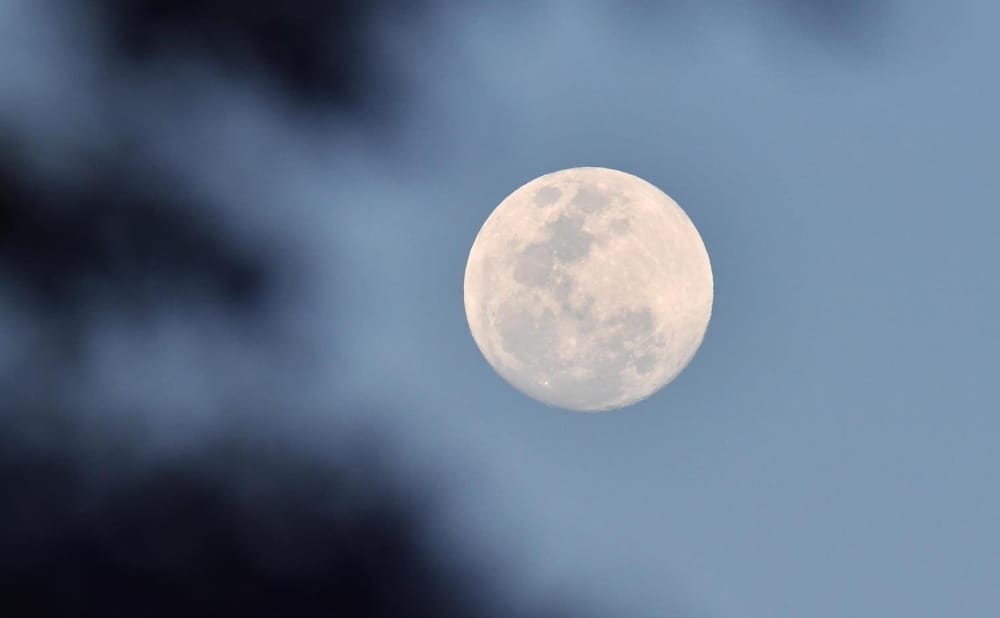
The skies over the Northern Borders region witnessed a remarkable astronomical event on Wednesday evening, with the observation of the first quarter moon of Shawwal 1447 AH. This event created a striking celestial spectacle that attracted the attention of those interested in observing celestial phenomena and amateur astrophotographers, who flocked to document this enchanting moment in the Kingdom's skies.
Details of the first quarter moon phenomenon of the month of Shawwal
The first quarter phase is one of the key and important phases of the Moon during its monthly orbit around the Earth. During this phase, half of the Moon appears fully illuminated because it is positioned at an almost right angle between the Earth and the Sun. This precise alignment makes the Moon stand out in the sky at the beginning of the night, providing an ideal opportunity for observation with the naked eye or using binoculars and advanced astronomical telescopes.
This phase represents a crucial transitional stage in the lunar cycle, as the illuminated portion gradually increases day by day until it reaches its full phase. Astronomers note that the lunar surface reveals its details more clearly during this phase, particularly impact craters and extensive rocky features, due to the contrast in shadows along the boundary between the illuminated and dark sides of the moon's surface. This provides observers with an exceptional opportunity to study its topography in detail.
Historical roots and connection to the Islamic calendar
The observation of lunar phases has always been closely linked to Arab culture and Islamic history. Since ancient times, Arabs and Muslims have relied on the movement of the moon and its phases to determine the beginnings and ends of the lunar months, which forms the solid foundation of the Islamic calendar. The importance of tracking these phases lies in ensuring the accuracy of astronomical calculations and their conformity with the precise religious sighting. Historically, Muslim scholars excelled in astronomy and established advanced observatories to study the movement of celestial bodies, making the observation of the crescent moon and the tracking of its phases an integral part of the region's rich scientific and cultural heritage.
The scientific and local importance of observing lunar phases
The importance of observing astronomical phenomena extends beyond purely scientific considerations, encompassing tangible positive impacts at the local and regional levels. In the Northern Borders region, such events contribute to raising astronomical awareness among community members and encourage young people and students to engage passionately in the fields of science, technology, and space science. Furthermore, the region's clear skies and relative lack of light pollution in many open areas make it a preferred destination for astrotourism enthusiasts.
This growing interest enhances the region's standing on the tourism and scientific map, and provides a fertile environment for hosting community events related to astronomy. Internationally, these documented observations by amateurs and professionals contribute to enriching astronomical databases with accurate images and information about the moon's surface features and movements, thus supporting ongoing scientific research and fostering communication among astronomical communities worldwide.