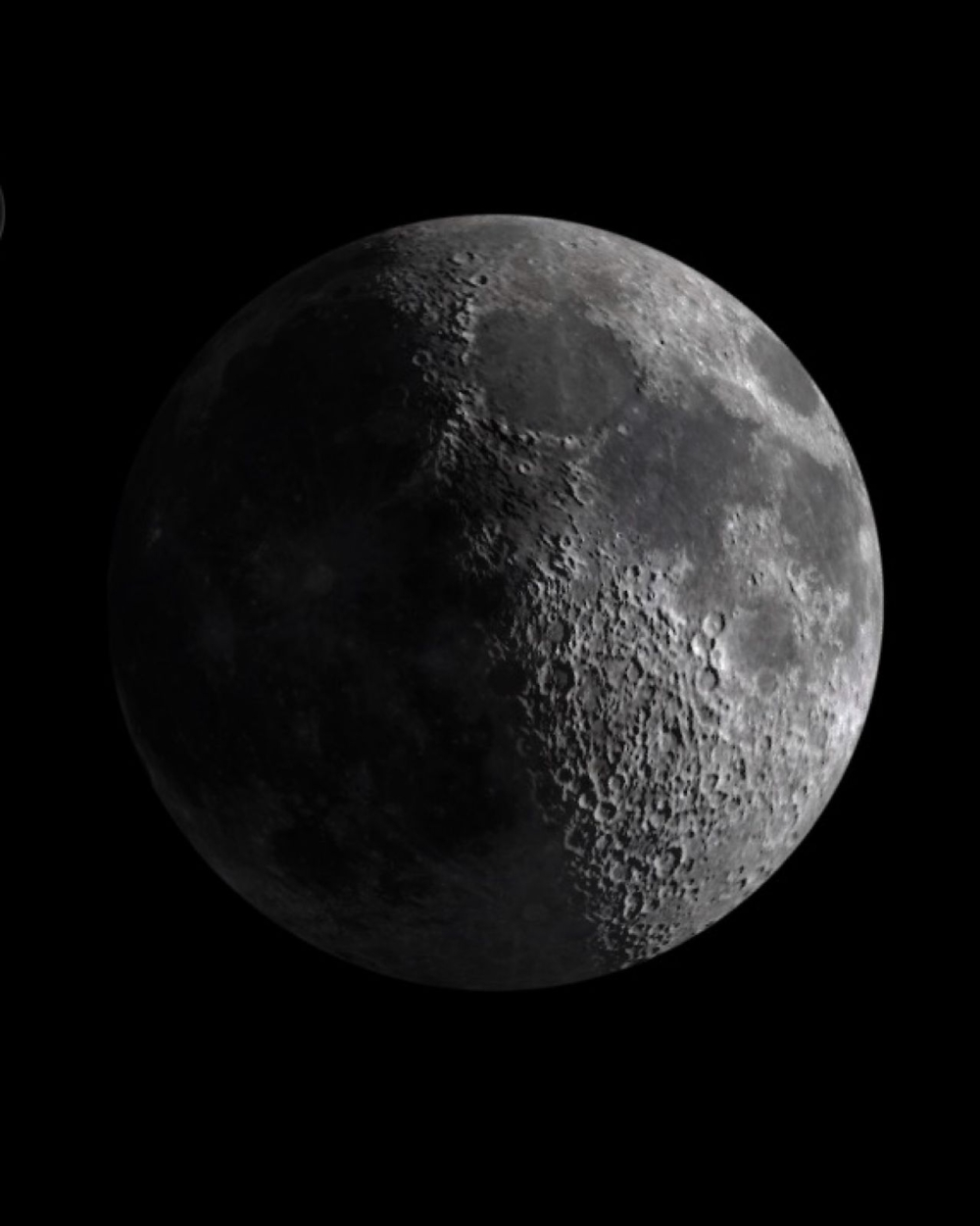
The Jeddah Astronomical Society, through its president, Engineer Majid Abu Zahra, announced that the skies of the Arab world will witness a unique astronomical phenomenon on Monday, January 26, 2026, when the moon will appear in its first quarter phase for the month of Sha'ban. This event presents an exceptional opportunity for astronomy enthusiasts, photographers, and all those interested to observe the details of the moon's surface with unparalleled clarity.
The astronomical context of the first quarter phenomenon
The first quarter phase occurs when the Moon completes a quarter of its monthly orbit around Earth, about a week after the new moon (the beginning of the lunar month). At this stage, the angle between the Sun, Earth, and Moon is almost perpendicular (90 degrees), meaning half of the Moon's face is fully illuminated by sunlight, while the other half remains in complete darkness. This phenomenon is not merely aesthetic; it is a direct result of the geometry of the solar system and the movement of celestial bodies, and it is part of a continuous lunar cycle that has influenced human life since the dawn of history.
The historical and cultural significance of the phases of the moon
Observing the phases of the moon has been closely linked to human civilizations, particularly in the Arab and Islamic world. The Arabs of old relied on the lunar cycle to determine time and months, a practice that continues with the Islamic calendar, which is entirely lunar. The month of Sha'ban holds special significance as it precedes the holy month of Ramadan, making the observation of the new moon and its phases of religious and cultural importance. Observing the moon during its first quarter phase revives this rich legacy of astronomy, in which Muslim scholars excelled, and connects current generations with their ancestors' traditions of exploring the heavens.
Why is the first quarter considered the best time for observation?
Engineer Abu Zahra explained that the moon in this phase rises at noon local time, reaches its highest point in the sky just before sunset, and remains clearly visible until midnight. The most prominent feature of this phase is the terminator, the boundary separating the illuminated and dark parts of the moon. At this terminator, sunlight strikes the moon at a very oblique angle, casting long shadows behind the mountains and the edges of lunar craters. This sharp contrast between light and shadow gives the lunar surface a three-dimensional appearance, revealing fine details that are not clearly visible when the moon is full and fully illuminated.
Practical tips for monitoring and photography
To enjoy this phenomenon, no complicated equipment is required. Binoculars can be used to view the large craters and lunar maria. For finer details, a small telescope with an aperture of 4 to 6 inches is recommended. Astrophotographers can take advantage of this opportunity to capture high-contrast images of the lunar surface, using filters to reduce glare and highlight more detail. As the Moon continues its orbit, its illuminated surface will increase day by day, progressing from waxing gibbous to full moon, providing a variety of exciting and changing views for observers over the following week.