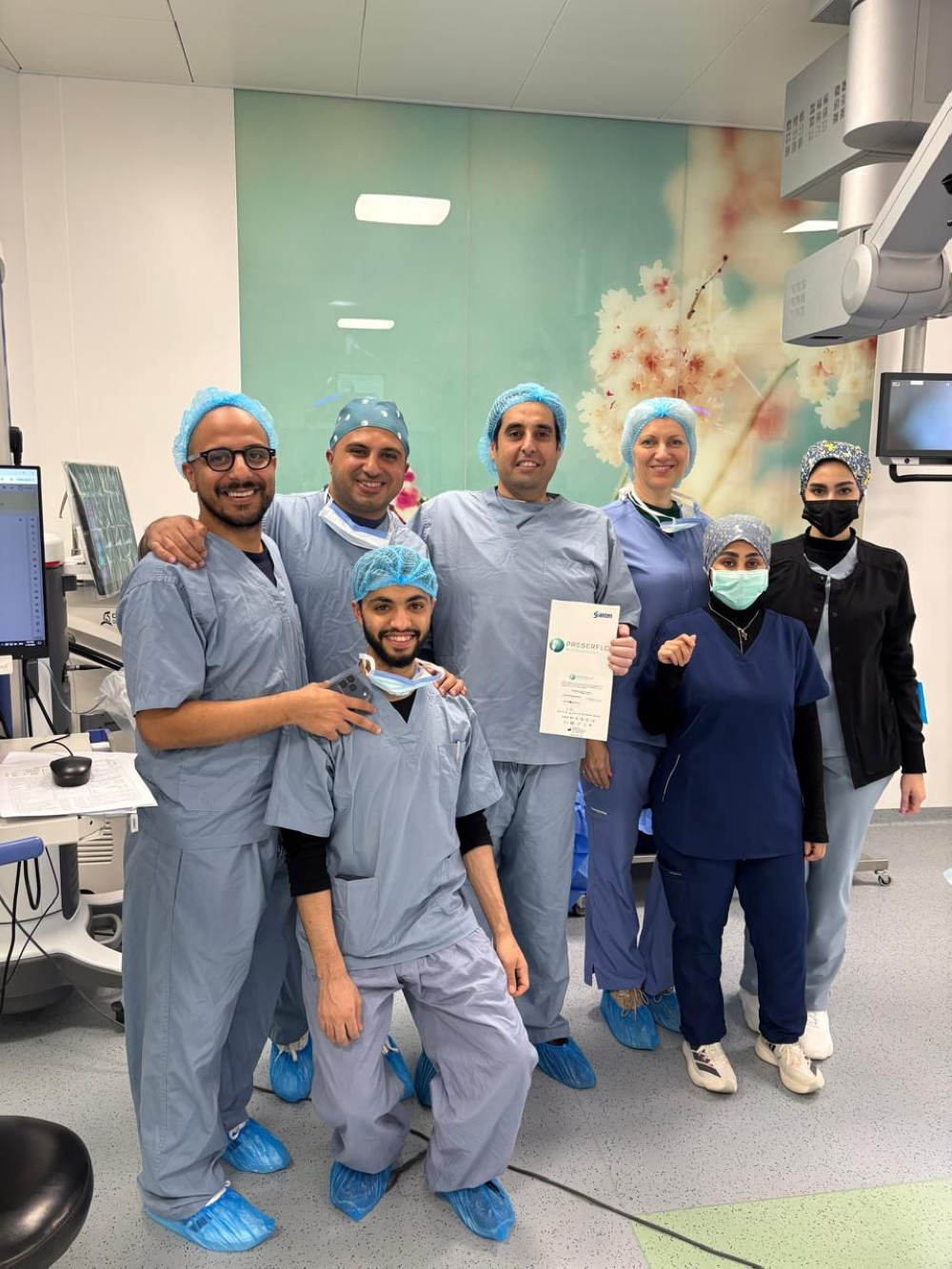
The Center of Excellence for Eye Care at Riyadh Health Cluster 1 has achieved another medical milestone, adding to its growing list of successes. Medical staff at Al-Iman General Hospital successfully performed the first PreserFlo MicroShunt implantation procedure for glaucoma treatment. This delicate procedure was overseen by Consultant Dr. Hassan Al-Kwikbi, marking the official launch of a new era in the treatment of glaucoma and optic nerve diseases, in accordance with the latest internationally recognized protocols.
What is PreserFlo technology and why is it considered a medical revolution?
Glaucoma is a leading cause of vision loss worldwide, as elevated intraocular pressure leads to irreversible damage to the optic nerve. This is where the importance of the modern "PreserFlo" technique lies, which is distinguished by its superior ability to lower intraocular pressure with very high safety rates compared to traditional surgeries.
This technique relies on implanting a very thin tube (MicroShunt) that helps drain accumulated fluids inside the eye, making it an effective alternative that reduces the need for complex traditional surgical interventions that may require long recovery periods. This technique also ensures long-term therapeutic stability for patients, which significantly improves their quality of life and reduces continuous dependence on therapeutic drops.
Record numbers and rising performance indicators
This achievement caps a record-breaking year for the Center of Excellence in Eye Care, which reported providing over 44,438 diagnostic and treatment services in 2025, marking a significant leap in clinical and operational performance indicators. The center's medical teams successfully performed 3,016 diverse surgical procedures, encompassing a wide range of subspecialties, from cataract and glaucoma surgery to retinal and corneal transplants, endoscopic orbital reconstruction, and vision correction.
Keeping pace with the health transformation and Vision 2030
Dr. Al-Kuwaikibi considered the introduction of this advanced technology a strategic choice that expands the range of treatment options for glaucoma patients and underscores the high level of preparedness of medical staff to handle advanced cases with the highest quality standards. This development aligns with the objectives of the Kingdom's healthcare transformation program within Vision 2030, which aims to facilitate access to healthcare services and localize advanced medical technologies.
For his part, the center's medical director, Dr. Mohammed Al-Anzi, affirmed that transforming this massive operational capacity into tangible healthcare value reflects the maturity of the center's medical model and its ongoing pursuit of localizing advanced technologies and building globally competitive national capabilities. The center continues to solidify its position as a leading destination in ophthalmology, committed to providing human-centered care.