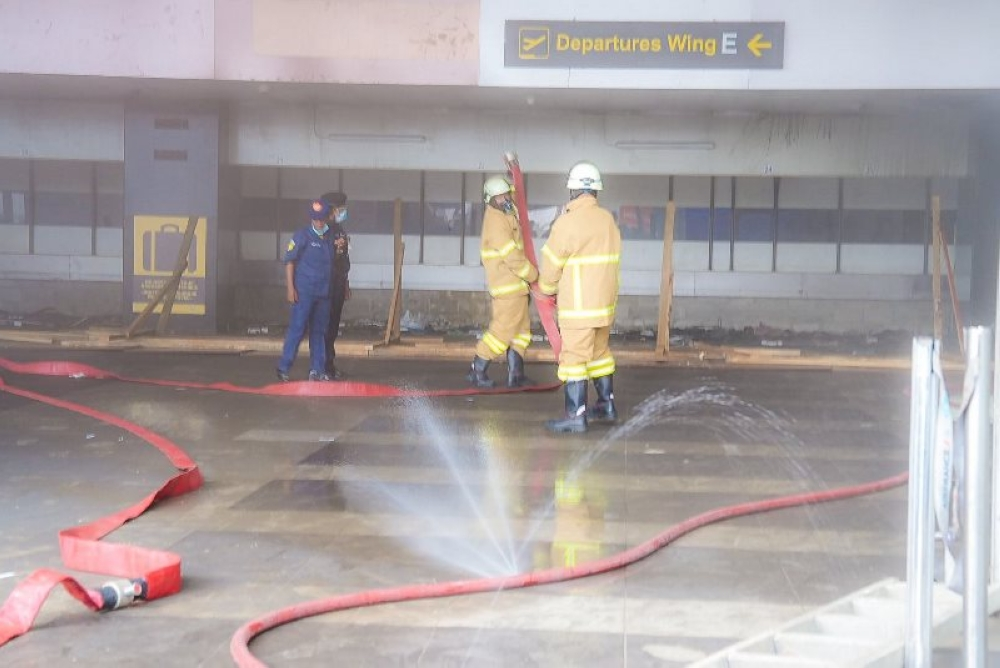
A fire broke out at Murtala Muhammed International Airport in Lagos, Nigeria, on Monday evening, injuring six people and temporarily suspending flights, causing disruption at one of West Africa's major air hubs. Nigerian authorities announced that the incident was largely under control and that efforts were underway to restore normal operations as quickly as possible.
Details of the incident and the immediate response
According to a statement issued by the Federal Airports Authority of Nigeria (FAAN), the fire started in the Server Room located on the first floor of Terminal 1. Smoke quickly spread to parts of the building, prompting an immediate response from the airport's emergency, fire and security teams.
The statement explained that the incident resulted in injuries to six people, including three women and three men. All were reported to be in stable condition after receiving first aid, with one person undergoing further medical examinations to ensure their well-being. The statement also indicated that 14 people were trapped in the air traffic control tower, but rescue teams successfully evacuated them all safely.
General context and importance of Lagos Airport
Murtala Muhammed International Airport (MMIA) is Nigeria's main air gateway and busiest airport, serving as a vital air transport hub for the entire West African region. The airport handles millions of passengers annually and is a crucial artery for trade, tourism, and business in Africa's largest economy. Incidents like this fire highlight the challenges of infrastructure development and the importance of implementing the highest safety and security standards at critical facilities. The departure hall, which was partially damaged by the fire, was already undergoing renovation as part of a major development project estimated to cost around 712 billion naira (US$530 million), reflecting ongoing efforts to modernize the airport and improve its operational efficiency.
Expected impacts and actions taken
The immediate impact of the fire was the suspension of flights and the temporary closure of airspace as a precautionary measure in accordance with international safety protocols. This measure, while necessary, caused flight delays and disrupted the schedules of thousands of passengers both domestically and internationally. Regionally and internationally, any disruption to operations at Lagos Airport could have cascading effects on other airports in the region that rely on it as a major transit hub. To mitigate these effects, the Nigerian Airspace Management Authority (NAMA) confirmed that it is working to establish a mobile, temporary control tower to ensure the resumption of air operations as quickly and safely as possible, while investigations continue to determine the exact cause of the fire and fully assess the extent of the damage.