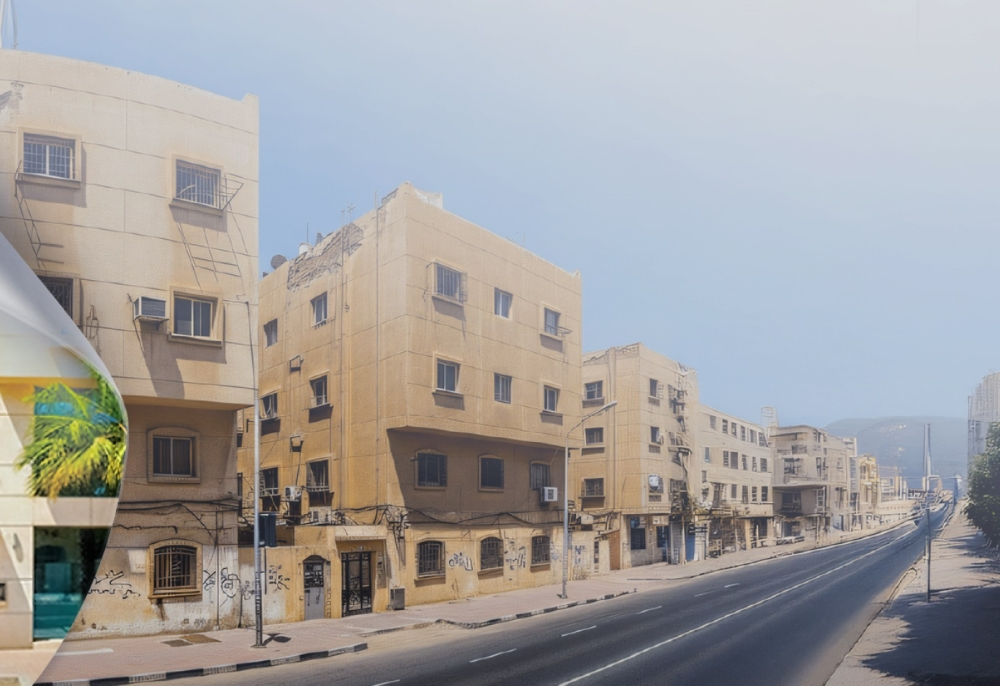
In a regulatory step aimed at controlling the urban landscape and ensuring residents' safety, the Ministry of Municipalities and Housing has released a draft of a new regulatory guide through the "Istilaa" platform. This guide aims to definitively eliminate the phenomenon of subdividing residential units . The initiative seeks to establish a strict regulatory framework that protects the urban fabric and guarantees the structural integrity of buildings, while imposing deterrent fines of up to 25,000 riyals on violators.
The context of organization and its urban significance
These moves come within the framework of the Kingdom's ongoing efforts to improve the urban landscape and enhance the quality of life. The phenomenon of haphazard building subdivision in recent years has posed a significant challenge to urban planners. This unregulated behavior has placed immense pressure on infrastructure in residential neighborhoods, resulting in traffic congestion, a shortage of parking spaces, and strain on electricity and water networks beyond their planned capacity.
Through this guide, the ministry seeks to protect the rights of residents and tenants, and to ensure the availability of necessary safety requirements that are often ignored when large units are divided into small, cramped units for the purpose of quick financial gain.
The concept of violation and smart monitoring mechanisms
The ministry has provided a precise definition of the violation, stating that illegal subdivision occurs when an owner or tenant divides a standard residential or commercial unit into smaller units without a permit. This includes converting villas or large apartments into studios or smaller apartments, and making structural modifications that compromise the building's safety or obstruct emergency exits and fire systems.
To ensure effective monitoring, the ministry adopted an integrated monitoring strategy based on:
- Field monitoring: Continuous rounds by observers.
- Smart and desktop monitoring: Analyzing contract data via the "Ejar" platform to detect illogical overcrowding in a single property.
- Community oversight: Reports can be submitted via the number “940”.
- Governmental integration: data exchange with the Ministry of Tourism and the General Authority for Real Estate.
Field indicators and prescribed penalties
The ministry explained that there are clear indicators that inspectors use to identify violations, most notably the accumulation of cars in front of the property, the presence of newly constructed side doors encroaching on setbacks, or the failure to permanently close the main building entrance. If a violation is confirmed after a site visit and photographic documentation, the owner is given a grace period of up to 60 days to rectify the situation.
Regarding penalties, the ministry has approved fines ranging from 5,000 to 25,000 riyals , with the violator required to remove the alterations at their own expense. In cases where removal poses a risk to the structural integrity of the building, the violator is required to pay half the cost of the construction in question, provided they submit a certified engineering certificate proving the building's safety.