FIFA president becomes a Lebanese citizen
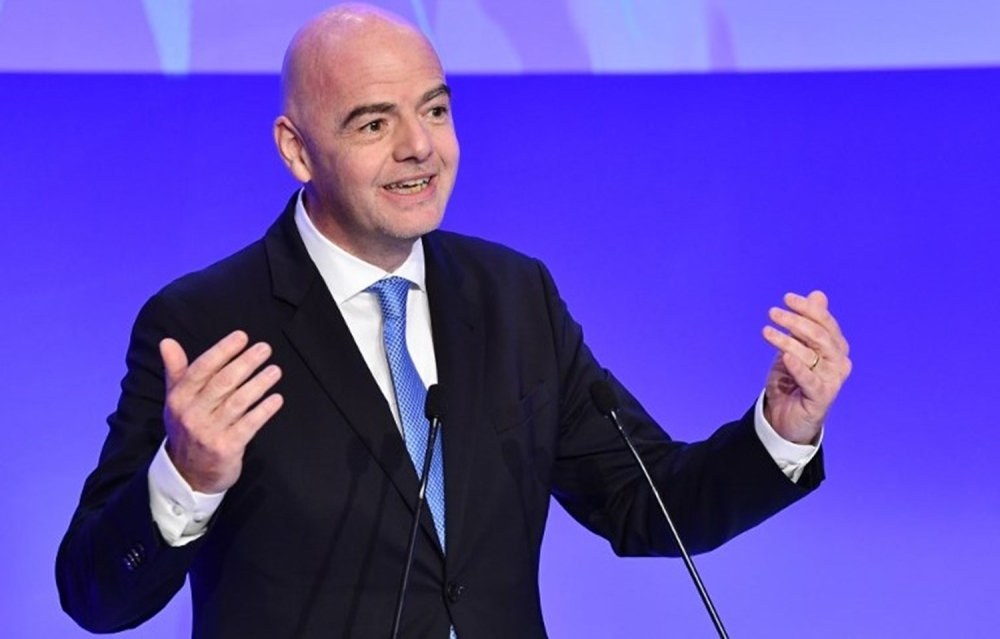
In a remarkable move reflecting the depth of his personal and professional ties, FIFA President Gianni Infantino completed the official procedures to obtain Lebanese citizenship. This took place during his current visit to Beirut with his family, where he received his Lebanese passport from the Ministry of the Interior.
Upon receiving his passport, Infantino expressed his immense joy in a video statement to the Lebanese Football Association's website, saying, "I am proud and happy to be in Beirut and at the Ministry of Interior to finally receive my Lebanese passport... I love Lebanon." This step is the culmination of his connection to Lebanon through his Lebanese wife, Lina Al-Ashqar, who previously worked at the Lebanese Football Association, and with whom he has four daughters.
Background and general context of the event
Gianni Infantino, 55, who also holds Swiss and Italian citizenship, has headed FIFA since 2016. His election followed a turbulent period for the organization, and since taking office, he has pledged to enhance transparency and broaden participation in football globally. His most prominent project has been increasing the number of teams participating in the World Cup. His connection to Lebanon is not merely familial; it also reflects his interest in developing football in West Asia, a region with a great passion for the game but facing numerous developmental challenges.
The importance of the visit and future projects
Infantino's visit was not merely personal; it also carried strategic dimensions aimed at supporting Lebanese football. The president of the Lebanese Football Association, Hashem Haidar, confirmed that the visit aimed to continue ongoing discussions between the Lebanese and international federations regarding several vital issues. Foremost among these is the project to construct a new national stadium in Lebanon, funded by a FIFA grant, a project that represents a pressing need for sports in the country.
The Camille Chamoun Sports City Stadium in Beirut, which seats about 50,000 spectators, is currently the largest stadium, but it has suffered from neglect and deterioration in recent years despite its long history since its opening in 1957. In this context, Haidar indicated that the two sides agreed to visit one of the Arab countries that implemented a similar project to learn about the model followed, in preparation for applying it in Lebanon, stressing that work is underway to determine the most suitable location for the new stadium.
Expected impact on the sports scene
The granting of Lebanese citizenship by the president of the world's highest football authority carries significant symbolic and material implications. Domestically, it represents a major morale boost for the sports community and for the country, which is grappling with a severe economic and political crisis. This personal connection could also accelerate the implementation of FIFA-supported projects and open new avenues for cooperation. Regionally and internationally, this move strengthens Lebanon's position on the global football map and underscores FIFA's commitment to supporting national federations that need assistance in developing their infrastructure and footballing talent, potentially encouraging future sports investments in the region.