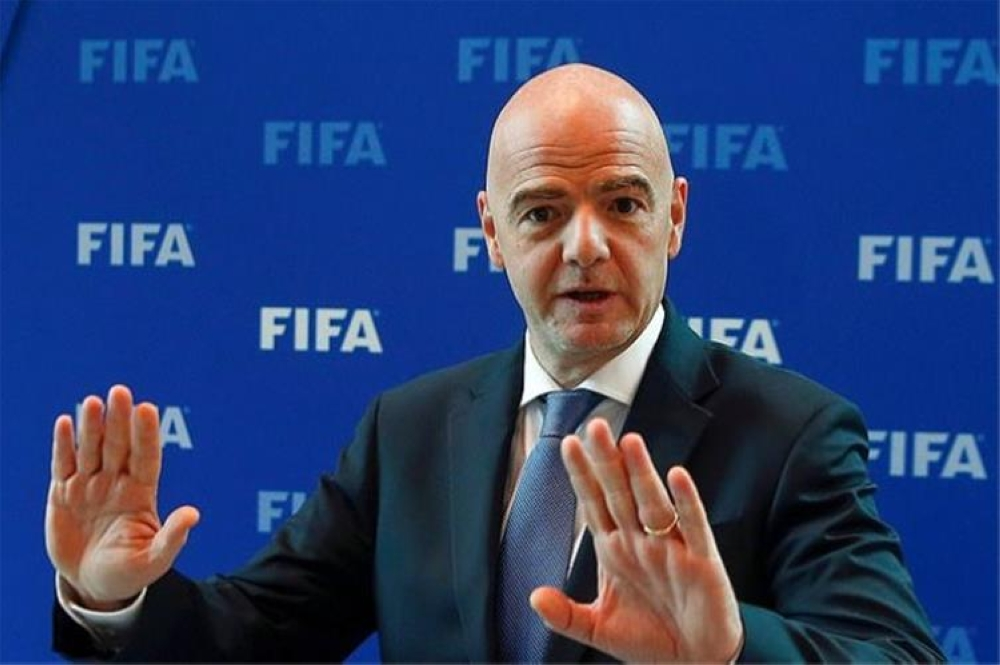
FIFA President Gianni Infantino sparked controversy with his remarks calling for the lifting of the ban on Russia's participation in international tournaments, arguing that the sanctions imposed since 2022 "have achieved nothing." This call has reopened the debate surrounding the complex relationship between sports and politics in the context of international conflicts.
Background of the ban and its repercussions
Following Russia’s invasion of Ukraine in February 2022, FIFA and UEFA swiftly and jointly suspended all Russian national teams and clubs from their competitions until further notice. This decision was part of a broader wave of international sanctions aimed at isolating Russia on sporting, cultural, and economic fronts. As a result, the Russian national team was excluded from the European playoffs for the 2022 World Cup in Qatar, and Russian clubs were barred from participating in the Champions League and other European competitions, negatively impacting the development of Russian football domestically and isolating it from international competition.
Infantino's justifications and his controversial stance
Speaking to Sky Sports, Infantino explained that the continued ban “has achieved nothing, only increased frustration and hatred.” He stressed that FIFA “should never prevent any country from playing football because of the actions of its political leaders.” He added, “Enabling Russian girls and boys to play football in other parts of Europe would be worthwhile,” emphasizing the need for “someone to keep the door open” for dialogue and reconciliation. Infantino’s stance reflects FIFA’s traditional philosophy of separating sport and politics, a principle that often faces challenges in practice.
Angry reactions and a unified European stance
The FIFA president's remarks were met with staunch rejection from the Ukrainian side. Ukrainian Sports Minister Matvey Bidnyy described the statements as "irresponsible" and "childish," adding that they "disconnect football from the reality of children being killed." Meanwhile, UEFA President Aleksander Čeferin maintained his firm stance, emphasizing that Russia's return to European competitions is directly linked to ending the war in Ukraine, a point he has reiterated on several occasions since the conflict began.
Defending Trump's Peace Prize
In a related development, Infantino defended FIFA's controversial decision to award the Peace Prize to former US President Donald Trump during the 2026 World Cup draw. He said, "We must do everything we can to contribute to world peace, and that's why we've been considering for some time rewarding those who contribute to achieving this goal." He added emphatically, "Objectively speaking, he (Trump) deserves it.".