Financial and economic markets around the world are eagerly awaiting the US Federal Reserve meeting scheduled for March 17 and 18, which will determine the future course of interest rates . This crucial meeting comes at a time when the US central bank faces a complex and conflicting set of factors impacting both the US and global economies. Investors are focused on this decision to see whether the Fed will maintain its current tight monetary policy or begin to hint at an imminent easing of monetary policy.
The historical context of the US interest rate trajectory
To understand the current situation, it's necessary to look at the recent history of US monetary policy. Since early 2022, the Federal Reserve has implemented a series of aggressive and successive interest rate to control inflation, which had reached its highest level in four decades. After achieving relative success in curbing inflation and gradually bringing it closer to the stated target of 2%, the Fed adopted a policy of holding rates steady and monitoring them. This cautious approach aims to ensure that inflationary pressures do not resurface, while simultaneously preventing the US economy from falling into a deep recession due to prolonged periods of high borrowing costs.
The impact of geopolitical tensions on the global economy
The Federal Reserve does not make its decisions in isolation from global events. Escalating geopolitical tensions, including conflicts in the Middle East and concerns about the repercussions of regional tensions, play a pivotal role in shaping the economic landscape. These conflicts threaten the stability of global supply chains and lead to sharp fluctuations in energy prices, particularly oil. Any sudden surge in energy prices directly impacts global inflation rates, complicating the task for central banks and making them more hesitant to lower interest rates.
Expected repercussions of the interest rate decision, both domestically and internationally
The Federal Reserve's decision carries significant implications that extend far beyond the United States. Domestically, high interest rates mean continued high mortgage and business borrowing costs, which slows economic growth but strengthens the dollar. Regionally and internationally, emerging markets are particularly affected, as a strong dollar increases their external debt burden and draws out foreign investment. In the Middle East, most Gulf Cooperation Council (GCC) currencies are pegged to the US dollar, leading their central banks to typically follow the Fed's interest rate to maintain exchange rate stability.
Market expectations and Jerome Powell's anticipated remarks
Current market expectations indicate a near-zero probability of an interest rate cut at this meeting or in the near future. Futures price data suggests that policymakers may not consider any monetary easing until September or possibly October, and even then, there may be only one cut this year. The Fed is likely to leave its monetary policy unchanged, maintaining the current target range.
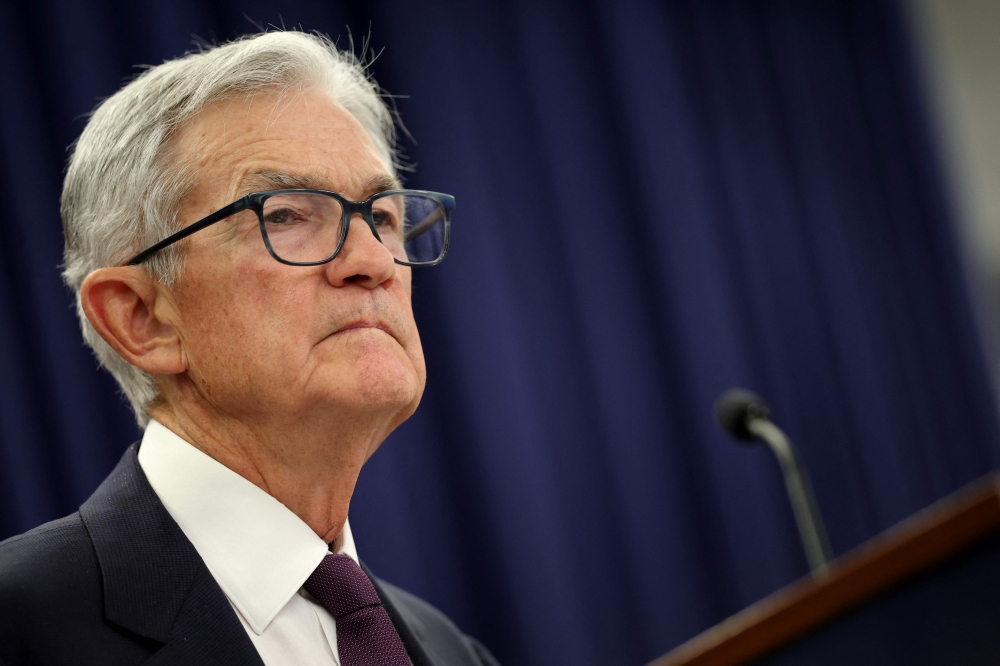
In this context, Pei Chen Lin, chief investment strategist at a leading financial firm, stated that a decision to hold rates steady at the March meeting seems almost certain, emphasizing that the US economy remains strong, thus reducing the likelihood of a rapid rate cut. All eyes will therefore be on Federal Reserve Chairman Jerome Powell's press conference, where markets will be scrutinizing for any hints or signals regarding the future course of monetary policy, especially given the conflicting indicators from the labor market and persistent inflation concerns.