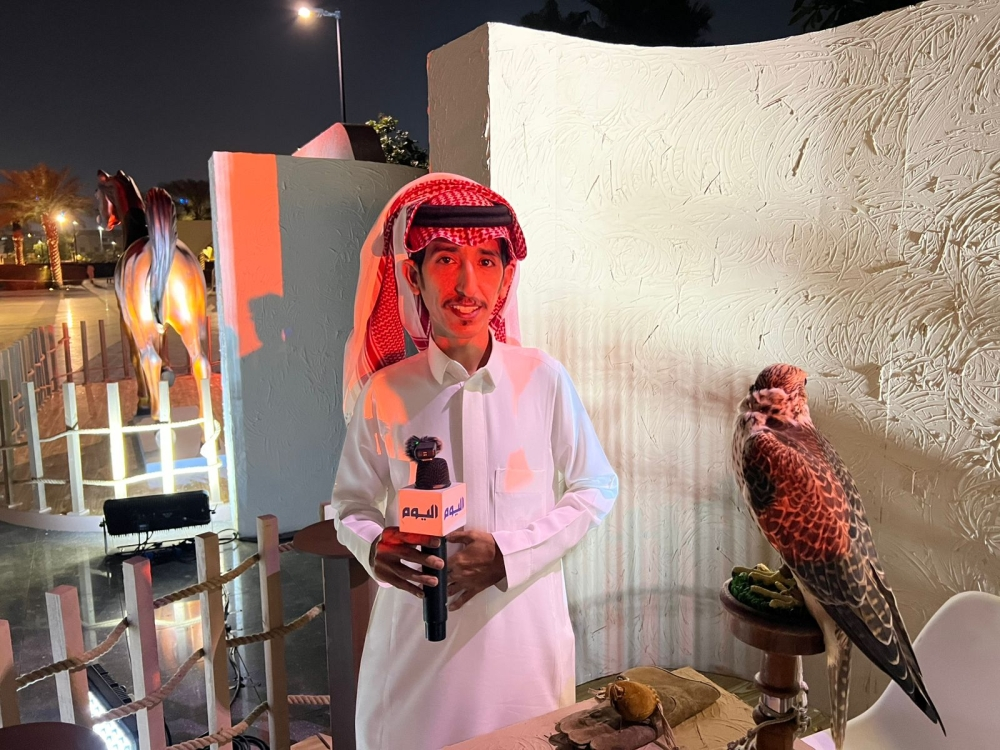
In a scene reflecting deep authenticity and a strong connection to heritage, falcons emerged as one of the most prominent cultural symbols during the Founding Day celebrations in Jeddah, captivating the audience and reminding them of a rich legacy that forms an integral part of the national identity of the Kingdom of Saudi Arabia. Their presence was not merely an aesthetic display, but a vivid evocation of the long history of the unique relationship between humankind and nature in the Arabian Peninsula.
Historical background: Falconry as a way of life
Falconry, or "hunting with falcons," dates back thousands of years in the region, where it was not merely a recreational hobby but a necessity of life. In the harsh desert environment, our ancestors relied on falcons as a primary means of securing food. A bond of trust, patience, and meticulous training developed between the falconer and his bird—values deeply rooted in Saudi culture to this day. This heritage transcended its role as a hunting method; it evolved into an art form celebrated by poets in their verses and became a symbol of courage, resourcefulness, and self-respect.
The importance of falcons in Saudi culture
Falconer Abdullah Al-Otaibi affirmed that the participation of falcons in the Founding Day celebrations is a true embodiment of this heritage. He explained that falconry was a complete way of life, from which fathers and grandfathers learned patience, perseverance, and skill. He added, “The falcon was not merely a bird of prey, but a partner in the journey of survival and a symbol of strength, freedom, and self-respect.” The Kingdom is rich in distinctive types of falcons that have held a special place among falconers, most notably the peregrine falcon, known for its exceptional speed; the saker falcon, distinguished by its strength and endurance; and the saker falcon. The skills of handling and training these birds are passed down through generations.
Local and international impact: A legacy that transcends borders
Locally, showcasing falcons on national occasions like Founding Day contributes to strengthening cultural identity and connecting new generations with their ancestors' history. Regionally, the Kingdom has become a leading center for preserving this shared heritage, through organizing major events such as the King Abdulaziz Falconry Festival, which attracts participants from across the Gulf and the world.
Internationally, this heritage has gained global recognition after being inscribed on UNESCO’s Representative List of the Intangible Cultural Heritage of Humanity, reflecting Saudi Arabia’s efforts to preserve it. Ongoing government support, exemplified by the establishment of specialized clubs and the organization of competitions and auctions, aligns with Vision 2030, which aims to preserve national heritage and celebrate its diversity, thus ensuring the sustainability of this rich cultural legacy.
The presence of falcons on the founding day confirms that the celebration of this occasion is not limited to commemorating a historical event, but extends to include celebrating all the heritages that shaped the features of Saudi society. The falcon is not just a hunting bird, but a living witness to the history of a nation that was founded on determination, preserved its heritage, and moved confidently towards the future.