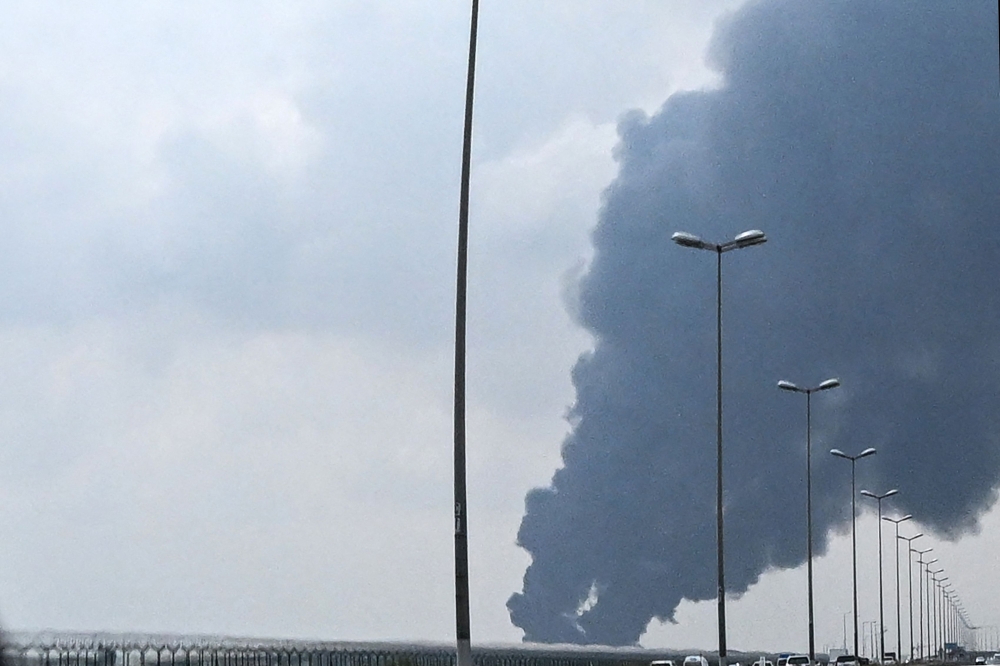
The occupied territories witnessed a rapid escalation of security developments, with loud explosions heard in Jerusalem on Sunday, following urgent warnings from the Israeli army about the detection of Iranian missiles aimed at targets in central Israel. According to AFP correspondents, flashes from the explosions, resulting from attempted interceptions, lit up the city's sky. Meanwhile, the Israeli ambulance service, Magen David Adom, announced that there were no official reports of casualties or injuries among the population as a result of the direct attack.
Escalating tensions: Background to Iranian missile launches towards Israel
This event did not occur in a vacuum; rather, it is the culmination of years of geopolitical tensions and an ongoing shadow war between Tehran and Tel Aviv. Historically, Iran has relied on supporting armed factions in the region to convey its messages, but the shift toward the direct use of Iranian missiles from Iranian territory represents an unprecedented strategic shift in the rules of engagement. The immediate cause of this latest escalation is a series of tit-for-tat attacks, most notably the attack on the Iranian consulate in the Syrian capital, Damascus, which Tehran considered a blatant violation of its sovereignty, vowing a firm and harsh response to deter Israel from repeating such operations.
This shift in the course of the conflict reflects a change in Iranian military doctrine, as the leadership in Tehran now sees the need to prove its ability to respond directly in order to save face before its allies in the 'axis of resistance', and to establish a new deterrent equation in the Middle East that prevents Israel from continuing to target Iranian interests and senior military leaders in Syria and Lebanon.
Regional and international repercussions of this military escalation
This event is of immense significance and has far-reaching consequences that extend far beyond local borders. Domestically, the wailing sirens and explosions brought public life in Israel to a standstill, with hundreds of thousands seeking shelter, placing immense economic and psychological strain on the Israeli home front. Regionally, the exchange of direct fire has brought the entire Middle East to the brink of a full-blown regional war. Neighboring countries, such as Jordan, Iraq, and Lebanon, quickly closed their airspace as a precaution, amid fears of missile debris falling on their territory or their lands becoming battlegrounds for settling scores.
Internationally, this escalation has sparked grave concern in major capitals, particularly Washington, which quickly reaffirmed its unwavering commitment to Israel's security and deployed additional naval and air assets to the region to provide defensive support. The international community also fears severe economic repercussions, especially the potential for a surge in global oil prices and disruptions to shipping in the Strait of Hormuz and the Red Sea. The United Nations and the European Union have called for restraint to prevent a slide into open conflict, the consequences of which could be catastrophic for global peace and security.
The role of air defense systems in reducing losses
The absence of reported casualties so far is explained by the extensive activation of Israel's multi-layered air defense systems. The Iron Dome system worked in conjunction with the David's Sling and Arrow (Arrow) systems, which are designed to intercept ballistic missiles outside the atmosphere. Furthermore, close intelligence and military cooperation with the United States and other allied nations played a crucial role in detecting and tracking the projectiles from the moment of launch, allowing sufficient time to activate the interception systems and guide civilians to safety.