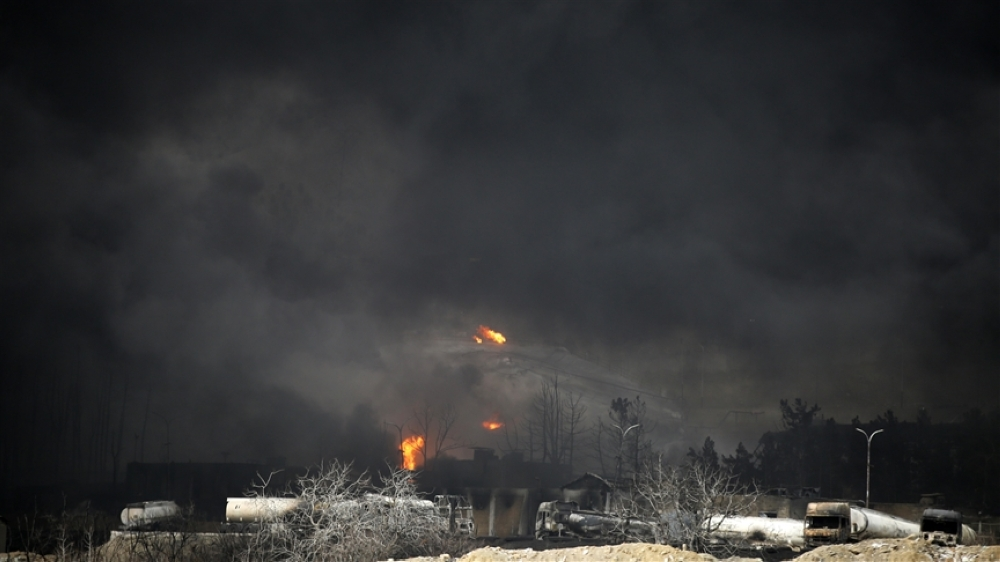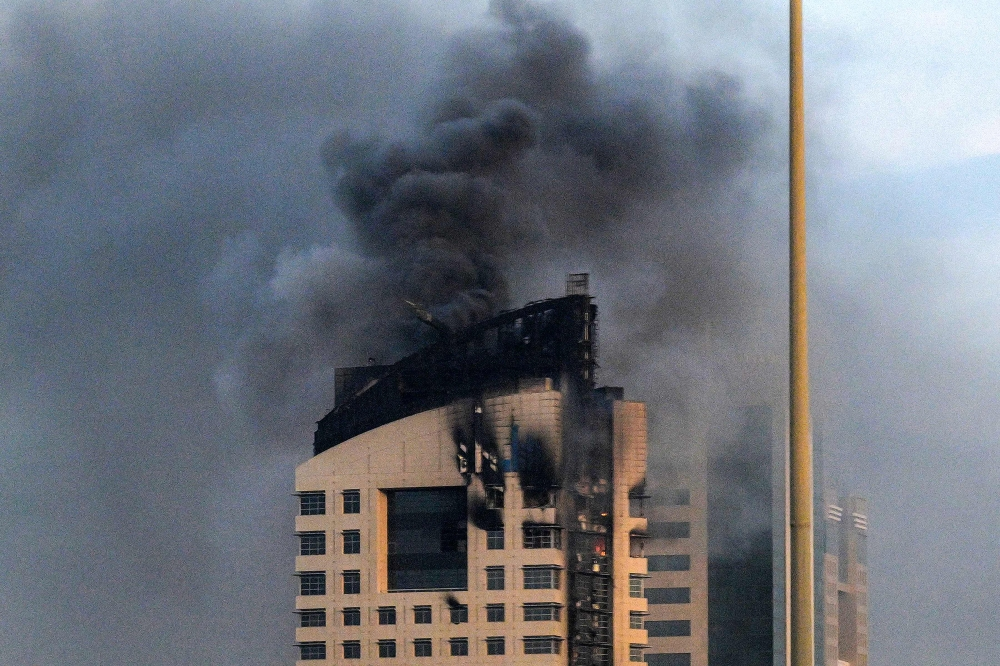
rocked Tehran early Sunday morning, shaking the Iranian capital and its surrounding areas, in a significant new escalation of military activity in the region. News outlets and international news agencies, including AFP, reported hearing loud explosions and seeing plumes of smoke rising into the sky, coinciding with the Israeli military's announcement that it had carried out precise strikes targeting sensitive military and vital infrastructure belonging to the Iranian Revolutionary Guard.
Details of the explosions in Tehran and the targeted locations
According to initial reports, the operation was not limited to a single location but encompassed multiple sites. Israeli authorities confirmed that their attack focused on "targeting and dismantling" the headquarters of the Iranian Revolutionary Guard's Aerospace Force. The Israeli military described the targeted site as a vital center housing reception, transmission, and research facilities belonging to the Iranian Space Agency, which are directly linked to the regime's military efforts.
On the ground, smoke billowed over the capital after strikes hit oil depots in and around Tehran during the night. The Israeli military statement indicated that the targeted site included a command and control center for the Khiam satellite, which Tel Aviv claims is used for espionage and monitoring Israeli movements and its population, as well as advanced research facilities.
Context of the conflict and escalation of direct confrontation
These developments come at a time of unprecedented turmoil in the Middle East. The recent attack cannot be separated from a series of tense events that have transformed the long-standing "shadow war" between Tehran and Tel Aviv into a more open and direct confrontation. Historically, these clashes were often limited to cyberattacks or targeting proxies in third countries, but recent months have witnessed a qualitative shift in the rules of engagement, with Iranian and Israeli territory becoming the stage for an exchange of missile and air strikes.
Targeting the Aerospace Force specifically sends a strong message, given that this branch of the Revolutionary Guard is responsible for the ballistic missile program and the drone program, which Israel and the West consider a major strategic threat to regional security.
Strategic implications and the impact of the strike on energy security
Targeting oil storage facilities alongside military installations carries extremely serious economic and security implications. Iran, which relies heavily on its oil infrastructure, views any attack on these facilities as a threat to its national economic security. This type of attack could lead to tensions in global energy markets, as the international community anxiously monitors any escalation that might affect oil supplies through the Strait of Hormuz.
Moreover, the attack on the Khiam satellite control center indicates an Israeli intention to disrupt Tehran’s space intelligence capabilities, reflecting the expansion of the conflict to include cyberspace and airspace, and presenting the region with open scenarios that could lead to a redrawing of the balance of deterrence in the region.