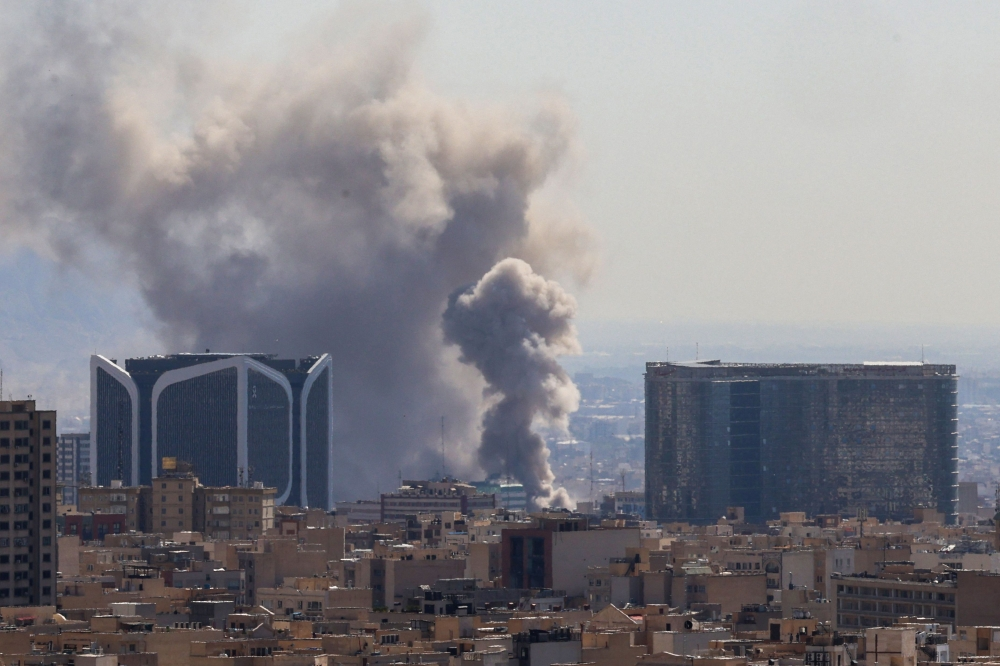
rocked Tehran, the Iranian capital, violently on Tuesday morning, marking a rapid escalation on the ground and the fourth day of open military operations. According to correspondents from international news agencies, including Agence France-Presse, this new wave of airstrikes and missile attacks comes amid the intensifying conflict involving the United States and Israel. The explosions were clearly heard in northern Tehran, sparking widespread anticipation and concern about the nature of the targets struck this time.
The circle of targeting is widening towards Isfahan and Karaj
The offensive military operations were not limited to the capital. Iranian media outlets confirmed similar and violent explosions in Karaj, a city near Tehran, as well as in Isfahan province in central Iran. Isfahan holds paramount strategic and military importance due to its vital facilities, air bases, and sensitive research centers. This clearly indicates that the target bank has expanded to include military infrastructure deep within Iranian territory, signaling a new and more intense phase of the current conflict, where the bombing is no longer confined to the periphery but has reached the very heart of the country.
The context of the conflict and the accumulating geopolitical tensions
These events cannot be understood in isolation from the complex geopolitical tensions that have gripped the region in recent years. The nuclear issue, ballistic missile programs, and regional influence have long been fundamental and deep points of contention between Tehran on one side, and Western powers and Israel on the other. The transformation of these diplomatic and political tensions and proxy wars into a direct and comprehensive military confrontation involving major powers reflects the culmination of the political deadlock. This dramatic shift places the entire Middle East at a critical historical juncture, where the issue transcends mere limited border skirmishes and becomes an open war with strategic dimensions that could reshape the regional balance of power for years to come.
The implications of continued explosions in Tehran for international security
The continued explosions in Tehran and other major cities have serious repercussions that extend far beyond Iran's borders. Economically, this conflict is directly impacting global markets, particularly regarding energy supplies and the potential for rising oil and gas prices, especially given the region's vital role in the global economy and its importance as a major international trade route. Politically, the involvement of international and regional powers in this conflict threatens to destabilize the entire Middle East, placing a heavy responsibility on the international community to intervene diplomatically and prevent the situation from escalating into a full-blown regional war with unpredictable and potentially devastating consequences.
In the absence of accurate and detailed official information so far about the extent of human losses or specific material damage to the targets that were bombed, the scene remains open to all possibilities, amid cautious international anticipation of what the coming hours and days will bring in terms of field developments that may be decisive in the course of this war.