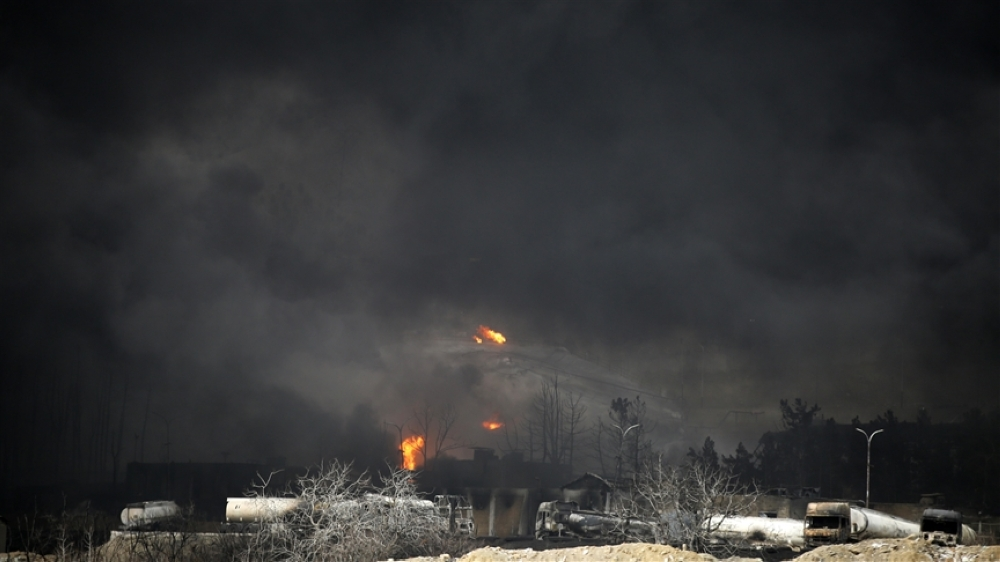
Press sources and eyewitnesses reported hearing a series of explosions in occupied Jerusalem , following the sounding of sirens in several areas within Israel and the occupied West Bank. According to AFP journalists, at least ten explosions were detected in the area, indicating a significant military escalation and heightened security tensions in the occupied Palestinian territories.
Details of the field tension and the expansion of the targeting circle
These rapid developments come at a time of heightened tension in the region, with explosions not only in Jerusalem but also in various parts of the West Bank. Observers note that the repeated sounding of sirens followed by loud explosions is often due to air defense systems attempting to intercept missiles or projectiles, or to some of them falling in open or populated areas, thus raising the alert level of security forces and emergency response teams to its highest point.
The repercussions of the explosions in occupied Jerusalem on the regional landscape
This event cannot be separated from the broader context of the ongoing conflict in the Middle East. Jerusalem has always been a sensitive center and a flashpoint for conflict, and any escalation affecting it carries serious political and security implications that extend far beyond the city's geographical boundaries. Historically, attacks targeting Jerusalem or its surrounding areas have served as a turning point in military confrontations, often leading to violent reactions and widespread international interventions aimed at containing the situation before it spirals out of control.
The situation in Iraq and attempts to distance oneself
In parallel with the events in occupied Palestine, explosions of unknown origin were heard Saturday evening in Erbil, the capital of Iraqi Kurdistan. This development comes amid a complex regional situation, as Iraq had previously declared its desire to avoid being drawn into the war launched by the United States and Israel against Iran about a week prior, according to the aforementioned context. However, geopolitics appears to be imposing a different reality, as Iraq, and specifically Iraqi Kurdistan, has not remained immune to the repercussions of this conflict.
Future risks and the impact of international conflict
For days, the Kurdistan Region has been subjected to repeated drone and missile attacks, specifically targeting American interests and objectives. This interconnectedness of various fronts—from Jerusalem to Erbil—reflects the nature of the modern conflict in the region, where arenas overlap and countries become battlegrounds for settling scores between major powers. The continuation of this escalation threatens dire consequences that could affect the stability of the entire region, placing a grave responsibility on the international community to intervene immediately and halt the cycle of war that has begun to consume everything in its path.