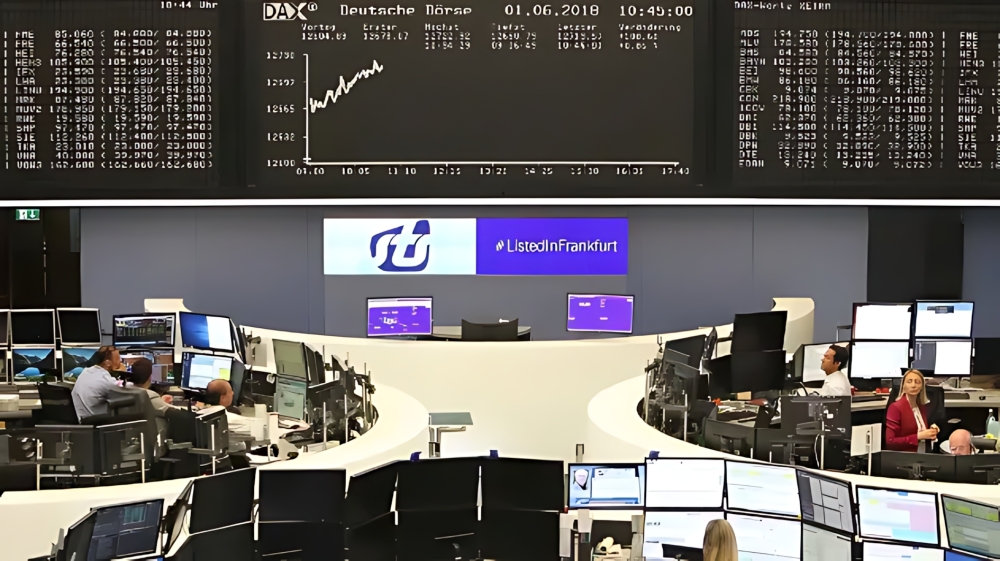
European stocks remained remarkably stable during today's trading session, maintaining their strong gains after closing at a new record high in the previous session. This measured performance reflects a positive outlook in the financial markets, as investors assess economic data and the performance of major companies across the continent.
Stoxx 600 Index Performance
The pan-European STOXX 600 index, a key benchmark for the region's stock market, held steady at 588.93 points . This stability follows a series of consecutive gains this week, during which the index broke through previous resistance levels and reached new record highs, bolstering investor confidence in the current strength of the European market.
The healthcare sector is driving the gains
The index reached a record high on Tuesday, driven primarily by the strong performance of healthcare stocks. Healthcare stocks are typically considered defensive sectors that investors turn to for preserving asset value while achieving sustainable growth, and the positive results of European pharmaceutical and biotechnology companies contributed to pushing the index to these new peaks.
The economic context and the importance of the event
This rise and subsequent stabilization are particularly significant given the current global economic climate. The Stoxx 600 index reaching these levels reflects the resilience of the European economy and the ability of listed companies to adapt to the challenges of inflation and interest rates. Comprising 600 companies of varying sizes (large, medium, and small) across 17 European countries, this index provides an accurate gauge of the region's overall economic health.
A look at global markets
European stock performance cannot be separated from the global landscape; European stock exchanges are directly affected by the movements of US and Asian markets, as well as the decisions of major central banks, most notably the European Central Bank (ECB) and the US Federal Reserve. The stability of stocks at these high levels indicates that markets have priced in current expectations regarding monetary policy and that there is a sense of cautious optimism about future growth, awaiting new economic catalysts that could either propel the indices to further gains or trigger a natural technical correction.