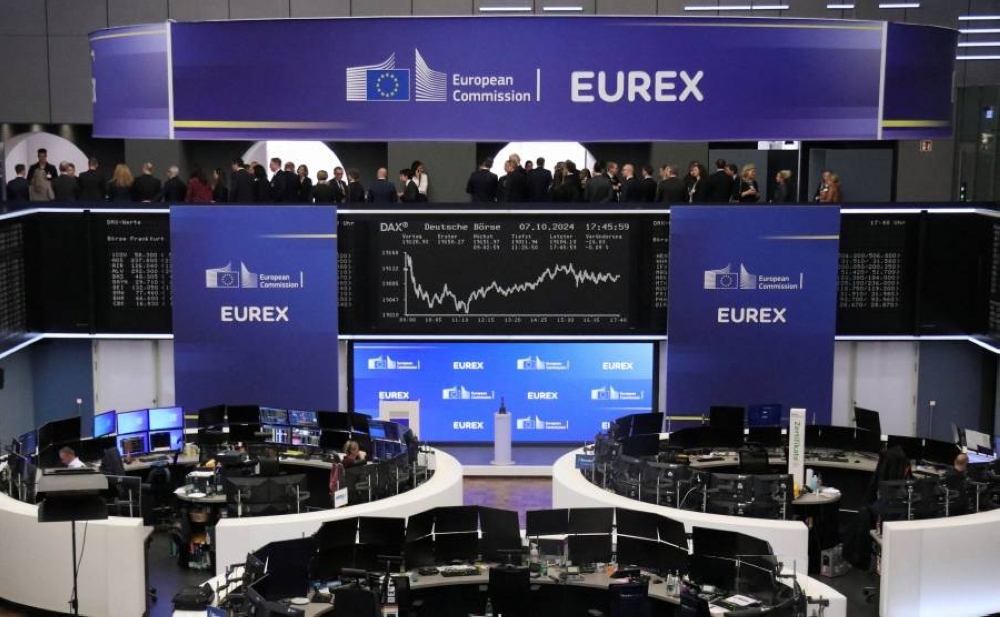
Financial markets witnessed significant shifts today, with European stocks sharply lower, reflecting a cautious and watchful stance among investors. The pan-European Stoxx 600 index fell by 1.17%, settling at 580.60 points. This decline underscores the current economic challenges facing the markets and raises numerous questions about the region's economic trajectory.
Reasons for the decline in European stocks and the economic context
To understand this decline in European stocks, one must consider the broader context and historical background of the continent's financial markets. Historically, European indices have been directly influenced by the policies of the European Central Bank, particularly regarding interest rates and inflation. During periods of inflationary pressures or geopolitical tensions, investors tend to move away from high-risk assets like stocks and towards safe havens. This recurring pattern explains the current volatility, as the figures reflect growing concern about the slowdown in economic growth in major European economies and the impact of energy crises and global supply chain disruptions that have weighed on the profits of major companies.
Performance of major indices: DAX and CAC 40 decline
The decline wasn't limited to the overall index; it extended to major local indices across the continent. Germany's DAX index, representing Europe's largest economy, fell by 1.49% to close at 22,598.49 points. In France, the CAC 40 index also suffered significant losses, dropping 0.98% to 7,769.31 points. These declines in major markets confirm that the sell-off was widespread and not confined to a single sector, but rather encompassed vital sectors upon which local economies heavily rely.
Expected impact at the regional and international levels
The decline in European stocks is not confined to the continent; its impact extends to regional and international markets. Locally and regionally, this downturn is eroding consumer and investor confidence, potentially leading companies to scale back expansion plans or postpone new investments. Internationally, financial markets are closely interconnected; any turmoil in European markets is often reflected in Wall Street indices in the United States and Asian markets. Global investors view Europe as a key indicator of the health of the global economy, and therefore, a continued decline could raise concerns about a broader economic recession.
Future outlook for financial markets
Given these circumstances, the future of European stocks remains contingent on several crucial factors in the coming period. Financial analysts are awaiting the release of new economic data related to unemployment rates and consumer price indices, as well as any statements from central bank officials. These factors combined will determine whether this decline is merely a temporary market correction or the beginning of a prolonged downward trend that necessitates new hedging strategies from portfolio managers.