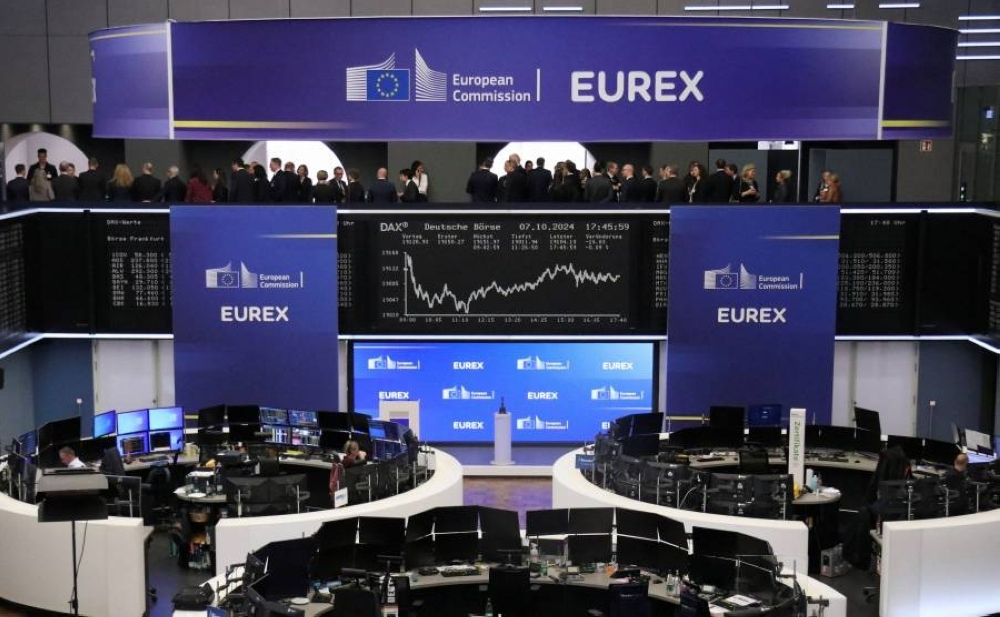
European stock markets closed mixed on Tuesday, in a session marked by caution and anticipation from investors, as the performance of major indices reflected uncertainty about the continent's economic trajectory. While the pan-European STOXX 600 index managed a slight gain of 0.10%, other major indices showed divergent performance, highlighting the simultaneous challenges and opportunities facing the European economy.
On the national indices front, Germany's DAX, a key gauge of the health of the industrial sector in Europe's largest economy, slipped slightly by 0.09%. France's CAC 40, which tracks major French companies in sectors such as luxury goods and energy, followed suit, closing with a marginal decline of 0.02%. This divergence reflects a split in investor sentiment between cautious optimism about some companies' earnings and persistent concerns about inflationary pressures and tight monetary policies.
General context and key market drivers
This mixed performance comes against a complex economic backdrop. On the one hand, European central banks, particularly the European Central Bank (ECB), are still struggling to curb persistently high inflation. Although the pace of interest rate hikes has slowed, high borrowing costs continue to weigh on economic growth and businesses' ability to expand. Investors are closely watching for any new statements or data from central bank officials for clues about when interest rate cuts might begin, which is currently the biggest driver for markets.
The importance of performance and its future impact
The divergent performance of European stocks is not merely a matter of numbers on a screen; it reflects investors' future expectations. The strong performance of some sectors may indicate their resilience in the face of challenges, while the decline in others, particularly industrials, reflects concerns about slowing global and domestic demand. Regionally, the performance of indices such as the DAX and CAC 40 directly impacts consumer and business confidence in Germany and France, the two main drivers of growth in the Eurozone. Internationally, the stability or volatility of European markets sends signals to global investors about the attractiveness of European assets compared to other markets such as the US and Asia, thus influencing global capital flows.
In conclusion, Tuesday's session was a moment of reflection for the markets, as investors weighed intermittent positive economic data against persistent macroeconomic risks. Attention will remain focused on upcoming inflation reports and economic growth indicators, which will shape the performance of European stocks in the coming weeks.