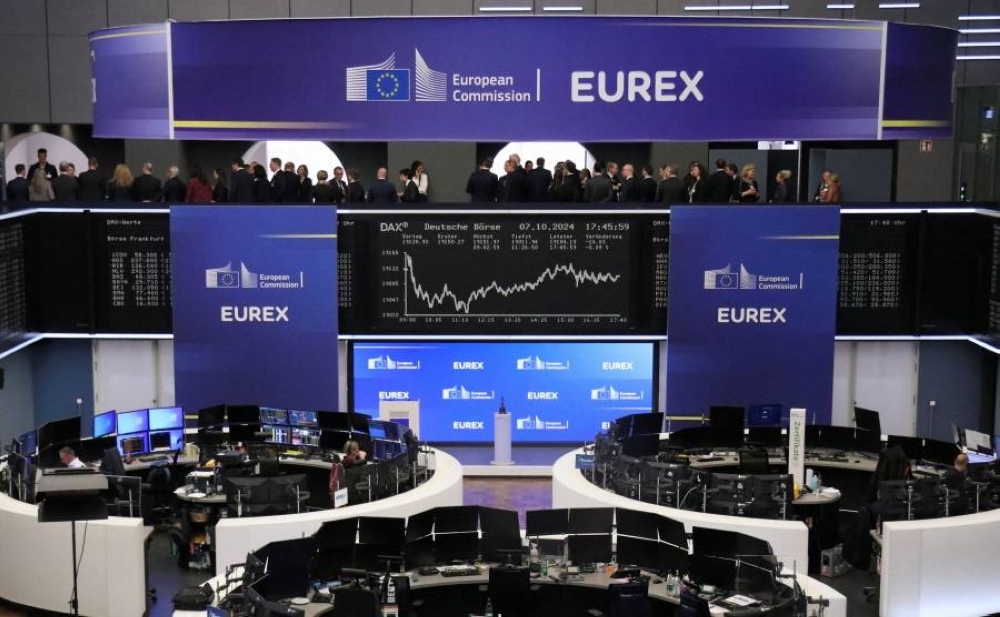
European indices showed mixed performance at the end of the week
European stock markets closed mixed on Friday, reflecting investor caution amid conflicting economic data and global monetary policy developments. While Germany's main index gained momentum, other indices faced selling pressure, summarizing a volatile week for financial markets.
In closing, the pan-European Stoxx 600 index edged down 0.13% to settle at 617.70 points. France's CAC 40 also declined, falling 0.35% to close at 8,311.74 points. In contrast, Germany's DAX index managed to gain, rising 0.20% to 24,903.39 points, demonstrating relative strength compared to other markets in the region.
Economic context and monetary policies
This mixed performance comes within a complex global economic context. Investors in Europe, as elsewhere, are weighing concerns about persistently high inflation against expectations regarding the future course of interest rates set by the European Central Bank and the Bank of England. Any new data on inflation, the labor market, or GDP growth is carefully analyzed to anticipate the central banks' next moves, which directly impact borrowing costs and investors' risk appetite.
Historically, European markets are heavily influenced by the economic health of their largest economies, particularly Germany, which is considered the continent's engine of growth. Therefore, any positive indicators from the German economy, such as industrial production or export data, often support the DAX index, which may explain its strong performance this session. Conversely, the decline in the broader Stoxx 600 index may reflect more general concerns about growth in the Eurozone as a whole.
Regional and international influences
European stock performance cannot be separated from the global landscape. Markets are closely interconnected, influenced by decisions of the US Federal Reserve, growth data from China, and geopolitical tensions in various parts of the world. The divergent performance suggests that investors are assessing risks and opportunities on a sectoral and geographical basis, favoring certain markets or sectors over others based on their future expectations.
In the currency markets, the British pound saw a notable rise against the US dollar and the euro, reaching $1.3643, a 0.18% increase. Currency movements often reflect differences in interest rate expectations between various economic regions, and the pound's rise may indicate greater confidence in the resilience of the UK economy or expectations that the Bank of England might be slower to cut interest rates than its counterparts.