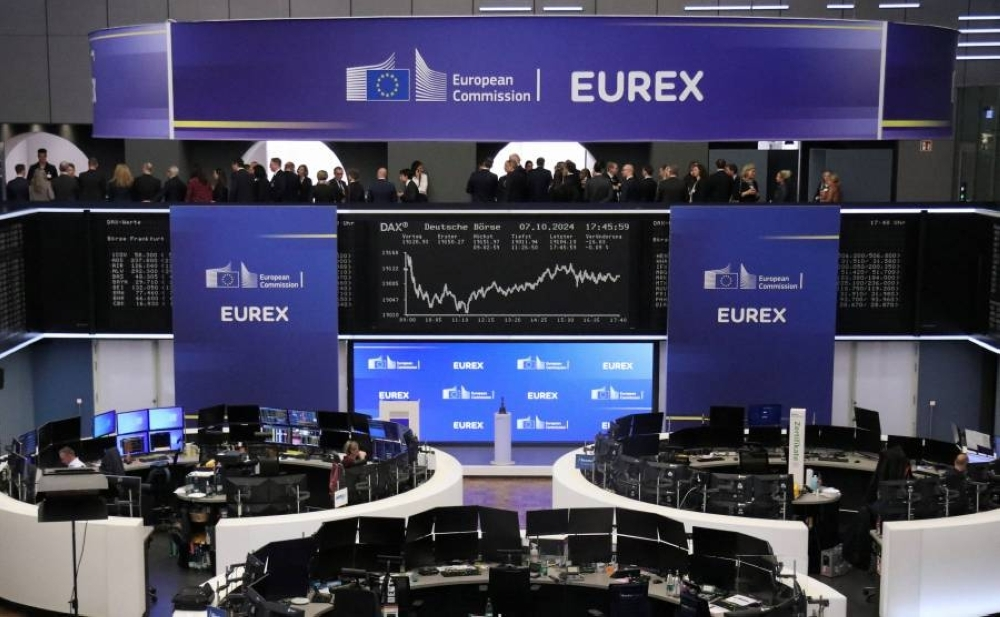
European financial markets experienced a widespread decline at the close of trading today, with European stocks in the red, impacted by broad-based selling across most major sectors. This negative performance reflected a sense of caution among investors, leading to a drop in the main pan-European index.
Performance of major European indices
Among the biggest losers was the pan STOXX 600 , the broadest benchmark for stock performance in the region, which fell 1.19% to close at 607.06 points. This decline is a significant indicator of investor sentiment in European markets, given that the index includes companies from 17 European countries and covers a wide range of sectors.
In major domestic markets, Germany's DAX index, which tracks the 40 largest blue-chip companies, fell by 1.33% to settle at 24,960.33 points. The situation was no better in France, where the CAC 40 index on the Paris Stock Exchange recorded significant losses of 1.78%, closing at 8,112.02 points, reflecting selling pressure on leading French stocks.
London Stock Exchange and its effects
Meanwhile, across the English Channel, London's main stock market index (FTSE 100) also closed lower today, albeit at a less pronounced rate than its counterparts in the Eurozone. The index fell by 0.39%, losing 39.94 points to close at 10,195.35. This index comprises the 100 largest companies listed on the London Stock Exchange by market capitalization and is considered a vital indicator of the health of the British economy and the global companies listed on it.
Signs of decline and the economic context
This decline in European stock markets comes amid a volatile global economic climate, where markets are closely monitoring inflation indicators and central bank interest rate decisions. The movement of an index like the Stoxx 600 not only reflects company performance but also serves as a barometer of economic confidence in the Eurozone and the UK.
These movements are of particular interest to economic analysts, as declines in benchmark indices like the DAX and CAC may signal concerns about slowing economic growth or the impact of global geopolitical and economic challenges on the profits of major companies. European markets remain an integral part of the global financial system, influencing and being influenced by market movements in the United States and Asia, making close monitoring of these market closures crucial for understanding future investment trends.