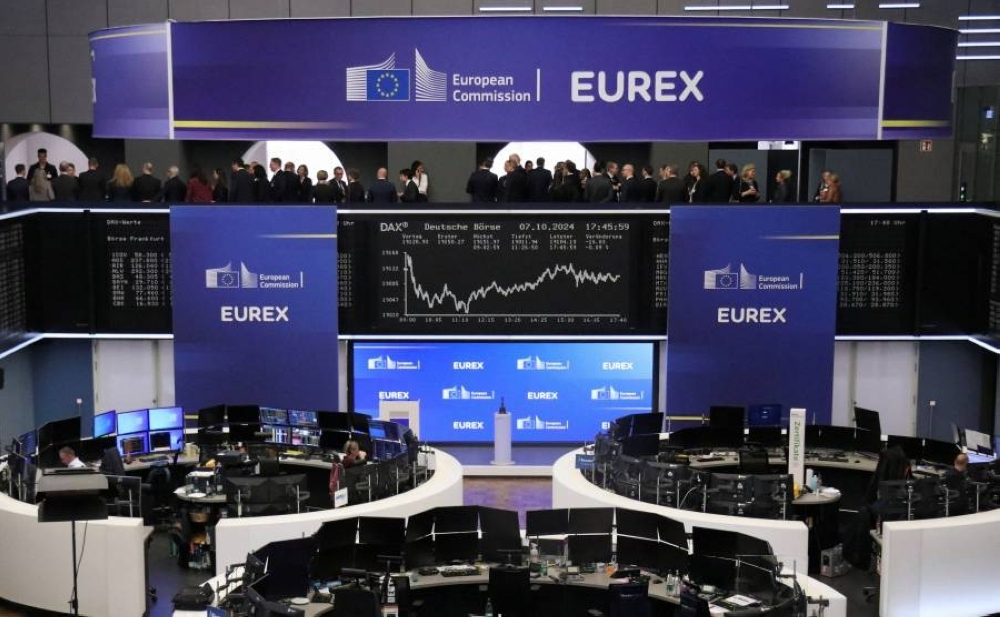
Contradictory performance in European stock markets
European stock markets closed mixed, reflecting the caution and anticipation among investors amid the uncertain global economic outlook. While the pan-European STOXX 600 index edged higher, the main indices in major European economies showed divergent trends, with Germany's DAX index declining and France's CAC 40 index posting notable gains.
Background of divergent performance and its economic context
This mixed performance comes within a complex economic context. On the one hand, the European economy faces significant challenges, including a slowdown in industrial growth, particularly in Germany, the region's economic engine. This partially explains the pressure on the DAX index, which comprises major industrial and exporting companies. On the other hand, investors are eagerly awaiting upcoming economic data, most notably inflation figures for the Eurozone and the United States, which will be crucial in determining the future course of interest rates by the European Central Bank and the US Federal Reserve.
Historically, European markets have been highly sensitive to global monetary policies. Any hint of monetary tightening to curb inflation raises concerns about an economic slowdown, while signals of interest rate cuts inspire optimism in the markets. This tug-of-war between controlling inflation and stimulating growth is what creates the current market volatility.
The importance and expected impacts of current performance
Regionally, this divergence highlights the differences in economic performance among Eurozone countries. The rise of the French CAC 40 index, strongly supported by the performance of luxury goods and services companies, indicates resilience in some consumer sectors, in contrast to the German industrial sector, which is suffering from weak global demand and high energy costs.
Internationally, the performance of European stock markets is a key indicator of the health of the global economy due to their close link to international trade. Investors worldwide monitor these movements to gauge future trends in US and Asian stock markets. Continued uncertainty in Europe could lead to increased volatility in global markets and drive investors toward safe havens, impacting global capital flows.