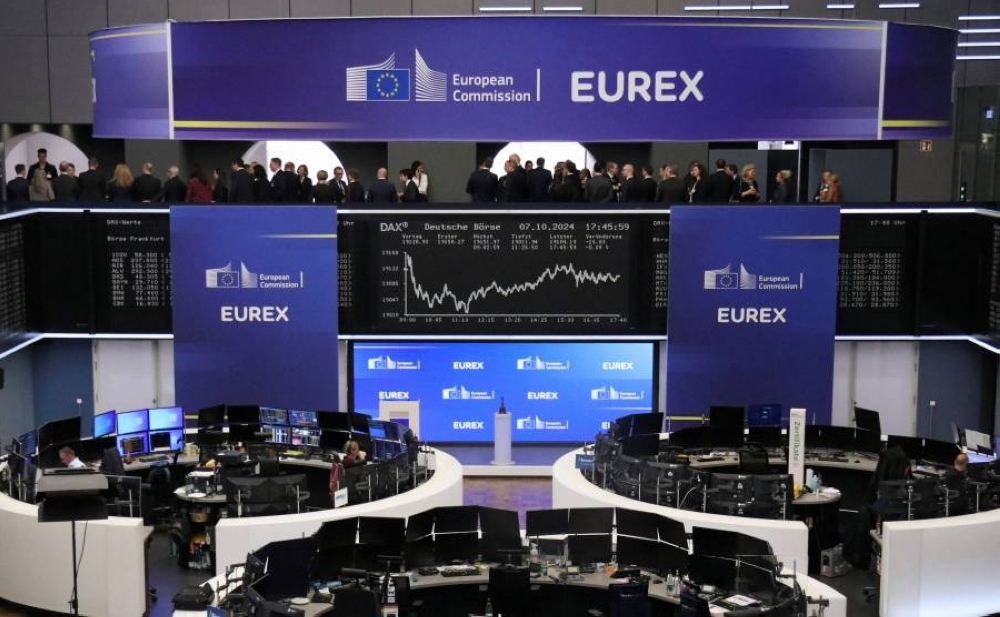
European stock markets ended the trading session with a broad decline, as investor caution prevailed, leading to a drop in the continent's main indices. The pan-European STOXX 600 index, a wide gauge of the region's stock performance, closed slightly lower by 0.03%, settling at 614.38 points, reflecting a period of fluctuation and relative stability with a downward bias at the close of trading.
Performance of major markets in Germany and France
In Germany, the economic engine of the European Union, the DAX index saw a notable decline of 0.30%, closing at 25,276.28 points. This drop reflects potential pressure on the German industrial sector and the major export companies listed on the index. In France, the losses were even more pronounced, with the CAC 40 index falling 0.65% to finish at 8,258.94 points, impacted by the performance of some leading companies in the banking and luxury goods sectors.
Economic context and the impact of monetary policies
This decline comes amid a global economic climate of anticipation, with investors closely monitoring the European Central Bank's decisions regarding interest rates and inflation. These indicators play a crucial role in guiding capital flows within European markets. Concerns about the continuation of tight monetary policies or a slowdown in economic growth typically lead investors to take profits or reduce their risk aversion, which explains the selling pressure witnessed during the session.
The importance of the Stoxx 600 index and its regional impact
The STOXX 600 index is one of the most important global financial indices, comprising 600 companies of varying sizes (large, medium, and small) across 17 European countries. Given its sectoral and geographical diversity, any movement in this index is a vital indicator of the overall economic health of the Eurozone, the United Kingdom, and Switzerland. Today's slight decline, while small, suggests a lack of strong positive catalysts to drive the markets upward at present.
Expected impact on global markets
Lower European stocks often cast a shadow over investor sentiment in other global markets, particularly US markets, which open during the second half of the European session, and Asian markets the following day. The close interdependence of financial markets means that weak performance in Europe could prompt global investment portfolios to reassess their positions, especially given the current geopolitical and economic challenges facing the global economy.