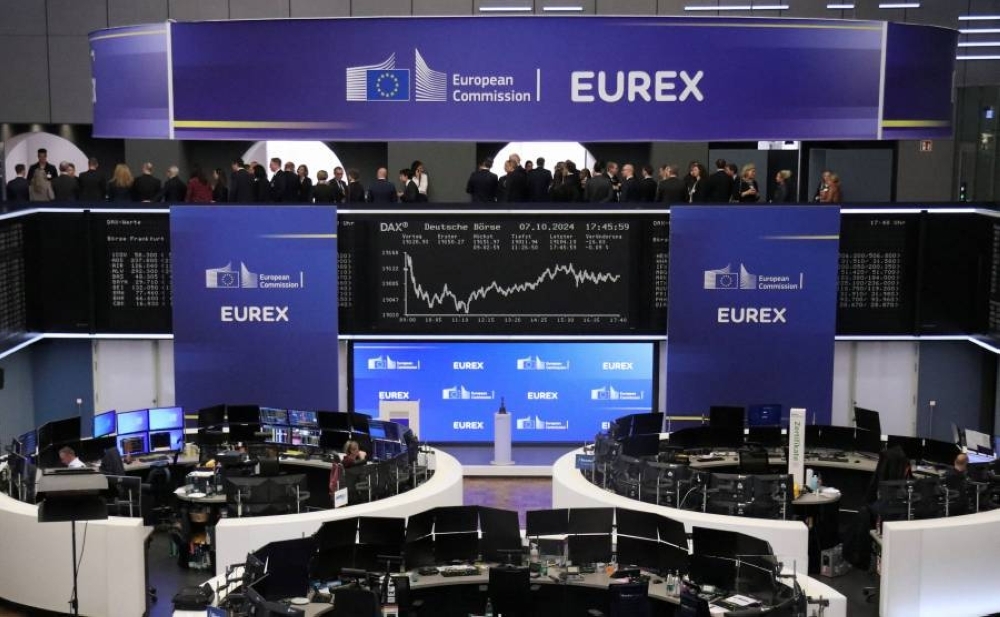
European stock indices saw a significant decline during Thursday's trading session, relinquishing the gains made on Wednesday. This decline comes as investors attempt to digest and interpret conflicting messages regarding the Middle East peace talks, particularly the tensions surrounding Iran.
This anxiety was clearly reflected on trading screens, with the pan-European Stoxx 600 index falling by 1%, a decline that affected all major exchanges and most vital economic sectors. Specifically, the UK's FTSE 100 index traded down 1.05%, while Germany's DAX index fell by 1.3%. The French and Italian markets were not immune to this downturn, with France's CAC 40 index declining by 0.8% and Italy's FTSE MIB index dropping by 1%.
The historical roots of the tensions and their impact on European stock indices
Global financial markets, particularly in Europe, have always been highly sensitive to geopolitical tensions in the Middle East. Historically, the region has been a vital artery for global energy supplies, and any military or political escalation there is immediately reflected in oil and gas prices, which in turn affects production costs and inflation rates in Europe. In past decades, similar crises have led to sharp market volatility, as investors tend to abandon high-risk assets like stocks and seek safe havens such as gold and government bonds during times of uncertainty. This historical context explains the current markets' rapid response to news emanating from Washington and Tehran.
Conflicting statements between Washington and Tehran
Over the past 48 hours, global markets have reacted with mixed sentiments to conflicting statements from the United States and Iran regarding the status of peace talks. While the US administration maintains that diplomatic discussions are ongoing concerning a proposed peace plan to de-escalate tensions, Tehran categorically denies any direct contact with Washington on this matter. In this context, Iranian state media quoted Foreign Minister Abbas Araqchi on Wednesday as saying that Iranian officials are studying a US proposal to end the conflict, but he simultaneously stressed that his country has no intention of holding any direct talks with the US side, further clouding the picture for investors.
The anticipated economic repercussions and the G7 meeting
These developments are of paramount importance and are expected to have an impact extending from the local and regional levels to the international level. Regionally, continued tensions threaten to disrupt trade and shipping, while internationally, monetary policymakers fear that energy price shocks could hinder central banks' efforts to control inflation, potentially leading them to postpone anticipated interest rate cuts.
Meanwhile, investors and European markets are closely watching the outcome of the G7 foreign ministers' meeting in France on Thursday and Friday. Current geopolitical crises, particularly tensions with Iran and the war in Ukraine, top the agenda of this crucial meeting. Adding to the event's significance is the broad international participation, with high-level delegations from Saudi Arabia, Brazil, India, South Korea, and Ukraine attending, reflecting a global desire for swift diplomatic solutions to prevent further setbacks to the global economy.