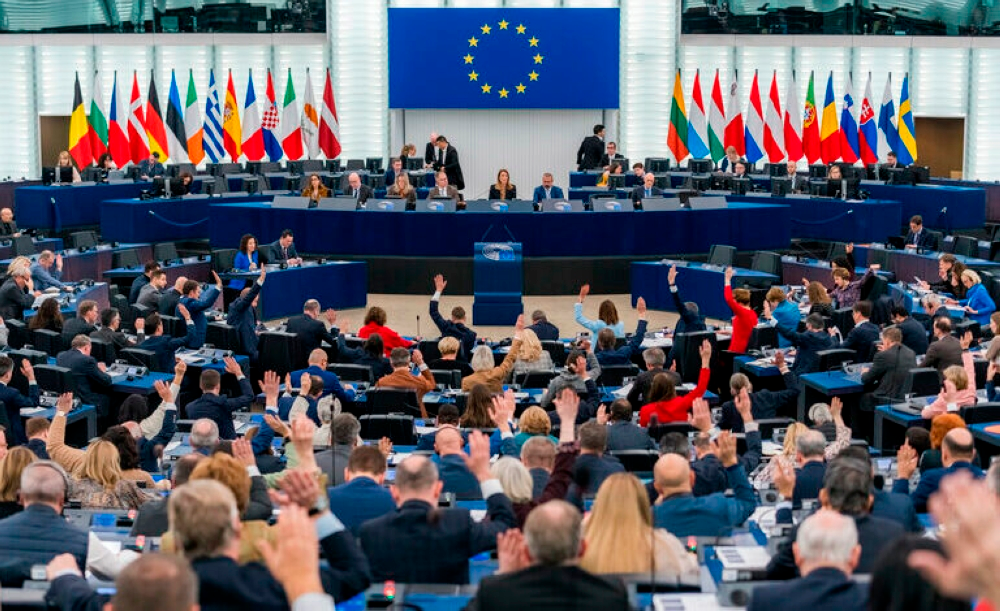
In an escalation reflecting the deepening transatlantic rift, the European Parliament decided to suspend the ratification process of the trade agreement between the European Union and the United States. This decisive move comes in light of recent threats made by Donald Trump, which have revived the specter of a trade war over economic relations between the world's two largest trading blocs.
Details of the European decision
The main political groups in the European Parliament confirmed on Tuesday that they had reached a consensus to freeze the agreement. Iratxe García Pérez, leader of the Socialists and Democrats group, told reporters that there was "a majority agreement" among the political groups in Parliament to halt the ratification process of the trade deal reached last year between Washington and Brussels. This move sends a clear political message that the European Union will not negotiate or ratify agreements under threat or economic coercion.
Background to the tension: "America First" policy
This decision cannot be separated from the historical context of strained trade relations in recent years. Donald Trump, both during his first presidential term and in subsequent campaigns, repeatedly threatened to impose sweeping tariffs on European imports, targeting sensitive sectors such as the automotive, steel, and aluminum industries. This protectionist "America First" policy directly contradicts the principles of free trade upheld by the European Union and raises concerns among European leaders about trade imbalances and damage to domestic industries.
Economic and geopolitical importance
Freezing this agreement carries profound implications that go beyond the immediate commercial dimension:
- Economically, the trade relationship between the United States and the European Union is the largest in the world, with the two sides exchanging trillions of dollars worth of goods and services annually. Any disruption to the agreements governing this relationship could lead to uncertainty in global markets and a slowdown in economic growth for both parties.
- Politically: Through this position, the European Union seeks to consolidate the principle of "strategic independence," emphasizing its ability to protect its interests in the face of traditional allies if policies conflict.
- Future of relations: This freeze raises questions about the future of the transatlantic partnership, especially in light of other global geopolitical challenges that require joint coordination, such as dealing with China’s economic rise and security crises in Europe.
In conclusion, it appears that Brussels has chosen to freeze the situation pending a full picture of the upcoming US policy, preferring not to commit to agreements that could become a burden if Trump carries out his threats to impose punitive tariffs.