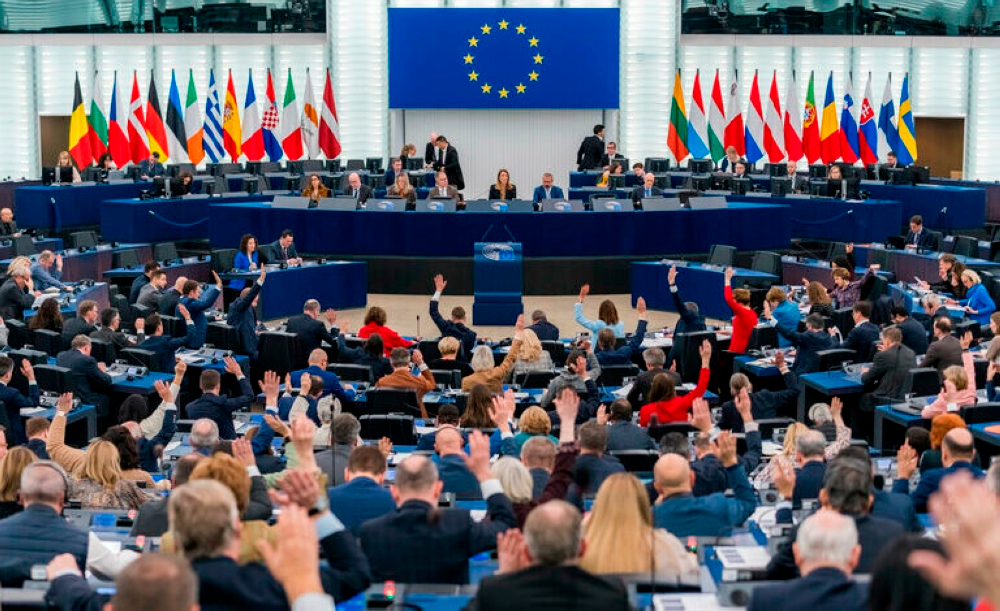
In a historic move that redraws the map of European energy, the European Parliament overwhelmingly approved a resolution to completely ban all natural gas imports from Russia by the end of 2027. This decision, voted on during a plenary session in Strasbourg, crowns a series of measures taken by the European Union to cut off funding for Russia's war on Ukraine and achieve strategic energy independence.
Background to the decision: From historical dependence to inevitable rupture
For decades, Russian gas has been a cornerstone of energy security for many European countries, particularly Germany and Italy, where it was seen as a reliable and inexpensive source of energy that sustained industry and provided warmth to homes. This dependence was embodied in massive infrastructure projects such as the Nord Stream pipeline. However, Russia’s full-scale invasion of Ukraine in February 2022 marked a turning point, revealing the extent to which Moscow uses energy as a geopolitical weapon to exert pressure on Europe. EU leaders realized that this dependence was no longer merely an economic issue, but a direct threat to the continent’s security and sovereignty.
The importance of the decision and its expected impact
This ban is an integral part of the European Union’s ambitious plan known as “REPowerEU,” which aims to end dependence on Russian fossil fuels as quickly as possible. The plan rests on three main pillars: diversifying gas supply sources by increasing imports of liquefied natural gas (LNG) from reliable partners such as the United States and Qatar, increasing pipeline supplies from Norway and Azerbaijan, and accelerating the transition to renewable energy sources such as wind and solar power, in addition to promoting energy efficiency measures to reduce consumption.
Impact at the European and international levels
At the European level, the decision presents both a challenge and an opportunity. On the one hand, phasing out Russian gas requires massive investments in new infrastructure, such as LNG regasification terminals and power grid upgrades, and could lead to short-term energy price volatility. On the other hand, it enhances long-term energy security, accelerates the green transition in line with the EU's climate goals, and reduces the bloc's vulnerability to political blackmail.
For Russia, the loss of the European market, its largest and most profitable customer, represents a severe economic blow. Moscow will be forced to seek alternative markets, particularly in Asia, which will require costly and time-consuming infrastructure development that may not fully compensate for the losses. Internationally, this shift is reshaping global energy flows, with Europe becoming a major competitor for global liquefied natural gas (LNG) supplies, impacting prices and availability in other parts of the world.