In a firm stance reflecting its commitment to international agreements, the European Union reiterated its expectation that all its international partners respect the principle of the territorial integrity and national sovereignty of states. This direct statement, made on Monday by the EU's spokesperson for home affairs, Anita Heber, was a swift and implicit response to US President-elect Donald Trump's renewed and controversial call to annex Greenland, a territory of the Danish crown.
"The European Union will continue to uphold the principles of national sovereignty, territorial integrity, and the inviolability of borders," Heber told reporters, as reported by international news agencies. She added, emphasizing the EU's core principles, "These are universal principles, and we will not cease to defend them, especially when it comes to the territorial integrity of an EU member state," in a clear reference to Denmark, under whose sovereignty Greenland enjoys self-governance.
Background of the controversy: From 2019 to the present day
This is not the first time Trump has floated the idea of buying the Arctic island. In 2019, during his first presidential term, he sparked a rare diplomatic crisis between Washington and Copenhagen when he suggested buying Greenland, describing it as a "great real estate deal." The proposal was met with staunch rejection from Danish Prime Minister Mette Frederiksen, who called the idea "ridiculous," prompting Trump to cancel a planned state visit to Denmark.
The debate was recently renewed following reports and statements indicating that Trump is still interested in the idea, prompting a preemptive European response to reaffirm European unity in the face of any proposals that infringe upon the sovereignty of member states.
The strategic importance of Greenland
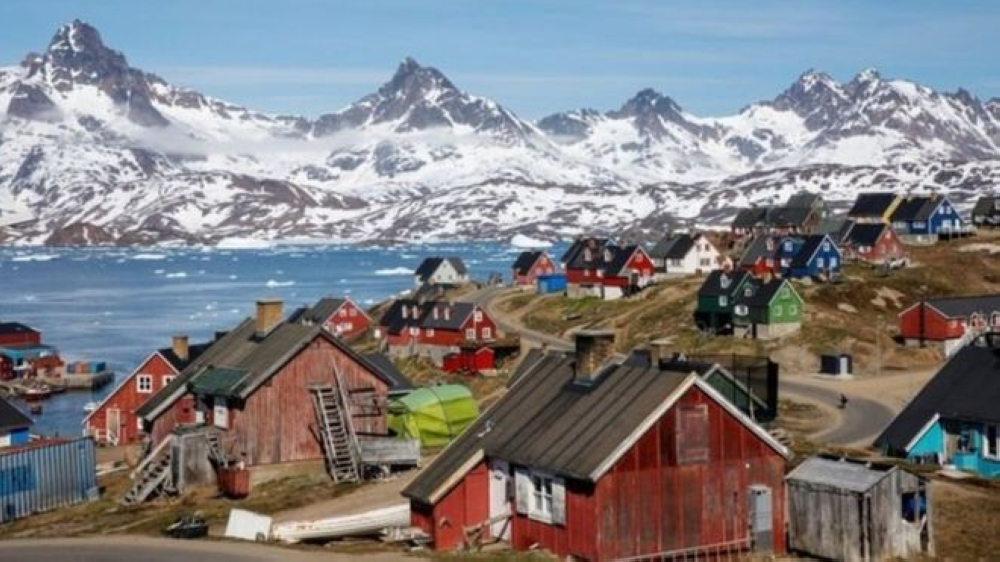
Greenland is acquiring enormous geopolitical and strategic importance that goes beyond its vast icy area, which explains the continued American interest in it:
- Military location: The island is home to the US Thule Air Base, the northernmost US military base, which plays a vital role in the ballistic missile early warning system and space surveillance, making it a key pillar of US national security.
- Natural resources: With the melting of ice as a result of climate change, Greenland has become the focus of attention for the great powers because of its rare mineral wealth, including rare earth elements necessary for advanced technology industries, oil, and gas, which puts it at the heart of international competition between the West, China, and Russia.
- Shipping routes: The melting ice in the Arctic is opening up new shipping routes that could shorten global trade routes, increasing the strategic importance of control or influence in that region.
The EU's position confirms that transatlantic relations, despite their strength, must be based on mutual respect for the sovereignty of states, and that strategic alliances do not mean accepting proposals that affect the constitutional status of member states.