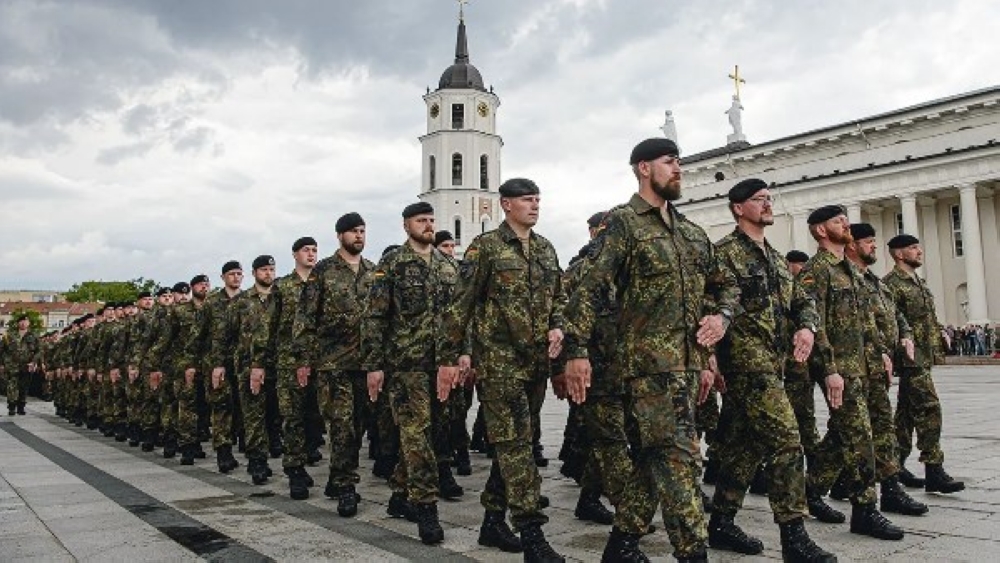
In a move reflecting a radical shift in the European Union's defense doctrine, EU Defense Commissioner Andrius Kubilius has called on member states to seriously consider forming a joint, independent European military force. This bold proposal aims to fill the potential void left by any withdrawal or reduction of US forces stationed on the continent, amid escalating geopolitical concerns.
Proposal details: A European army of 100,000 soldiers
During a speech in Sweden, Cubillius proposed the creation of a "strong, permanent European military force" of approximately 100,000 troops. The European official argued that this option was essential for better protecting the continent in light of international developments. Cubillius posed the question bluntly: "How will we replace the permanent American military force of 100,000 troops, which forms the backbone of European military power?" He emphasized the need for a readily available and effective alternative.
Geopolitical context: Concern over US policies
This proposal doesn't arise in a vacuum; rather, it coincides with growing doubts among NATO member states regarding the sustainability of their complete security dependence on Washington. These concerns are fueled by the erratic policies of successive US administrations, including former President Donald Trump's stances and statements that raised concerns about the United States' commitment to defending its allies, as well as the increasing US focus on containing China in the Indo-Pacific region, which could diminish the priority given to Europe.
Historical background and challenges to sovereignty
The idea of creating a "unified European army" has been floated for decades, but it has always run up against the obstacle of "national sovereignty," with member states wary of relinquishing control of their armies to a central command in Brussels. Historically, Europe has relied almost entirely on the American security umbrella through NATO since World War II. However, the escalating threats on the EU's eastern borders, particularly from Russia, have prompted European capitals to reassess their strategies and intensify their efforts to bolster their own capabilities.
European Security Council and support for Ukraine
In the context of strengthening the defense architecture, Kubilius, the former Prime Minister of Lithuania, called for the creation of a "European Security Council" comprising the continent's major powers, with the potential inclusion of Britain, to ensure broader security coordination outside the framework of the European Union. He emphasized that the council's task would be to discuss the most pressing defense issues and make strategic decisions. He stressed that the top priority now must be changing the dynamics of the war in Ukraine to ensure that Kyiv does not lose the battle, which constitutes the first line of defense for European security.
In conclusion, these statements put the European Union to a real test of its political will: Will Europe succeed in building military strategic independence, or will it remain hostage to the political fluctuations in Washington?