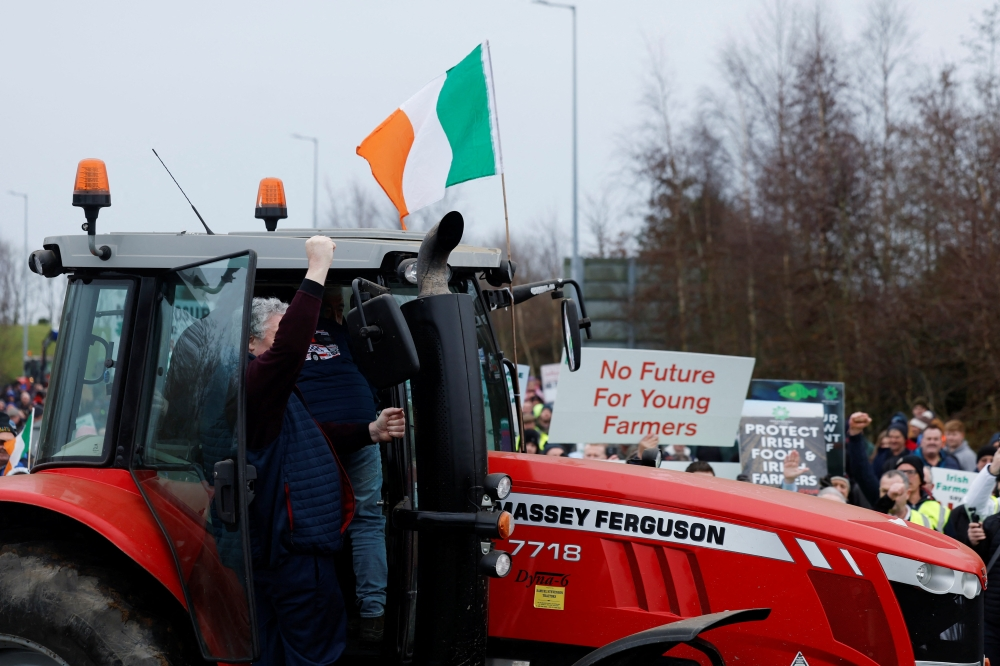
Several European countries, most notably Ireland, witnessed a wave of anger among farmers, with thousands demonstrating last Saturday against the controversial free trade agreement between the European Union and the South American trade bloc Mercosur. These protests came a day after EU member states announced their approval of the agreement, a move that overcame strong opposition from key agricultural countries such as France and Ireland.
Protests sweep across the Old Continent
The protests weren't confined to Ireland, where tractors carrying banners reading "No to Mercosur" and "Save local agriculture" rolled out; the movement spread to other countries. In Poland, farmers held large demonstrations, while France and Belgium saw major roads blocked in a show of outright rejection of the agreement. Protesters view the agreement as a "stab in the back" for the European agricultural sector, threatening to flood markets with uncompetitive imported products.
Historical background and context of the agreement
This agreement is the culmination of marathon negotiations spanning more than 25 years between the European Union and the Mercosur bloc, which comprises major South American economies: Brazil, Argentina, Paraguay, and Uruguay. The agreement aims to create one of the world's largest free trade areas, covering a vast consumer market of over 700 million people, by gradually eliminating tariffs on the majority of goods traded between the two sides.
Economic concerns and quality standards
The concerns of European farmers, particularly in Ireland and France, revolve around a fundamental issue: “unfair competition.” They fear a massive influx of beef, poultry, and agricultural products from South America at very low prices. This concern stems from the fact that production in Mercosur countries is not subject to the same stringent environmental and health standards that the European Union imposes on its farmers, thus reducing production costs and making it impossible for European producers to compete.
European divisions and conflicting interests
The agreement has created a clear rift within the European Union. While France, Ireland, and Poland are leading the opposition in defense of their vital agricultural sectors, major industrialized nations like Germany and Spain are pushing hard for its completion. Those in favor argue that the agreement will revitalize the struggling European economy by opening new markets for European industrial exports, particularly automobiles, machinery, and equipment, as well as services. This creates a delicate balance between the interests of the industrial sector and the concerns of the agricultural sector.
What happens after approval?
Despite the initial green light, the agreement still has a long way to go before it can be fully implemented. The final version must be presented to the European Parliament for a vote, a stage observers expect to be fraught with intense political wrangling. The Irish Farmers' Association has called on MEPs to uphold their responsibilities and reject the agreement, describing the current step as "disappointing," while Irish Deputy Prime Minister Simon Harris has affirmed that his government will continue to voice its legitimate concerns on all fronts.