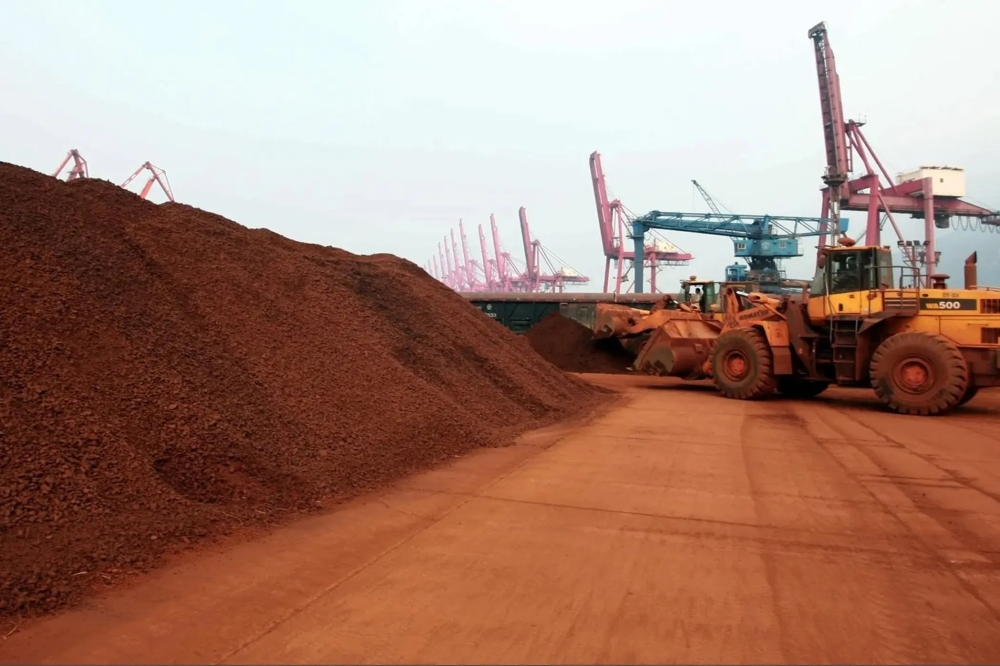
In a strategic move aimed at bolstering the economic independence of the European continent, the European Commission announced on Wednesday a massive financial package of nearly €3 billion. This initiative is primarily intended to reduce Europe's excessive reliance on China for supplies of rare earth elements and vital raw materials, which have become the lifeblood of modern industries.
Strategic financing for vital sectors
In a press statement, Commission Vice-President Stefan Sigourney explained that this funding will not be limited to one sector but will cover the entire value chain. The funds will be directed towards supporting strategic projects encompassing the extraction, refining, and recycling of these metals and minerals. These materials are of paramount importance to the defense, electric vehicle, digital technology, and renewable energy sectors, both within the European Union and in cooperation with partner countries.
Global context and importance of rare earth minerals
These moves come at a time of fierce international competition for control of future resources. Rare earth elements are known as the "oil of the 21st century," as neither the green nor the digital transformation is possible without them. They are used in the manufacture of almost everything, from smartphones and semiconductors to wind turbines and electric vehicle motors. The European Union recognizes that continued near-total dependence on Beijing poses a geopolitical risk, especially given global trade tensions.
A unified European center for resource management
As part of the overall plan, the Commission revealed its intention to create a "European Hub for Bio-Raw Materials," which is expected to be operational by early 2026. Sigourney identified three main tasks for this hub:
- Accurately monitor and assess the needs of the European market.
- Organizing joint procurement on behalf of member states to enhance negotiating power.
- Managing storage and distribution operations to ensure continuous supply to European companies.
Promoting a circular economy and restricting exports
Not content with simply injecting funds, Brussels is now moving towards enacting protectionist legislation. The European Union is set to begin restricting exports of scrap and waste from permanent magnets containing rare earth elements early next year. This measure aims to force industries to recycle these materials within Europe instead of exporting them, thus creating a sustainable domestic source of raw materials. The Commission is also considering extending these restrictions to include aluminum and copper waste.
Chinese dominance and Western fears
China currently controls the majority of the world's rare earth reserves, and more critically, it holds a near-monopoly on refining and processing operations, making the world hostage to its industrial capabilities. European concerns have intensified following Beijing's recent restrictions on exports of certain strategic metals, such as gallium and germanium. These European moves parallel efforts by the United States, which is also seeking to secure supply chains independent of Chinese influence, suggesting the emergence of a new global order based on securing strategic resources.