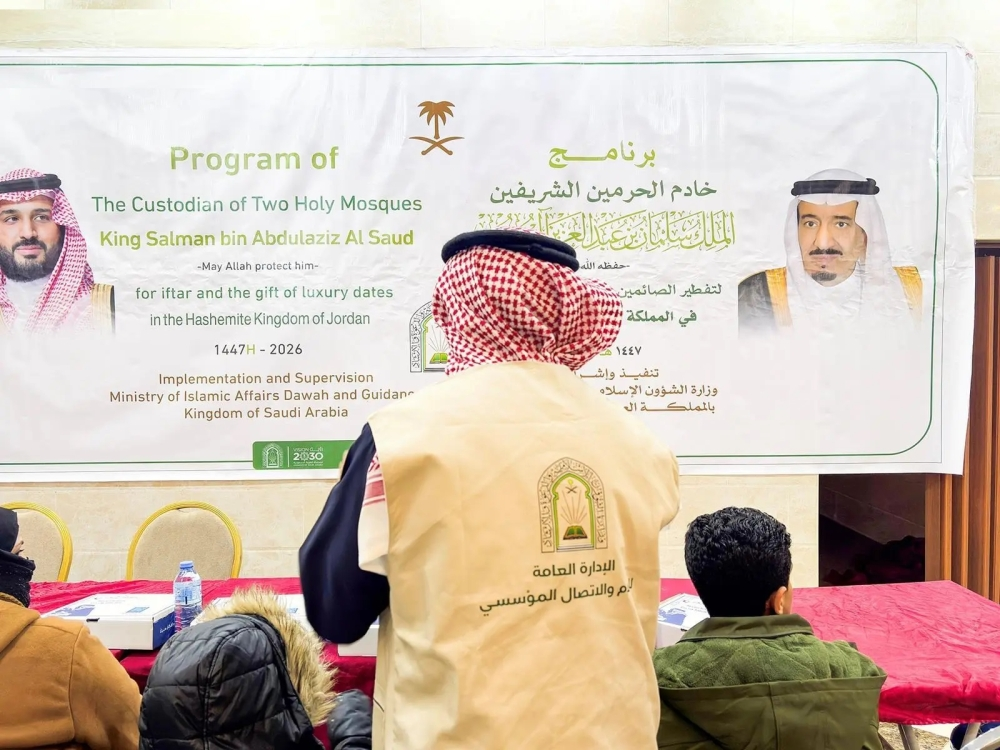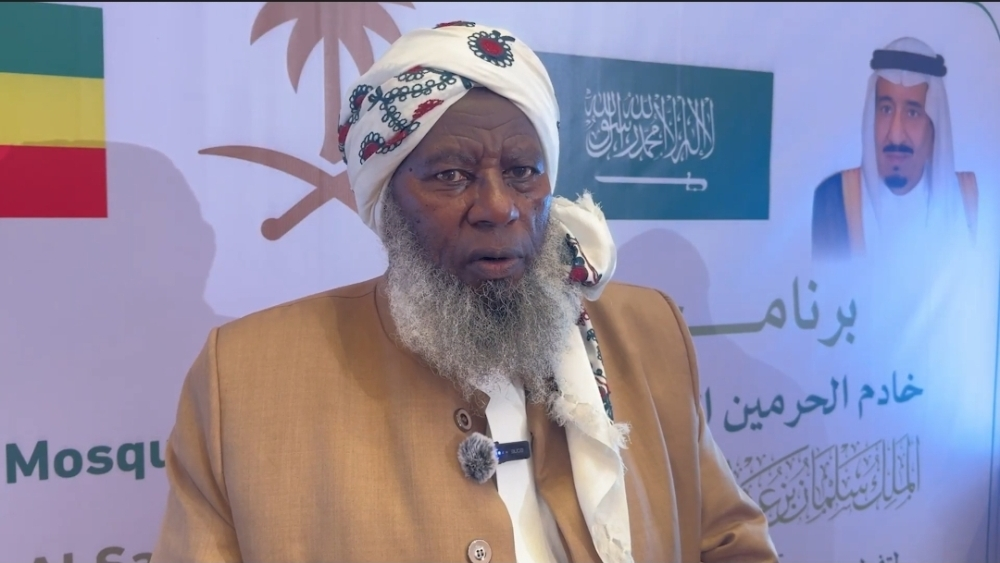
The President of the Supreme Council for Islamic Affairs in Ethiopia, Dr. Ibrahim Tufa, praised the leading role played by the Kingdom of Saudi Arabia in serving Islam and Muslims worldwide, emphasizing that its benevolent and humanitarian initiatives benefit the entire Muslim world. He described the Kingdom as a firmly established model of generosity and giving, which is clearly demonstrated in its programs for Muslims during the holy month of Ramadan.
His remarks came during the launch of the “Custodian of the Two Holy Mosques Program for Distributing Dates and Providing Iftar Meals” in the Federal Democratic Republic of Ethiopia, where he emphasized that these initiatives reflect the Kingdom’s profound spiritual standing and its historical and humanitarian role. He added that the Kingdom, the Qibla of Muslims and a wellspring of knowledge and scholars, was chosen by God to carry a great message, as He placed it in proximity to the Two Holy Mosques and made it a center of blessing and goodness flowing to all parts of the world.
Deep-rooted historical relations between the two countries
Relations between the Arabian Peninsula and Ethiopia (historically Abyssinia) extend back to the dawn of Islam, as Abyssinia was the first land to which the early Muslims migrated, fleeing persecution by the Quraysh. There, they found safety and justice under the rule of the Negus, the just king who welcomed and honored them. This historical background lends a special depth to the relationship between the Saudi and Ethiopian peoples, and makes Saudi initiatives in Ethiopia a reflection of those fraternal ties that have endured for centuries.
The Custodian of the Two Holy Mosques Program: A gift that extends to the world
Dr. Tofa explained that the Custodian of the Two Holy Mosques' program for distributing dates and providing iftar meals is not merely a seasonal humanitarian initiative, but rather a natural extension of a deeply rooted approach the Kingdom has followed since its founding. This program is part of a broad network of humanitarian and relief aid provided by the Kingdom through its humanitarian arm, the King Salman Humanitarian Aid and Relief Center, and the Ministry of Islamic Affairs, Dawah and Guidance. These programs target dozens of countries around the world, reaching millions of Muslims, especially the most vulnerable, thus reinforcing the values of solidarity and compassion during the holy month.
Regional and international importance and influence
Domestically in Ethiopia, this aid helps alleviate the burden on thousands of Muslim families and deepens the bonds of affection between the two peoples. Regionally, these initiatives bolster the Kingdom's soft diplomacy and its role as a stabilizing force and a cornerstone of the Islamic world. Internationally, these efforts solidify the Kingdom's image as a leading nation in humanitarian work and committed to the causes of Muslims everywhere, reflecting its responsibility as Custodian of the Two Holy Mosques. Dr. Tufa noted that the affection between the two countries is renewed and strengthened daily, and that many Ethiopians have been influenced by the approach and beliefs of the Kingdom's scholars and preachers, who have had a profound impact on disseminating sound knowledge and serving Islam.
He concluded his speech by emphasizing that the blessings, bounties, and graces of the Kingdom cannot be counted or enumerated, expressing his deepest gratitude and appreciation to the Kingdom of Saudi Arabia, its leadership and people, and praying to God to reward it with the best reward on behalf of Islam and all Muslims.