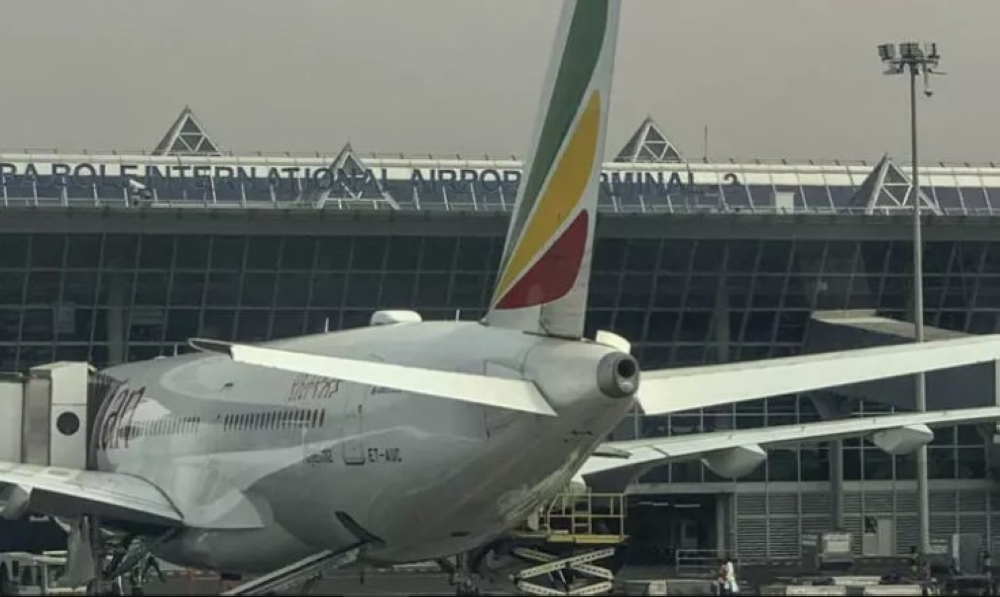
In a strategic move aimed at reshaping the air transport landscape of the African continent, Ethiopia officially launched construction on a new international airport in Bishoftu, about 40 kilometers from the capital Addis Ababa, on Saturday. This massive project underscores the country's ambition to become a global aviation hub, and the airport is expected to become the largest in Africa upon completion, rivaling major international airports in the Middle East and Europe.
Details of the giant project
During the inauguration ceremony, Ethiopian Prime Minister Abiy Ahmed announced that the new airport was designed to be an architectural and engineering icon, with the total project cost estimated at approximately $12.7 billion. According to the plans, the first phase will be able to accommodate 60 million passengers annually, eventually increasing capacity to 110 million passengers per year—more than four times the current capacity of Bole International Airport.
The ambitious project includes, in addition to passenger terminals and runways, state-of-the-art supporting infrastructure, including a modern multi-lane highway linking the airport to the capital, as well as a 38-kilometer high-speed railway line, designed for trains of up to 200 kilometers per hour, ensuring the smooth flow of passengers and goods.
A quantum leap for Ethiopian Airlines
This project is a pressing necessity to accommodate the rapid growth of Ethiopian Airlines, the national carrier and Africa's largest airline in terms of fleet size, profitability, and passenger numbers. The existing Bole International Airport, located in the heart of the capital, is facing significant operational pressure as it has reached its maximum capacity of 25 million passengers. The new airport in Bishoftu will serve as the future base that will enable the airline to expand its global network and solidify Addis Ababa's position as a major gateway to the continent.
Strategic and regional importance
The significance of this event extends far beyond the local level, encompassing broader geopolitical and economic implications. Historically, Ethiopia has always sought to leverage its strategic geographic location between Asia, Africa, and Europe. This airport will enhance Ethiopia's competitiveness against traditional regional aviation hubs and attract a larger share of global transit traffic, thereby bolstering the national economy through increased revenue from logistics and tourism.
Funding and existing challenges
On the financing front, the Bishoftu project received a significant boost with a $500 million commitment from the African Development Bank. The government is also in advanced negotiations with major financial institutions, including the Asian Infrastructure Investment Bank, the European Investment Bank, and the U.S. International Development Finance Corporation, to secure the remaining costs.
Despite these ambitious goals, the project faces challenges related to internal stability. The government hopes that this development will contribute to attracting tourists and investments, despite the continued security tensions in some regions, specifically in Oromia and Amhara. These are challenges that the state seeks to overcome through comprehensive development projects.