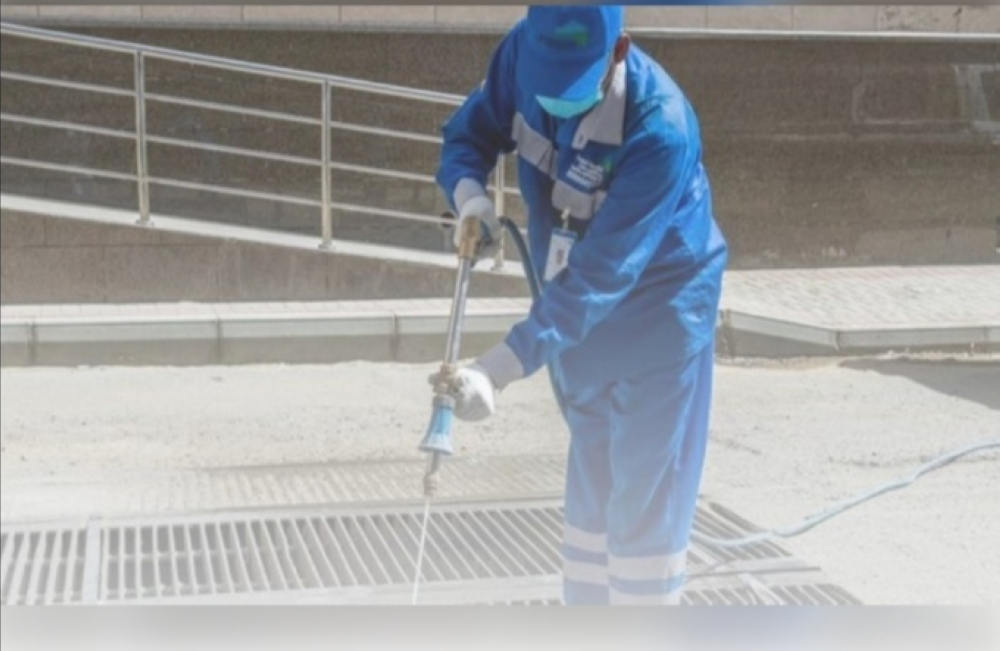
The Holy Capital Municipality revealed the results of its intensive field efforts during the month of November, during which its supervisory and field teams carried out a wide range of environmental sanitation tasks, totaling 51,444, as part of its ongoing strategy to promote public health and raise the quality of life in Makkah. These efforts affirm the Municipality's readiness to address all environmental challenges and ensure the safety of residents and visitors.
The importance of the location and the unique character of the Holy City
Environmental sanitation efforts in the Holy City of Mecca are of exceptional importance, exceeding the traditional concept of public hygiene. This is due to Mecca's unique geography, characterized by valleys and mountains, as well as its high population density and the continuous flow of visitors and pilgrims throughout the year. The Municipality operates according to proactive plans aimed at preventing the emergence of pollution hotspots or the proliferation of pests that could pose a threat to public health, making these efforts a fundamental pillar of the local health security system.
Details of field operations and pest control
In terms of statistics, field teams focused their efforts primarily on combating mosquito breeding grounds, carrying out 22,533 control operations across various residential neighborhoods, open areas, and public facilities. These operations coincided with the treatment of 1,826 stagnant water sites, which serve as breeding grounds for insects, as part of strict preventative measures to reduce vector-borne diseases.
Environmental efforts also included the implementation of 25,105 operations dedicated to addressing fly breeding grounds in markets and vital facilities, in addition to 1,394 maintenance and treatment operations for manholes and rainwater drainage systems to ensure smooth flow and prevent blockages that could lead to water overflow and pollution of the surrounding environment.
Responding to reports and rodent control
Regarding community engagement, the municipality explained that its monitoring and rapid intervention units efficiently handled 665 reports received from residents during the month, reflecting the integrated nature of the monitoring system and the speed of response to citizens' and residents' concerns. In a related context, specialized teams continued their rodent control campaigns, carrying out 3,806 field operations targeting critical locations to limit their spread and reduce their health risks.
Strategic impact on quality of life
These intensive efforts contribute to achieving the goals of the Kingdom's Vision 2030 related to the Quality of Life Program, as effective environmental sanitation helps create a sustainable and healthy environment and reduces the burden on the healthcare sector by preventing diseases before they occur. The Holy Capital Municipality affirmed its commitment to continuing these programs according to periodic operational plans that rely on continuous monitoring and modern technologies to ensure a safe and healthy environment befitting the sanctity of the place and the well-being of its inhabitants.