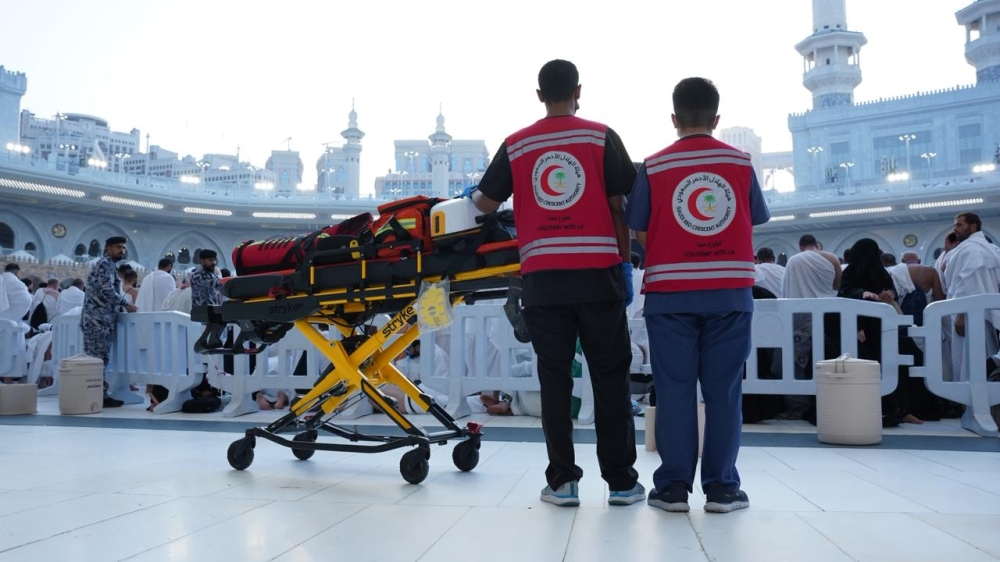
The Saudi Red Crescent Authority continues its tireless efforts to provide ambulance services at the Grand Mosque and the surrounding central areas, as part of an integrated healthcare system aimed at enhancing the speed of response to emergencies. These efforts are designed to ensure the best possible medical care for pilgrims, reflecting the Kingdom of Saudi Arabia's commitment to providing a safe and healthy environment for all those who visit the Grand Mosque to perform Hajj or Umrah rituals efficiently and effectively.
A long history of providing healthcare to pilgrims
Over the decades, the Kingdom of Saudi Arabia has placed great importance on the health and safety of pilgrims performing Hajj and Umrah. Historically, healthcare in Mecca has evolved from simple clinics and limited medical points to a vast network of advanced hospitals and specialized medical centers. This historical development reflects a deep-rooted commitment to serving Islam and Muslims, with the management of medical crowds and the provision of care during peak times becoming a globally recognized model. Today, this institutional integration is a natural extension of the Kingdom's vision to harness all its human and material resources to ensure the comfort of visitors to the Holy Mosque in Mecca.
Joint coordination to provide ambulance services in the Grand Mosque
The Saudi Red Crescent Authority plays a prominent role in this system through its collaborative efforts with 17 health entities representing the government, private medical, and non-profit sectors. Emergency medical services are provided at the Grand Mosque by directly responding to emergencies and offering immediate primary care within the mosque's courtyards and surrounding areas. Ongoing coordination with hospitals and health centers in the central area supports field deployment plans, directly contributing to faster response times and reduced arrival times for patients and the injured.
Modern technologies and foot patrols for rapid response
To ensure comprehensive coverage, ambulance teams are deployed throughout the Grand Mosque, its courtyards, and the surrounding central areas via multiple routes, including foot patrols, fixed ambulance stations, and strategic staging points. In addition, lightweight and advanced ambulance vehicles are utilized, such as medically equipped golf carts specifically designed to facilitate rapid movement and access to emergency cases within densely populated areas, ensuring efficient medical intervention at critical moments.
Dimensions and effects of the integrated health system
The impact of this healthcare system extends far beyond the local level, encompassing crucial regional and international dimensions. Locally, these measures enhance health security and ensure the safety of citizens, residents, and visitors. Regionally and internationally, the efficient handling of emergencies sends a reassuring message to millions of Muslims worldwide that their relatives performing Hajj and Umrah are receiving exceptional care. Furthermore, these efforts reinforce the Kingdom's position as a global leader in mass gathering medicine and managing health crises in large populations, making its experience an international benchmark for field healthcare.