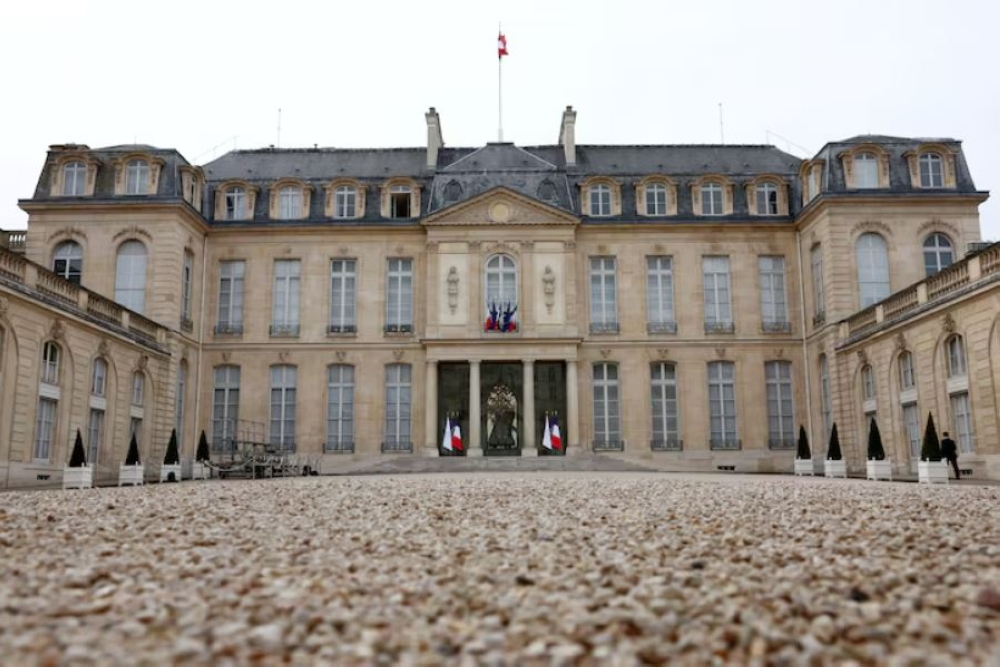
The public prosecutor's office in Paris announced details of a controversial security and criminal case in which the personal silversmith of French President Emmanuel Macron, along with two other men, will stand trial for stealing valuable historical porcelain and tableware from the Élysée Palace. This incident has once again highlighted security lapses within French sovereign and cultural institutions, particularly as it coincides with a period marked by similar incidents.
According to Reuters, the Élysée Palace, the official residence of the French president and the heart of the executive branch, filed a formal report regarding the disappearance of sets of silverware typically used at official banquets and high-level diplomatic dinners. The public prosecutor's office estimated the material value of the stolen items at between 15,000 and 40,000 euros (approximately $17,500 to $46,800), but their historical and sentimental value far exceeds this, given their connection to the history of the presidential palace.
Details of the security breach and the investigation
The investigation revealed that the main suspect, Thomas M., a cutlery custodian, and his accomplice, Damien J., were arrested on suspicion of direct involvement in the theft. A third man, Ghislain M., was also implicated for allegedly receiving and concealing the stolen goods. Thorough searches recovered approximately 100 stolen items hidden in the first suspect's personal locker, as well as in his car and home. The recovered items included copperware, rare ceramic pieces, and valuable glasses.
The Élysée Palace holds immense symbolic and historical significance. Built in the 18th century, it served as the residence of prominent historical figures before becoming the official residence of the French president. Therefore, any security breach at this edifice is not viewed as a simple theft, but rather as an attack on the prestige of the state and its sovereign symbols, which explains the intense media and legal attention this case has received.
The threads of the crime and its connection to the Louvre Museum
In a surprising detail, the newspaper Le Parisien reported that the third suspect, Ghislain M., worked as a security guard at the prestigious Louvre Museum. The newspaper quoted his lawyer offering a bizarre justification, claiming that his client's motive was not financial gain but rather his great "passion" for rare artifacts. This connection brought to mind the horrific theft that struck the Louvre just two months prior, when thieves disguised as construction workers managed to steal priceless jewels from the French crown in broad daylight, sparking a wave of sharp criticism regarding the effectiveness of security systems at French monuments.
The Sèvres porcelain factory, a historic royal workshop and the main supplier of ceramics to the Élysée Palace, played a crucial role in uncovering the crime. Experts at the factory were able to identify several stolen items being offered for sale on online auction sites, which helped authorities track down the perpetrators and recover some of the looted artifacts.