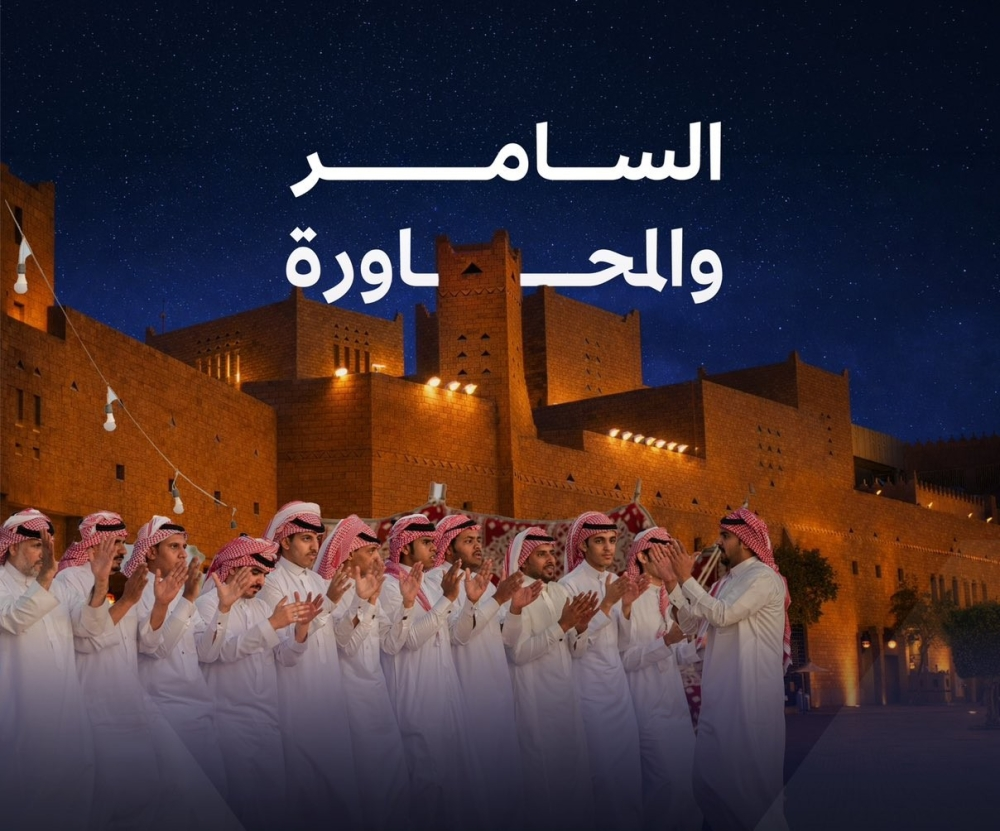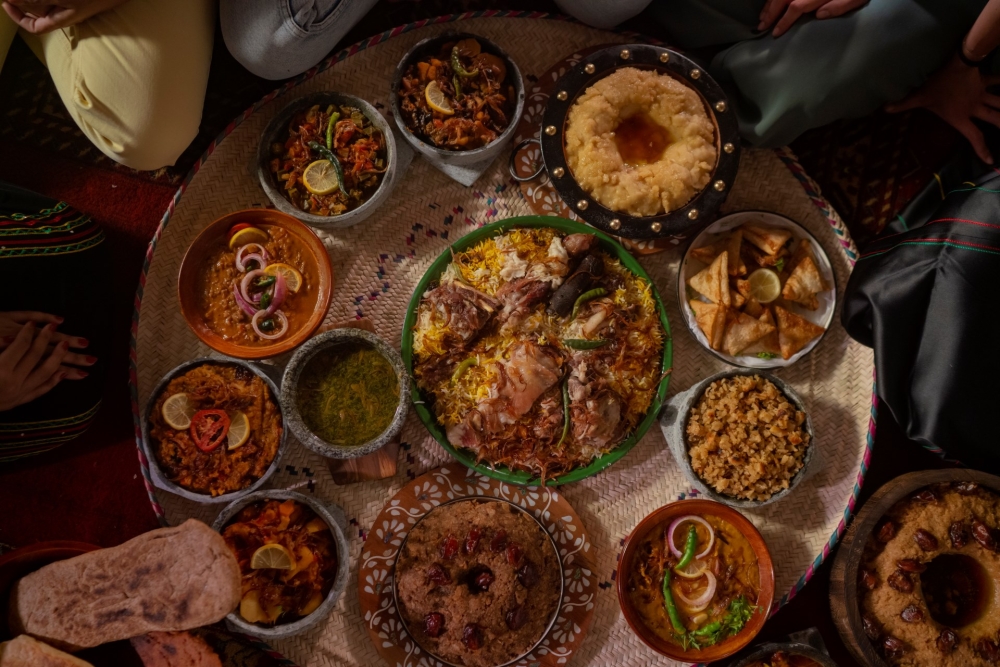
The Eid al-Fitr celebration is one of the most prominent social and cultural traditions observed throughout Saudi Arabia. With the dawn of the first day of Shawwal, after worshippers return from Eid prayers, homes open their doors to welcome guests and exchange visits. Family members, relatives, and friends gather around tables laden with the most delicious traditional dishes associated with this joyous occasion, in an atmosphere of happiness, connection, and the exchange of greetings. This transforms neighborhoods and homes into hubs for family gatherings that bring together young and old alike.
The historical roots of Eid feasts in Arab culture
The tradition of celebrating Eid feasts has deep roots in authentic Islamic and Arab customs that stretch back through history. After a full month of fasting and worship during Ramadan, Eid arrives as a divine reward. In ancient times, Arabs took pride in honoring guests and holding grand feasts as an expression of gratitude. These customs have evolved over generations to become what we know today, where these morning meals have become a symbol of the legendary generosity of the people of the Arabian Peninsula, and an integral part of their national identity, passed down from generation to generation, while preserving the authenticity of the local ingredients that each region's environment provides.
The variety of Eid breakfast dishes in the regions of the Kingdom
The dishes served on Eid morning vary according to local customs and culinary traditions in each geographical region of Saudi Arabia. In some areas, particularly in the central region, rice and meat dishes such as Kabsa, Jareesh, and Qursan take center stage. In the southern region, dishes like Areeka, Aseedah, Mabthouth, and Mashghoutha, which rely primarily on wheat, ghee, and local honey, are prominent. Meanwhile, in the Hijaz region, tables are adorned with dishes like Dabiyaza, Mantu, Yaghmash, and Ma'soub, reflecting a unique cultural diversity that enriches the Saudi table and transforms the Eid celebration a visual feast that is appreciated by the eyes before the palate.
Traditional sweets and children's joy
Alongside the main dishes, traditional sweets and pastries stand out as essential elements. Saudi coffee takes center stage, accompanied by a variety of dates, maamoul, and kleija. Tour guide Sami Al-Harthi emphasizes that children especially look forward to this occasion, given its joyful and festive atmosphere and its close association with the distribution of Eid gifts and the celebration of the holiday in a warm, family setting. These small details plant joy in the hearts of children and create beautiful memories that will remain etched in their minds for years to come.
The social and cultural impact of local celebrations
The impact of these customs extends far beyond the family sphere, encompassing significant local, regional, and international dimensions. Locally, these gatherings contribute to renewing social bonds and reinforcing the values of solidarity and mutual support among community members, thus strengthening the social fabric. Regionally, these traditions reflect the depth of the shared Gulf heritage and highlight the unique character of Saudi cuisine. Internationally, showcasing these authentic customs enhances the Kingdom's soft power and supports the cultural tourism sector, attracting visitors and tourists eager to experience this rich human heritage. This makes the Eid celebration a global window into the culture and history of Saudi Arabia.