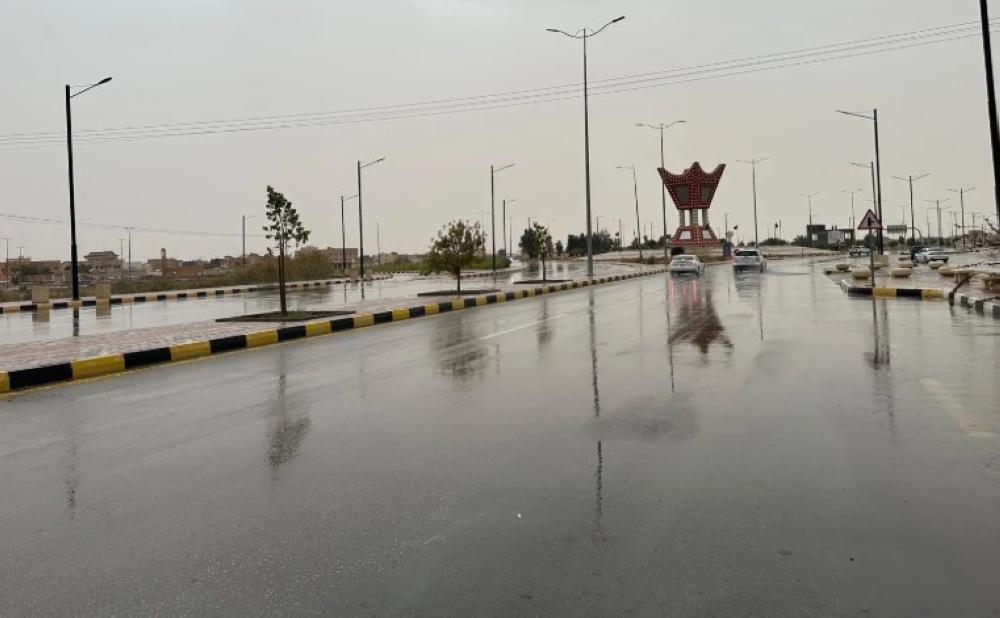
As Eid approaches, citizens and residents of Saudi Arabia are turning their attention to the weather forecast. The National Center for Meteorology has released its predictions for rainfall during Eid al-Fitr 1447 AH. These predictions include moderate to heavy rainfall in several key areas, necessitating caution and vigilance when planning trips and celebrations.
History of weather fluctuations in spring
Historically, spring in the Arabian Peninsula is known as a transitional period marked by rapid weather changes, locally referred to as the 'Sarayat' season. During this time of year, warm and cold air masses collide, leading to the formation of thunderstorms and rainfall that can sometimes be heavy. These climatic phenomena are part of the Kingdom's natural weather cycle, and these spring rains contribute to enhancing vegetation cover and replenishing groundwater, adding to the beauty of the desert landscape. However, they also necessitate preparedness to cope with sudden changes.
Eid al-Fitr rainfall map and affected areas
Eid al-Fitr rainfall map extends across a wide geographical area from March 20th to 23rd. The forecast includes the regions of Riyadh, the Eastern Province, Qassim, Makkah, Madinah, Hail, and Najran. Rainfall is also expected in the mountainous areas of Asir, Jazan, and Al-Baha, as well as scattered areas of the Northern Borders, Al-Jawf, and Tabuk regions. This widespread rainfall pattern requires everyone to follow the continuous updates to ensure a safe and enjoyable experience.
Lower temperatures and chances of fog formation
In addition to the rain, forecasts indicate relatively cool weather during the night and early morning hours, particularly in the northern regions of the Kingdom and the southwestern highlands, while the weather will be mild in the rest of the country. Furthermore, there is a chance of dense fog forming in the Eastern Province, parts of the Northern Borders and Al-Jawf regions, and the highlands of Asir, Al-Baha, and Makkah. This fog formation requires drivers to exercise extreme caution while driving, especially in the early morning hours when visibility will be significantly reduced.
Surface wind activity and its effect on visibility
The days of Eid will also see a noticeable increase in surface winds, stirring up dust and sand. This activity will be concentrated in the regions of Tabuk, Al-Jawf, the Northern Borders, Hail, and Al-Qassim, in addition to the eastern parts of the Makkah and Madinah regions, and the western parts of the Riyadh region. This wind activity is expected to reduce horizontal visibility on highways and open areas, adding another challenge for road travelers.
Impact of weather conditions on events and travel
These weather forecasts are of paramount importance locally, coinciding with the Eid holiday, a period of increased travel between cities across the Kingdom, as well as the organization of numerous events and festivals. Early awareness of these weather fluctuations helps organizers take the necessary measures to ensure the safety of visitors and enables families to plan their trips and travel effectively. The National Center of Meteorology has urged all citizens and residents to follow reports and warnings on its website and official applications to obtain up-to-date information and to avoid valleys and floodplains to protect lives and property.