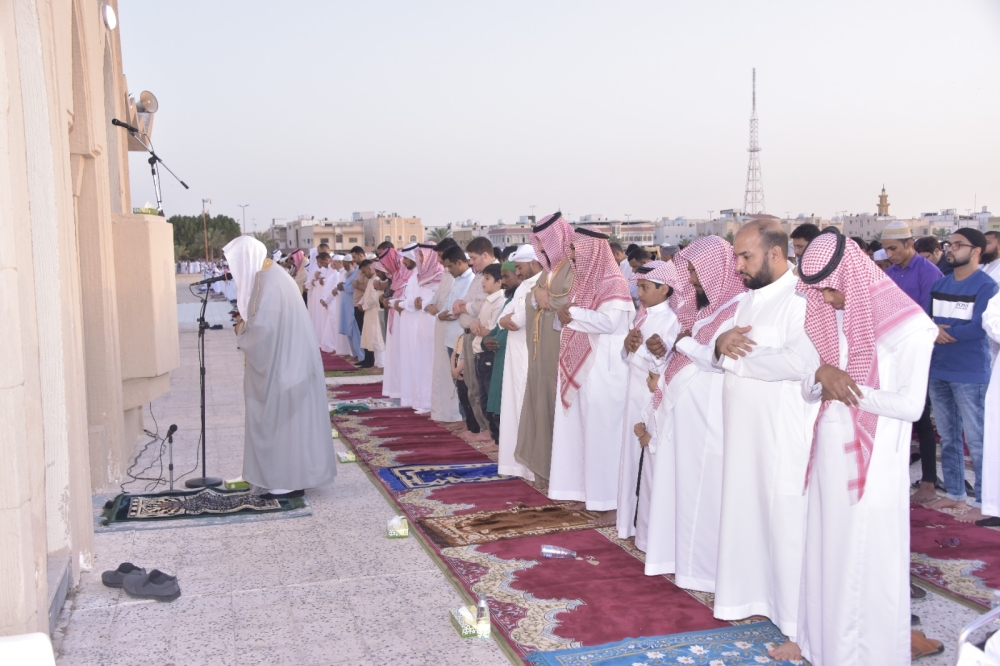
The Ministry of Islamic Affairs, Dawah and Guidance in the Kingdom of Saudi Arabia issued important and urgent directives to its branches in various regions of the Kingdom regarding the manner and location of performing the Eid al-Fitr prayer. The directives stipulated that the Eid al-Fitr prayer for the year 1447 AH be held only in large mosques and designated prayer areas, and that it be canceled in open-air prayer grounds in areas expected to be affected by rainfall. This prudent decision comes as a result of close and continuous monitoring of reports from the National Center for Meteorology, which warned of varying intensities of rainfall in the coming days, accompanied by several weather phenomena such as strong winds and a drop in temperatures.
The history of caring for worshippers and the flexibility of Islamic legislation
Historically, performing Eid prayers in open-air prayer grounds outside buildings is a confirmed Sunnah (Prophetic tradition) that Muslims are keen to revive. However, Islamic law is characterized by flexibility and ease, permitting the relocation of prayers to mosques and prayer halls in cases of legitimate excuses such as heavy rain, strong winds, or extreme cold. For decades, the government of the Kingdom of Saudi Arabia has consistently prioritized the safety of its citizens and residents. This concern is evident in the ongoing coordination between religious authorities and those responsible for weather and crisis management, ensuring that religious rites are performed in a safe and comfortable environment. This reflects the wise leadership's commitment to facilitating worship and protecting worshippers from any hardship or harm that might result from sudden weather changes.
The importance of the decision and its impact on holding Eid al-Fitr prayers safely
This precautionary measure is of paramount importance on several levels. Locally, the decision ensures the safety of millions of worshippers, including the elderly, children, and women, from the risks of slipping or contracting illnesses due to inclement weather in open prayer areas. It also contributes to easing traffic congestion and facilitating movement around mosques, which have better infrastructure for handling rainwater. Regionally and internationally, this measure highlights the Kingdom's efficiency in crowd management and proactive crisis planning. Relying on modern weather monitoring technologies and making swift and decisive decisions regarding Eid al-Fitr prayers provides a model for other Islamic countries on how to balance the proper observance of religious rites with adherence to the highest standards of public safety and risk management.
Mosques are ready to accommodate large numbers of worshippers
In a related context, the Ministry of Islamic Affairs emphasized to all its branches the necessity of full compliance with issued instructions and continuous monitoring of updates from relevant authorities. It stressed the importance of ensuring the utmost readiness of all approved mosques in terms of maintenance, cleanliness, the efficiency of air conditioning and sound systems, and the availability of safety measures. The primary objective is to guarantee the accommodation of the anticipated large numbers of worshippers who will be attending mosques instead of prayer rooms, and to provide a safe and tranquil spiritual environment befitting the grandeur of this joyous Islamic occasion, enabling everyone to perform their prayers and celebrate Eid in a spiritual atmosphere filled with serenity and reverence.